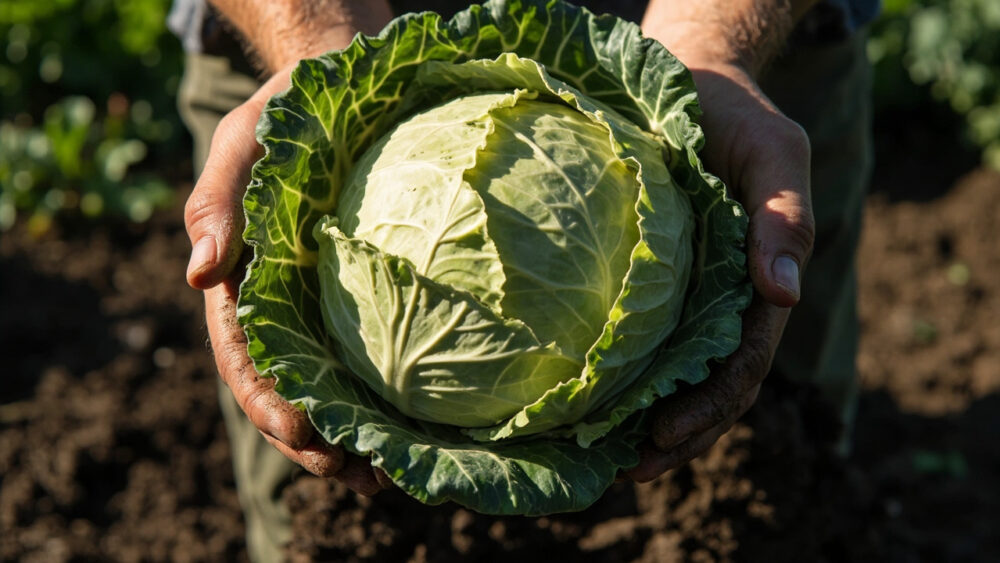
The best way to store cabbage is whole, unwashed, wrapped loosely in plastic, and kept in the crisper drawer of your fridge, where a firm head will hold for one to two months. Root cellar conditions do even better, stretching a hard winter cabbage three to four months. Knowing how to store cabbage properly is really about controlling two things: moisture loss and rot, and most people get both wrong without realizing it.
Here is what nobody tells you upfront. The mistake that ruins most stored cabbage happens before it ever hits the fridge, not after. There is also a sign of spoilage everyone misreads as “still fine” when it is actually the early warning stage. And if you are wondering whether to freeze cabbage instead, the honest answer depends entirely on what you plan to do with it later.
Stick with me through the how-to and the mistakes, because at the very bottom you will find a save-able Cabbage at a Glance card with every timing and number in one place.
The Best Method: Whole, Wrapped, and Cold
Start with a firm head that has no soft spots when you press it. Peel off any loose or damaged outer leaves, but leave the rest of the wrapper leaves intact. Do not wash it.
Wrap the whole head loosely in plastic wrap or a produce bag, leaving it a little loose rather than airtight. Set it in the crisper drawer, ideally the one you can set to high humidity.
Cabbage wants cold and moist, between 32 and 40 degrees Fahrenheit with high humidity, which is exactly what a crisper drawer is built for. A whole head stored this way holds well for four to eight weeks depending on the variety and how fresh it was when you bought or harvested it.
That method covers a whole head, but cut cabbage plays by different rules entirely.
Cut Cabbage Is a Different Animal
Once you slice into a head, the clock speeds up fast. Wrap the cut piece tightly in plastic, pressing it against the exposed flesh to limit air contact, and it will keep five to seven days in the fridge before quality drops.
Shredded cabbage, the kind you have already prepped for slaw, is even more fragile. Give it three to five days in a sealed container or bag before it starts going limp and sour smelling.
This is the piece most people miscalculate. They treat a half head like a whole one and expect it to last weeks. It will not, because the cut surface is an open door for moisture loss and bacteria both.
Knowing why cut cabbage fails faster explains the mistake that ruins whole heads too.
The Mistake That Ruins Most Stored Cabbage
If you assumed washing cabbage before storage helps it stay fresh, that guess is backwards, and it is the single most common way people shorten their cabbage’s life. Washing introduces moisture onto the leaf surfaces, and trapped moisture in a sealed bag is exactly what breeds rot and mold.
Wash cabbage right before you use it, never before you store it. The outer leaves are doing you a favor as a natural wrapper, so leave them on until you are ready to cook or eat.
The second big mistake is sealing a whole head in fully airtight plastic. Cabbage still needs a little airflow. Fully sealed plastic traps condensation against the leaves and speeds up the exact rot you are trying to prevent.
Loose wrap, no washing, cold and humid. Now let’s talk about how long each storage method actually buys you.
How Long Cabbage Keeps, Method by Method
On the counter, cabbage is living on borrowed time. A whole head at room temperature holds maybe three to five days before the outer leaves start yellowing and the texture goes soft. Counter storage only makes sense if you are using it within a day or two.
In the fridge, a whole unwashed head wrapped loosely runs four to eight weeks. Cut cabbage runs five to seven days. Shredded cabbage runs three to five days.
In a root cellar or a similarly cold, humid, dark space around 32 to 40 degrees Fahrenheit, whole heads of a dense storage variety like a late-season green or red cabbage can hold three to four months, sometimes longer if the heads were harvested dry and undamaged.
Frozen cabbage is the outlier, and it deserves its own explanation.
Should You Freeze Cabbage? The Honest Answer
Freezing works, but only if you are planning to cook the cabbage later, not eat it raw. Raw cabbage does not freeze well on its own. The water inside the cells expands, ruptures the cell walls, and you get a mushy, waterlogged mess on thawing.
The fix is blanching first. Cut the cabbage into wedges or shreds, blanch in boiling water for 90 seconds to 2 minutes, then plunge it into ice water immediately to stop the cooking. Drain well, pat dry, and freeze in a sealed bag or container.
Blanched and frozen cabbage holds for 9 to 12 months and is genuinely good in soups, stews, and braises. It will never be crisp again, so do not plan on using thawed cabbage for slaw or fresh salads.
If freezing is not the plan, curing might be, especially if you grew your own.
Curing Cabbage for Long-Term Storage
Curing is mostly for gardeners harvesting a whole crop at once, not for a head you bought at the store. After harvest, let the heads sit somewhere cool and dry, around 50 to 60 degrees Fahrenheit, for a day or two. This lets the outer leaves toughen slightly, which helps them protect the head in long storage.
After curing, move heads to root cellar conditions: 32 to 40 degrees Fahrenheit, high humidity, and darkness. Some gardeners wrap each head in newspaper or set them on straw so they are not touching each other, which slows the spread of rot if one head goes bad.
Check cured cabbage every couple of weeks. Pull any head showing soft spots before it can affect its neighbors.
That brings up the real question: how do you know when cabbage has actually turned?
The Sign of Spoilage Everyone Misreads
Loose, slightly wilted outer leaves are not spoilage, they are just moisture loss, and you can peel them off and the head underneath is often still fine. That is the sign most people panic over and toss out a perfectly good cabbage.
Real spoilage looks and smells different. Watch for these signs:
- Soft, mushy spots anywhere on the head, especially near the core.
- A strong sulfurous or ammonia-like smell instead of the mild, faintly sweet smell of fresh cabbage.
- Black or dark slimy patches between the leaf layers.
- A core that has gone dark brown or slimy when you cut the head open.
Any one of these means it is time to compost the head, not cook around it. Cabbage with slimy or foul-smelling spots is not worth the risk of eating even after cutting the bad part away, since spoilage organisms travel further into the head than they appear to on the surface.
With the warning signs covered, here is everything worth keeping close at hand.
Cabbage at a Glance
- Whole head in the fridge: wrap loosely in plastic, unwashed, keeps four to eight weeks in the crisper drawer.
- Cut cabbage in the fridge: wrap the cut face tightly, keeps five to seven days.
- Shredded cabbage in the fridge: sealed container, keeps three to five days.
- Root cellar storage: 32 to 40 degrees Fahrenheit, high humidity, darkness, keeps three to four months for dense storage varieties.
- Freezer storage: blanch 90 seconds to 2 minutes, cool in ice water, then freeze, keeps 9 to 12 months, best cooked not raw.
- Do not wash before storing: wash only right before use to avoid trapping moisture against the leaves.
- Signs it has turned: soft mushy spots, sulfur or ammonia smell, dark slimy patches, or a slimy brown core.
Cold, humid, and left alone is what cabbage wants most. Skip the wash, skip the airtight seal, and check it every couple of weeks, and one head can carry you through most of a season.