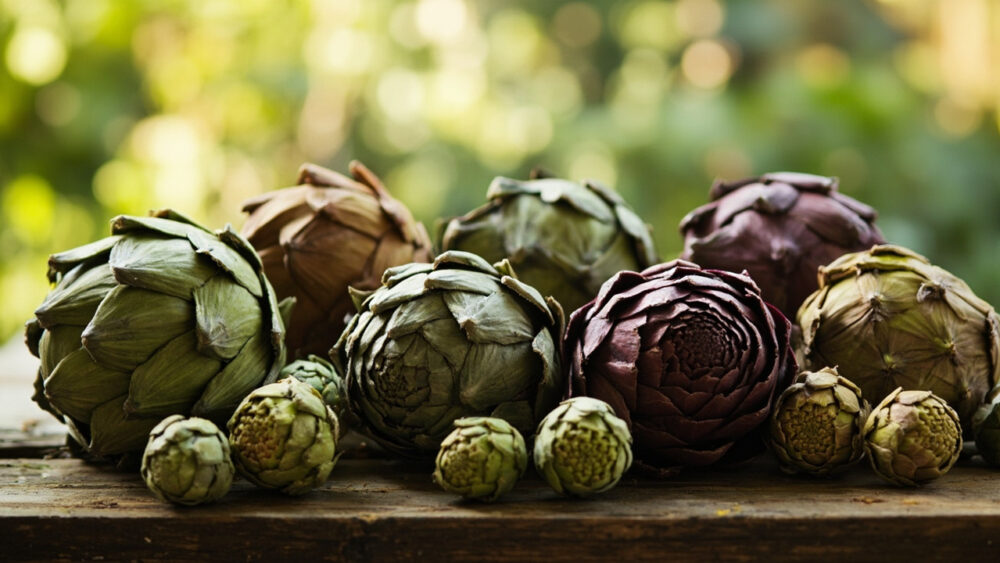
The fastest way to sort out types of artichokes is by bud color and plant hardiness, not flavor, because almost every globe artichoke tastes similar and the real differences show up in your climate and your patience for overwintering a six-foot silver plant. Green types dominate the market for a reason, but most home gardeners pick them out of habit rather than because they suit a short season. There is also a purple type that quietly outperforms the famous ones in flavor and cold tolerance, and most people never hear about it until they have already planted the wrong thing.
There is one mistake buried in this list that ruins entire harvests, and it has nothing to do with variety choice. Entry number 13 is the one gardeners misjudge most often, usually because it looks like it is failing right up until the week it explodes with buds. Stick around for that one, plus the true perennial workhorses and the exact method for choosing, all waiting at the bottom once you have seen the full lineup.
Classic Green Globe Types
These are the artichokes you already know from the produce aisle, and they are the safest starting point if you have never grown one before.
1. Green Globe
The standard supermarket artichoke is rounded, tight-headed, and about 3 to 5 inches across at harvest. It grows best in USDA zones 7 to 11 as a true perennial, or as a heat-forced annual further north, and needs a long, mild growing season to size up properly.
2. Green Globe Improved
A tighter-budding selection bred for more uniform heads and slightly earlier maturity than the original strain. It suits coastal growers with cool summers, since the plant stalls and gets bitter once daytime temperatures push past the mid 80s for long stretches.
3. Imperial Star
The one annual-climate gardeners should actually plant instead of Green Globe. It was bred specifically to set buds the first year from an early start indoors, making it the realistic choice in zones 6 and colder where the plant will not survive winter outdoors.
4. Big Heart
A large-headed hybrid that produces fewer artichokes per plant but bigger ones, often 4 to 6 inches, with a meaty heart that holds up well to stuffing and roasting. It needs the same long, frost-free window as Green Globe and is not a good fit for short-season gardens.
Green types get you the familiar flavor and look, but color is where the next group earns its keep.
Purple and Red-Tinged Varieties
Purple types are not a novelty, they are often more cold-hardy and more tender-leaved than the greens, which is the underrated fact most catalogs bury.
5. Violetto
An Italian heirloom with deep purple, elongated buds and noticeably more tender bracts than most green types, meaning you can eat further down each leaf. It handles light frost better than Green Globe and is the variety experienced growers quietly prefer for flavor.
6. Purple of Romagna
A regional Italian type prized for sweet, almost nutty flavor and a rounder, more compact bud than Violetto. It is slower to mature, so it rewards gardeners in zones 7 and up who can let the plant establish over two seasons.
7. Opera
A purple hybrid bred for earliness, closing the gap between purple flavor and annual-climate practicality. It buds up faster than most heirloom purples, making it a reasonable middle choice if you want purple color without waiting years for a full harvest.
8. Rossa di Paestum
A red-purple southern Italian type grown for its striking color as much as its taste, with buds that shade from green at the base to deep wine red at the tip. It wants heat and a long dry summer, so it struggles in humid or short-season climates.
Color tells you something real about hardiness and tenderness, but size and shape decide how the artichoke actually cooks.
Specialty Shapes and Sizes
Once you get past color, the next real distinction is bud shape, because it changes how you cook and eat the thing, not just how it looks in the garden.
9. Romanesco
A rounder, thornless Italian type with tightly overlapping bracts and almost no fiber in the outer leaves, so more of the bud is edible. It is a favorite for whole roasting and grilling since the heads hold their shape well over direct heat.
10. Spinoso Sardo
A spiny Sardinian heirloom, and the thorns are the identifying feature, tipping every bract with a sharp point that means gloves at harvest. Flavor is intensely artichoke-forward, favored by cooks who find modern hybrids bland, but the spines make it a poor choice around kids or pets in the garden.
11. Baby Anzio
Not a separate species but a harvest strategy paired with a compact-growing variety, picked small and tender at 1 to 2 inches before the choke fibers develop. Many green and purple types can be grown this way if you harvest the secondary buds early instead of letting the main head size up.
12. Cardoon-type Ornamental Artichoke
Grown mostly for its dramatic silver foliage rather than for eating, this close relative produces edible stalks more than edible buds. It suits gardeners who want the artichoke look, six feet of arching silver leaves, in a border or large container without committing to a food crop.
Shape and size explain how a variety cooks, but the next group is about how long you are willing to wait and watch.
Slow Growers and True Perennials
These are the varieties that reward gardeners who treat artichokes as a multi-year investment instead of a one-season vegetable.
13. Green Globe Perennial Strain (Second-Year Bearing)
This is the one gardeners give up on too early. In marginal zones, first-year plants often put all their energy into roots and leaves and produce nothing, looking like a failure right up until the second spring, when a well-mulched crown suddenly throws multiple flower stalks. If your winters stay above about 20°F at the crown, or you mulch heavily, patience here pays off far better than replanting annually.
14. Tavor
A newer hybrid bred for both earliness and perennial vigor, splitting the difference between Imperial Star’s speed and Green Globe’s longevity. It is a solid pick if you are unsure whether your zone can support a true perennial and want a plant that performs decently either way.
15. Emerald
A thornless, heat-tolerant selection developed for large-scale growing regions with long, warm seasons. It produces heavily over a longer harvest window than most home-garden types, making it the choice for anyone with the space and season length to treat artichokes as a real crop rather than a specialty planting.
How to Choose the Right One
- Check your space first: artichokes need 3 to 4 feet between plants and get 4 to 6 feet tall and wide at maturity, so container growers should look at compact or ornamental types only.
- Match your climate next: zones 7 and warmer can grow almost any type as a perennial, zones 6 and colder should default to annual-bred types like Imperial Star or Opera unless you are willing to baby a crown through winter.
- Decide your purpose: cooking whole buds favors Romanesco or Big Heart, eating down the leaf favors Violetto, and baby artichokes favor any compact green or purple type harvested young.
- Be honest about care appetite: true perennial strains ask for winter mulch, patience through a slow first year, and space you cannot reclaim for other crops.
- Start from transplants where possible, since artichokes need 10 to 12 weeks of cool conditioning before transplant to trigger budding the first year, and few home gardeners have the setup to do this reliably from seed.
Pick by climate and patience first, flavor second, and almost any artichoke on this list will reward you with something worth roasting.