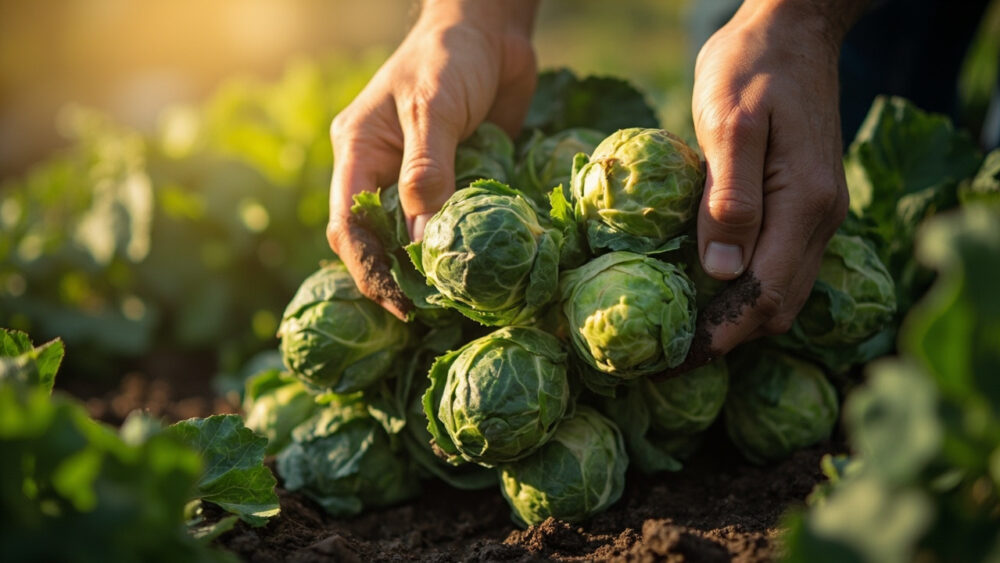
The right way to store brussels sprouts depends on whether they’re still on the stalk or already picked off. Whole stalks keep for weeks in a cold garage or root cellar, while loose sprouts belong in the fridge crisper wrapped loosely, unwashed, where they’ll hold for 3 to 5 weeks if you know what you’re doing. Learning how to store brussels sprouts correctly is really about slowing down two things: moisture loss and the ethylene that speeds up decay, and most people get both wrong within the first ten minutes of bringing them home.
Here’s what trips people up. Most gardeners wash their sprouts right after harvest because it feels like the responsible thing to do, and that single habit is probably the fastest route to a slimy, rotten bag by day four. There’s also a widely misread sign on the sprout itself that tells you it’s past saving, not just “still fine,” and most people miss it until it’s too late.
Stick with me and you’ll also get the honest answer on whether stalk storage is worth the hassle, plus a save-able Brussels Sprouts at a Glance card at the bottom with every number in one place.
The Best Method: Keep the Stalk, or Bag Them Loose and Dry
If you harvested the whole stalk, don’t cut the sprouts off right away. Standing the stalk upright in a bucket with an inch of water, then storing it in a cold garage, unheated porch, or root cellar around 32 to 40°F, is the single best way to keep brussels sprouts fresh for weeks rather than days.
If you’ve already picked the sprouts loose, don’t rinse them. Pat off loose dirt with a dry cloth, leave them unwashed, and load them into a perforated plastic bag or a loosely closed container.
Set that bag in the crisper drawer, the coldest and most humid part of a home fridge.
The stalk method buys you the most time without any freezer space.
How Long Each Method Actually Keeps Them
On the stalk in a cold spot (32 to 40°F), expect 3 to 5 weeks, sometimes longer in a proper root cellar with high humidity. Loose in the fridge crisper, plan on 3 to 5 weeks as well, though quality drops noticeably after week two. On the counter at room temperature, you’re looking at 2 to 3 days before they start going soft and bitter, so counter storage is really just a same-week plan, not real storage.
Frozen sprouts, blanched first, hold their quality for 10 to 12 months in the freezer. That’s the number to remember if you harvested more than you can eat in a month.
Curing isn’t really a brussels sprout technique the way it is for onions or winter squash. Their thin leaves and high moisture content mean they don’t cure into a shelf-stable state. They store cold, or they get frozen. There’s no in-between long-term option.
So which of those windows fits how many sprouts you actually have sitting in front of you right now.
The Prep That Decides Whether They Last
If you assumed washing your sprouts before storage is just good hygiene, that instinct is exactly what shortens their life. Water sitting on the surface, or trapped between the tight leaves, creates the damp environment that mold and bacterial soft rot need to take hold. Wash sprouts only right before cooking, never before storage.
Trim the stem end just slightly and pull off any loose or yellowing outer leaves before storing, since those leaves are the first to rot and can spread that rot inward.
For freezing, the opposite rule applies: you do blanch first. Drop trimmed sprouts into boiling water for 3 to 5 minutes depending on size, then straight into ice water for the same amount of time to stop the cooking. Dry them well before bagging and freezing, because wet sprouts turn into a solid clump.
Skip the blanch and frozen sprouts turn mushy and grassy-tasting within a couple of months, so this step earns its extra ten minutes.
The Signs a Batch Has Turned
Most people think yellow leaves mean a sprout is done for, and pull the whole thing. Yellowing outer leaves are usually just aging, not spoilage. Peel them off and the sprout underneath is often perfectly fine.
The real red flags are different. Watch for a strong, sulfurous smell that’s noticeably sharper than the normal cabbage-family scent, any slimy or wet film between the leaves, and soft, dark, or mushy spots on the sprout body itself.
Sprouts that have gone soft all the way through, or that leave your fingers damp and slick when you pick them up, are done. Toss those rather than trying to salvage the firm-looking ones nearby, since soft rot spreads bag to bag fast.
A little yellowing on the outside is normal aging, not a verdict, and that distinction alone will save you from tossing perfectly good sprouts.
The Mistakes That Ruin a Whole Batch
- Washing before storage: traps moisture against the leaves and invites rot within a few days.
- Sealing them airtight: no airflow means trapped humidity and faster mold, use a perforated bag instead.
- Storing near apples, pears, or bananas: these release ethylene gas that speeds up yellowing and softening in brussels sprouts.
- Skipping the blanch before freezing: raw-frozen sprouts turn mushy and lose flavor within weeks in the freezer.
- Leaving them at room temperature past a day or two: brussels sprouts are cold-lovers, and warmth turns their sugars bitter fast.
Fix those five habits and you’ll outlast almost every other home grower’s storage attempt this season.
Brussels Sprouts at a Glance
- On the stalk: store upright in a bucket with an inch of water, in a cold spot around 32 to 40°F, keeps 3 to 5 weeks or more.
- Loose in the fridge: unwashed, in a perforated bag in the crisper drawer, keeps 3 to 5 weeks with best quality in the first two.
- On the counter: only good for 2 to 3 days before texture and flavor decline.
- Frozen: blanch 3 to 5 minutes, ice bath, dry thoroughly, then freeze for 10 to 12 months.
- Washing rule: never wash before storing, only right before cooking.
- Real spoilage signs: sulfurous smell, slimy film, soft or dark mushy spots, not just yellow outer leaves.
- Keep away from: apples, pears, bananas, and other ethylene-heavy fruit in the fridge.
Cold, dry, and unwashed is the whole secret. Get those three right and everything else about storing brussels sprouts takes care of itself.