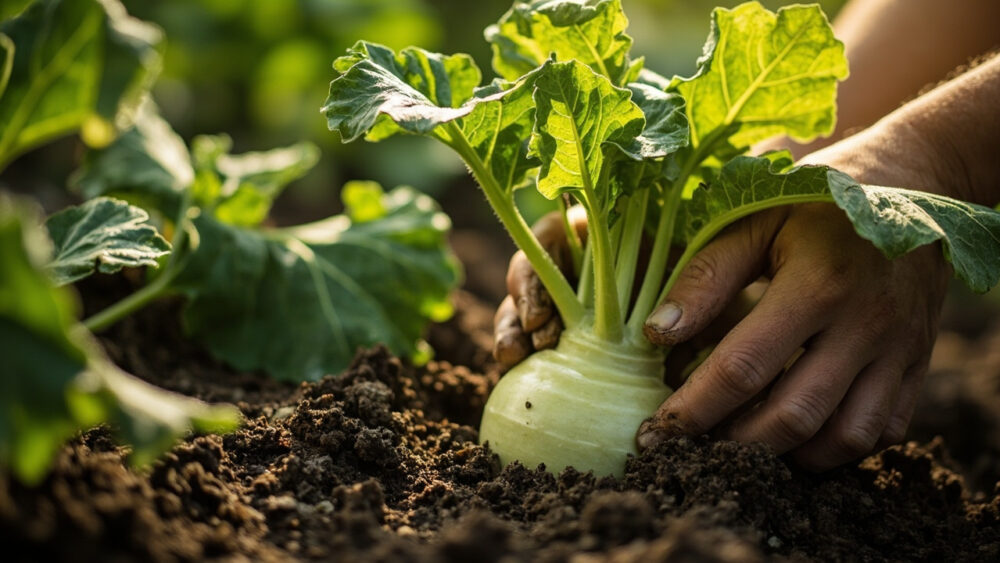
Kohlrabi grows fastest as a cool-season cropplanted from seed or transplant two to four weeks before your last spring frost, or again in late summer for a fall crop, and it’s ready to pull in 45 to 60 days once the bulb hits 2 to 3 inches across. That’s the short version of how to grow kohlrabi from seed to plate. But the timing window is tighter than it looks, and most of the trouble people run into isn’t disease or pests, it’s waiting too long to harvest and ending up with a bulb the texture of a raw potato.
There’s also a sizing mistake almost everyone makes at least once, a watering habit that causes bulbs to crack right when they look their best, and a question that comes right after “how do I grow it,” which is “how do I actually eat the thing.” I’ll answer all of it.
Stick with me to the bottom and you’ll find a save-able Kohlrabi at a Glance card with every number you need on one screen, no scrolling back through the article to find the spacing or the days to maturity.
When to Plant Kohlrabi
Kohlrabi is a brassica, and it thinks like cabbage and broccoli: it wants cool weather, not heat. Direct-seed or transplant it two to four weeks before your last expected spring frostonce soil temperature is at least 45°F, though it germinates faster and more evenly around 60 to 75°F.
In zones 3 to 6, that’s early to mid spring for the first crop. In zones 7 and up, you can also get away with a very early spring planting and a second round in late summer for fall harvest, since kohlrabi actually sweetens with a light touch of frost.
Avoid planting into real heat. Bulbs started when temperatures are consistently above 75°F tend to bolt or turn woody before they size up.
Get the timing right and the rest of the season is mostly maintenance, but the spot you choose matters almost as much.
Choosing the Spot and Prepping the Soil
Kohlrabi wants full sunat least 6 hours a day, in soil that drains well but holds moisture. It’s a fast, shallow-rooted crop, so it doesn’t dig deep for nutrients or water, which means the top 8 inches of soil are doing all the work.
Work in an inch or two of compost before planting. Kohlrabi likes a slightly acidic to neutral pH, roughly 6.0 to 7.0, and it will not forgive compacted, heavy clay that stays soggy.
If your soil is rich in clay, raised beds or mounded rows solve most of the drainage problem without much extra effort.
Once the bed is ready, the actual planting takes about five minutes and a little attention to spacing.
Step by Step: Planting Kohlrabi
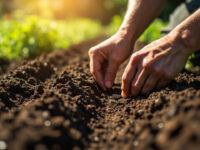
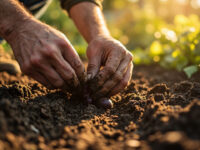
- Direct-seed about 1/2 inch deep, or set transplants at the same depth they were growing in their tray, no deeper.
- Space plants 6 to 9 inches apart in rows 18 to 24 inches apart. Tighter spacing gives smaller, more tender bulbs; wider spacing gives bigger ones.
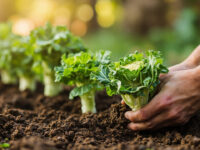
- Thin seedlings to your final spacing once they have two true leaves, keeping only the strongest plant every 6 to 9 inches.
- Water immediately after planting or transplanting to settle soil around the roots.
- Mulch lightly once seedlings are a few inches tall, to keep soil cool and moisture even.
Crowding is the sizing mistake most people make without realizing it: plant kohlrabi too close and every bulb stays small no matter how well you feed it.
Watering and Feeding Through the Season
Kohlrabi needs steady, even moistureabout 1 to 1.5 inches of water a week between rain and irrigation. The word to hold onto here is even, not heavy.
If you assumed inconsistent watering just stunts the plant, that’s the guess that costs people their harvest. What it actually does is cause the bulbs to split and crack right as they’re sizing up, usually after a dry stretch followed by a heavy soak.
Check soil an inch down with your finger. If it’s dry there, water. Mulch helps flatten out the swings between soggy and bone-dry, which matters more for kohlrabi than for most vegetables.
Feed lightly with a balanced or nitrogen-leaning fertilizer once about three weeks after planting, then again three weeks later if growth looks slow. Too much nitrogen late in the game pushes leafy growth at the bulb’s expense, so ease off once bulbs start swelling.
Get the water right and most of your remaining risk is pest pressure, which is where kohlrabi’s cabbage-family habits work against it.
Problems to Head Off Early
Kohlrabi shares pests and diseases with the rest of the brassica family, so if you’ve grown cabbage or broccoli, the cast of characters will look familiar.
Common Pests
- Cabbage worms and loopers: look for ragged holes in leaves and small green caterpillars. Handpick when you spot them, and use row covers early in the season to keep egg-laying moths off the plants.
- Flea beetles: tiny black beetles that riddle young leaves with pinholes. Row covers at planting are the most reliable prevention; established plants tolerate light damage fine.
- Aphids: clusters on the undersides of leaves, often signaled by curling growth. A strong water spray knocks most colonies down before they need anything stronger.
Common Diseases
Clubroot and black rot are the two serious brassica diseases, and both live in the soil and spread through infected transplants or contaminated tools. The real prevention is crop rotation: don’t plant kohlrabi or any brassica in the same soil more than once every three years.
For any fungal disease that does show up, a fungicide labeled for that specific problem, used exactly per the label, is the right tool, not a home remedy.
Handle the bugs and rotate your beds, and the last real skill left to learn is knowing exactly when to pull the bulb.
When and How to Harvest Kohlrabi
Here’s the honest answer to the question every kohlrabi grower eventually asks: bigger is not better. Harvest when the bulb is 2 to 3 inches in diametermeasured at the widest point above the soil line.
Left beyond that, especially past golf-ball to tennis-ball size, the texture turns woody and fibrous no matter the variety. Some larger types tolerate a bit more size, but 3 inches is a safe ceiling for almost all of them.
To harvest, cut the stem at soil level with a sharp knife, or pull the whole plant and trim the roots off afterward. Either way works fine. There’s no bulb damage risk either way if you’re not tugging on the leaves.
Kohlrabi holds in the fridge for two to three weeks once the leaves are trimmed off, and it stores even longer in a root cellar or a cool garage held near 32 to 40°F with high humidity.
That’s the whole arc from seed to harvest, and now here’s everything worth saving before you close this tab.
Kohlrabi at a Glance
- When to plant: two to four weeks before your last spring frost, soil at least 45°F, or again in late summer for a fall crop.
- Depth and spacing: seeds 1/2 inch deep, plants thinned to 6 to 9 inches apart, rows 18 to 24 inches apart.
- Sun and soil: full sun, at least 6 hours a day, well-drained soil enriched with compost, pH around 6.0 to 7.0.
- Watering: 1 to 1.5 inches per week, kept even to prevent cracking, not heavy soaks after dry spells.
- Feeding: light balanced fertilizer around three weeks after planting, easing off nitrogen once bulbs start swelling.
- Days to maturity: 45 to 60 days from planting, depending on variety and temperature.
- Harvest size: pull at 2 to 3 inches in diameter, before the texture turns woody.
If you only remember one thing, remember the size, not the calendar: pull kohlrabi at 2 to 3 inches across, every single time.
Get that right and everything else about growing it takes care of itself.