Growing luffa from seed takes patience more than skill: soak or nick the seeds, start them indoors 3 to 4 weeks before your last frost in a warm spot (80 to 90°F soil), and get them into the ground only after nighttime temperatures stay above 55°F. From there you’re growing a sprawling vine that needs a full 150 to 200 frost-free days to produce mature, harvestable sponges, which is the part most gardeners underestimate.
Here’s what nobody tells you before you plant: luffa germination can take anywhere from 5 days to 3 weeks, and most people give up and toss the seed tray right when it was about to sprout. There’s also a sneaky mistake with the fruit itself, where the exact sign that tells you a luffa is ready to eat as a vegetable is the opposite of the sign that tells you it’s ready to become a sponge.
And the timing question you’re probably about to ask, “can I still start this now,” has a real, honest answer depending on your zone that I’ll get to below. Stick around, because the full Luffa at a Glance card is at the bottom of this guide, saveable to your phone for the whole season.
When to Start Luffa Seeds
Luffa needs heat and a long runway. In most of the U.S., that means starting seeds indoors 3 to 4 weeks before your last expected frost, rather than direct sowing.
If you garden in a zone with a long, hot growing season (zone 8 and warmer, with 200-plus frost-free days), you can direct sow once soil hits 70°F and stays there. Everyone else is racing the calendar, and an indoor head start is what turns a failed season into a full one.
If it’s already deep into your local planting season and you’re wondering whether you’ve missed your window, the honest answer is: you probably have less margin than a tomato or squash gives you, but you’re not necessarily out of time if your frost-free season still has 4-plus months left. Push transplants out the door the moment nights are reliably warm, and consider it a shorter, later harvest.
Getting the timing right matters less than getting the sowing itself right, and that’s where most seed packets skip a crucial step.
Sowing Luffa Seed Step by Step
Luffa seeds have a hard, almost woody coat, and that coat is the single biggest reason for slow or spotty germination. Skip the prep step and you’re gambling on weeks of nothing.
1. Nick or soak the seed
Use a fingernail clipper or sandpaper to gently nick the seed coat on the rounded end, away from the pointed embryo tip, or soak seeds in room-temperature water for 12 to 24 hours. This is the step that separates a 90% germination rate from a 40% one.
2. Sow at the right depth and medium
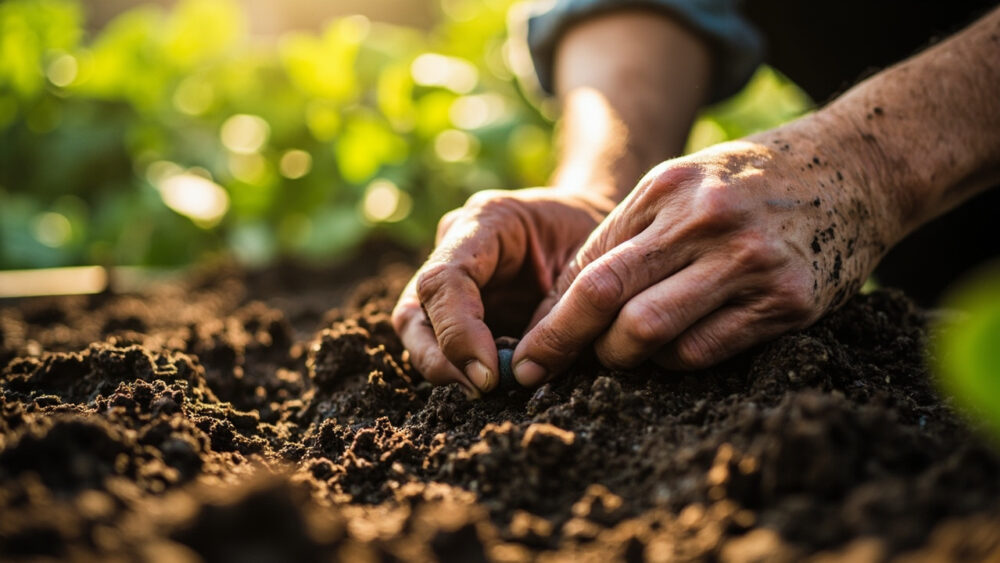
Plant seeds 1/2 to 3/4 inch deep in a loose, well-draining seed-starting mix. Use individual 3 to 4 inch pots since luffa dislikes root disturbance.
3. Keep it hot
Bottom heat matters here more than for almost any other vegetable seed. Aim for 80 to 90°F soil temperature using a heat mat, and expect poor or erratic germination anywhere below 70°F.
4. Light after sprouting, not before
Seeds don’t need light to germinate, but the moment you see a sprout, move the pot under strong light (a bright south window or grow light) immediately, or you’ll get pale, leggy seedlings that struggle later.
Get the heat and the seed coat right, and germination stops being the mystery part.
Germination: What to Expect and When to Actually Worry
With nicked or soaked seed and warm soil, expect the first sprouts in 5 to 10 days. Without that prep, or in cooler soil, it can stretch to 2 or even 3 weeks.
This is the point where most people quit too early. If you assumed no visible sprout by day 10 means dead seed, that guess costs a lot of gardeners a whole tray. Luffa is genuinely one of the slower, more uneven germinators in the vegetable garden, and a mixed tray sprouting over a 10-day spread is normal, not a failure.
Real cause for concern looks different: seeds that have gone soft, moldy, or mushy in soil that’s been kept too wet. That’s rot, not slowness, and those seeds are done. Keep the medium moist but never soggy, and you avoid that outcome entirely.
Once you’ve got a true seedling with its first true leaf unfurling, the next test is getting it outside alive.
Hardening Off and Transplanting
Luffa transplants are tender and hate a cold shock, so hardening off isn’t optional. Start 7 to 10 days before your planting date, setting seedlings outside in a sheltered, shaded spot for an hour or two, and gradually increasing sun and time over the week.
Transplant only after nighttime lows are reliably staying above 55°F, ideally closer to 60°F, and all frost danger has passed. Cold soil stalls luffa hard, sometimes for weeks, even if the plant survives.
Space plants 24 to 36 inches apart, and give the vine somewhere to climb: a trellis, arbor, or fence at least 6 to 8 feet tall. Luffa vines easily run 15 to 20 feet in a warm season, and fruit quality is genuinely better when the vine climbs instead of sprawls on the ground, since hanging fruit grows straighter.
Getting a healthy transplant in the ground is only half the job, since a slow start in cool soil is where the season quietly gets lost.
Care Through the Season
Luffa is a heavy feeder and a heavy drinker once it’s rolling. Give it consistent moisture, about 1 to 1.5 inches of water a week, and a balanced fertilizer or compost feeding every 3 to 4 weeks through the growing season.
Full sun is non-negotiable, at least 6 to 8 hours a day. In partial shade the vine will grow but flower and fruit poorly.
Luffa produces separate male and female flowers, both yellow, and male flowers typically show up first, sometimes weeks before any female flowers appear. Don’t panic at a vine covered in blooms and no fruit early on. Bees do the pollination work, so avoid spraying insecticides on open flowers.
Once female flowers (look for the small bulb at the base of the bloom) start setting fruit, the countdown to harvest actually begins.
When Luffa Is Ready, and the Sign Everyone Gets Backward
Here’s the mistake that trips up almost everyone growing luffa for the first time. If you want to eat luffa as a vegetable (it’s cooked like a summer squash in many cuisines), you harvest it young and green, usually at 4 to 6 inches long, while the skin is still tender enough to dent with a fingernail.
If you want a sponge, you do the opposite of everything that feels intuitive: you leave it on the vine far past the point where it looks appetizing. A sponge luffa is ready when the skin turns yellow-brown, feels dry and papery, and the fruit feels noticeably lightweight, rattling slightly if you shake it. This typically takes 150 to 200 days from seed, which is why so many northern gardeners run out of season before the sponge stage.
Cut fruit from the vine before hard frost regardless of color; frost-killed fruit rots instead of drying. Peel the dried skin, shake or rinse out the seeds, and you’ve got a usable sponge.
Whichever route you’re aiming for, the full-season cheat sheet below is the one worth saving.
Luffa at a Glance
- When to plant: start seeds indoors 3 to 4 weeks before last frost, transplant only after nights stay above 55°F.
- Seed prep: nick the seed coat or soak 12 to 24 hours before sowing to speed germination.
- Depth and heat: sow 1/2 to 3/4 inch deep, keep soil at 80 to 90°F for fastest, most even sprouting.
- Germination window: 5 to 21 days depending on prep and soil warmth, uneven sprouting is normal.
- Spacing and support: 24 to 36 inches apart, on a trellis or arbor at least 6 to 8 feet tall.
- Water and feeding: 1 to 1.5 inches of water weekly, feed every 3 to 4 weeks once vines are established.
- Harvest for food: pick at 4 to 6 inches long, skin still fingernail-tender, before it toughens.
- Harvest for sponges: leave on the vine 150 to 200 days until skin is dry, brown, and lightweight.
Luffa doesn’t reward rushing, it rewards a warm start and a long leash.
Get the season length right, and the rest of this plant mostly takes care of itself.