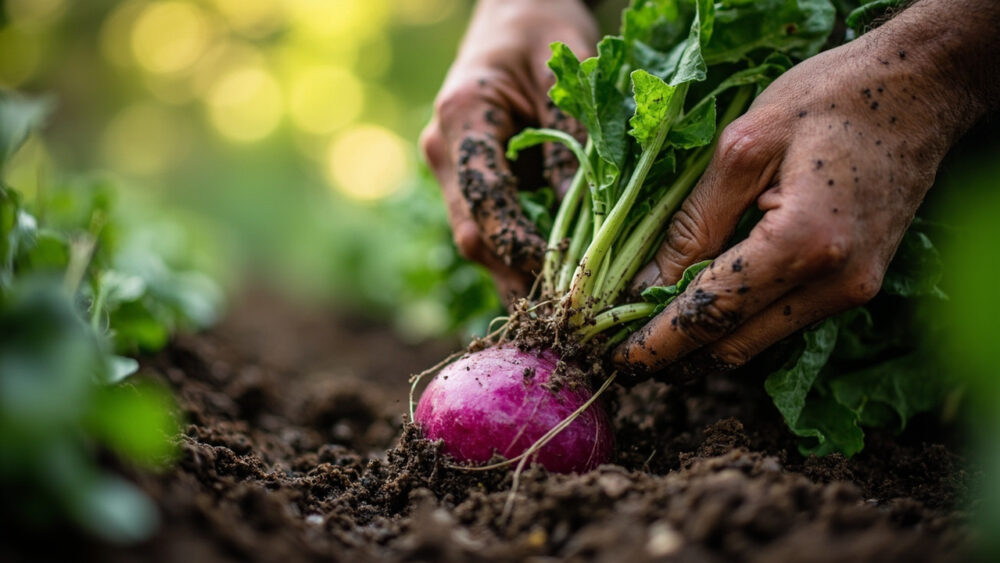
Learning how to grow turnips is one of the most forgiving things you can do in a vegetable garden, provided you get one thing right: timing. Sow seed directly in the ground, 1/2 inch deep, as soon as soil hits about 40 to 50°F, and you will have edible roots in as little as 35 to 55 days depending on variety. Skip transplants entirely, turnips hate having their roots disturbed and will sulk or fork if you try to move them.
Most failed turnip crops do not fail from bad soil or bad luck. They fail because someone planted them at the wrong end of the season and got all leaf, no root, or a crop that bolted straight to flower. There is also a sizing mistake almost everyone makes, and it has nothing to do with watering.
Stick with me through the sections below and I will hand you the exact planting windows, the spacing that actually matters, and the harvest signs that separate a sweet, tender turnip from a woody one. There is a save-able Turnips at a Glance card waiting at the bottom once you have the full picture.
When to Plant Turnips
Turnips are a cool-season crop, and they genuinely do not like heat. Plant a spring crop 2 to 4 weeks before your last frost date, once soil has warmed to at least 40°F. They will tolerate a light frost as seedlings, so getting them in early is rarely the mistake.
The bigger opportunity, and the one most gardeners skip, is the fall crop. Sow again 6 to 8 weeks before your first fall frost. Turnips planted for fall harvest almost always taste better, since cool weather at maturity sweetens the root and light frost improves flavor further.
Summer sowing is the trap. Heat pushes turnips to bolt and turns roots fibrous and bitter fast.
Choosing the Spot and Prepping the Soil
Turnips want full sun, though they will tolerate light afternoon shade in warmer zones. What they really care about is the soil underneath. Loose, well-drained soil free of rocks and clumps lets the root swell into a round shape instead of forking into something odd-looking.
Work the bed 8 to 10 inches deep and remove clods and stones. Turnips are not heavy feeders, but they do want a soil pH between 6.0 and 6.8 and a light feeding of balanced fertilizer or finished compost worked in before planting.
Avoid fresh, high-nitrogen manure right before planting. It pushes lush leafy growth at the expense of the root, which is the opposite of what you are growing this for.
Get the bed right once, and the rest of the season gets a lot easier.
Planting Turnips Step by Step
Direct sowing is the only reliable method. Here is the exact process.
1. Sow the seed
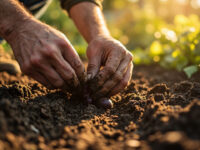
Plant seeds 1/2 inch deep in rows 12 to 18 inches apart. Turnip seed is tiny, so resist the urge to bury it deeper thinking that helps germination. It does not.
2. Space generously, then thin harder than feels right
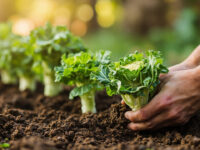
Scatter seed thickly since germination varies, but once seedlings reach 2 to 3 inches tall, thin to one plant every 3 to 4 inches for greens-only crops, or 4 to 6 inches if you want full-sized roots.
This is the step almost everyone gets wrong. Crowded turnips produce plenty of green tops and small, tough, disappointing roots underneath, no matter how good your soil is.
3. Water in immediately
Keep the seedbed consistently moist until germination, which takes 5 to 10 days. Turnip seed sitting in dry soil simply will not sprout evenly.
Thinning feels wasteful the first time you do it, but it is the difference between a harvest and a handful of green confetti.
Watering and Feeding Through the Season
Turnips want steady moisture, about 1 inch of water per week, more during dry spells. Inconsistent watering is the second-biggest reason turnip roots turn woody or crack, right behind overcrowding.
Check soil an inch down. If it is dry there, water. If it is still damp, hold off, since soggy soil invites rot more than it helps growth.
One light side-dressing of balanced fertilizer about 3 weeks after sowing is usually enough. Heavier feeding, especially anything nitrogen-rich, again favors leaves over roots.
Mulch lightly to hold moisture evenly, and you will rarely think about watering again until harvest.
Problems That Actually Show Up
The most common turnip pest is the flea beetle, a tiny black insect that peppers leaves with small round holes, usually right after germination when seedlings are most vulnerable. Floating row cover laid down at sowing time is the most reliable prevention, since it blocks the beetle before it ever finds the row.
Root maggots can tunnel into developing roots in cooler, wetter soil. Crop rotation, avoiding planting turnips where you grew radishes or cabbage the year before, cuts this risk significantly.
Aphids sometimes cluster on the undersides of leaves. A strong blast of water or insecticidal soap applied per the product label handles light infestations without much fuss.
If leaves yellow and roots stay small despite good watering, it is usually a nitrogen or spacing problem, not a disease, and it is fixable this season, not a total loss.
None of this is likely to ruin your crop if you catch it early, which brings us to the part everyone actually clicked for.
When and How to Harvest Turnips
Most people assume bigger turnips are better turnips. That guess is exactly backwards, and it is the honest answer to the question you were probably about to ask.
Harvest at 2 to 3 inches in diameter for the sweetest, most tender roots, typically 35 to 55 days after sowing depending on variety. Left in the ground past that, turnips turn woody, fibrous, and increasingly bitter, even if they look impressively large.
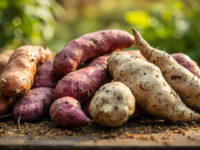
Check the shoulders of the root peeking above the soil line as your visual cue. Once you see 2 to 3 inches of purple-white shoulder, it is time to pull, not wait for more.
Grip the base of the leaves near the soil and pull straight up, or loosen stubborn soil with a garden fork first. A light frost before harvest actually sweetens the flavor, so do not rush a fall crop off the vine at the first cold snap.
Turnip greens are harvestable too, and can be cut earlier as a leafy crop while roots are still sizing up, giving you two harvests from one planting.
Turnips at a Glance
- When to plant: 2 to 4 weeks before last frost in spring, or 6 to 8 weeks before first frost for a sweeter fall crop, once soil is at least 40°F.
- Depth and spacing: sow 1/2 inch deep, thin to 4 to 6 inches apart for full-sized roots, rows 12 to 18 inches apart.
- Sun and soil: full sun, loose well-drained soil free of rocks, pH 6.0 to 6.8.
- Water: about 1 inch per week, consistent moisture to avoid woody or cracked roots.
- Feeding: light compost or balanced fertilizer at planting, one side-dressing around 3 weeks in, avoid heavy nitrogen.
- Watch for: flea beetles on young seedlings, root maggots in wet cool soil, both manageable with row cover and rotation.
- Harvest: pull at 2 to 3 inches diameter, 35 to 55 days from sowing, when the shoulders show above the soil line.
Get the timing and the thinning right, and turnips take care of the rest themselves.
Pull them small, not big, and every root will taste like it came from someone who knew exactly what they were doing.