The best way to store turnips is unwashed, with the tops cut off, packed in damp sand or sawdust in a box kept at 32 to 40°F and high humidity, which keeps them firm for four to five months. Short term, bagged in the fridge crisper, they hold for one to two weeks. If you’re wondering how to store turnips you just pulled from the garden, the greens are actually the part that spoils fastest, and most people throw away the wrong half.
There’s one mistake that ruins more turnip harvests than rot ever does, and it happens before storage even starts. There’s also a sign of spoilage everyone misreads as normal aging, and the honest truth about whether you really need a root cellar to pull this off.
Stick around, because the save-able Turnips at a Glance card at the bottom has the exact temperature, humidity, and timeline numbers you’ll want pulled up on your phone in the garage or kitchen.
The Method That Actually Works: Sand-Packed Cold Storage
If you have more than a few turnips, this is the method worth setting up. It mimics a root cellar using a box, sand, and a cool spot.
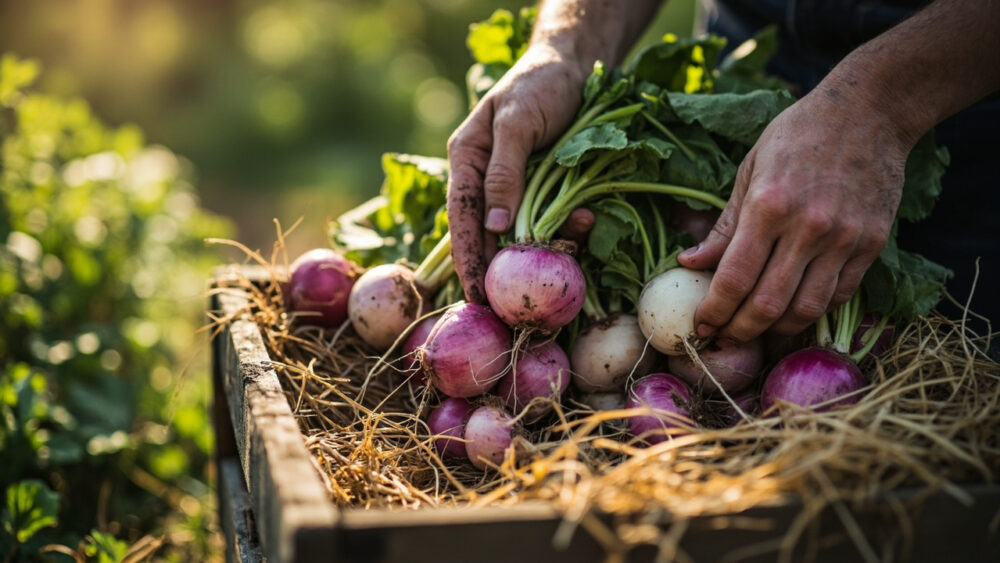
Cut the greens off to about an inch above the root, leave the taproot on, and do not wash the roots. Layer them in a box or crate with damp sand, sawdust, or peat moss so roots don’t touch each other. Store at 32 to 40°F, ideally in a root cellar, unheated garage, or a spare fridge, with humidity around 90 to 95 percent.
Check every few weeks and pull any turnip that’s gone soft before it spreads.
That single trimming step at the start is where most people go wrong, and it’s worth explaining why.
The Mistake That Ruins Most Attempts
Leaving the greens attached is the single biggest storage killer. The tops keep drawing moisture out of the root even after harvest, which shrivels the turnip and shortens its life to days instead of months.
If you assumed the leaves would just wilt and fall off on their own, that guess costs you the whole batch. Cut them off within a day of pulling the turnips, no exceptions.
Save the greens separately. They’re edible, they cook down like other hearty greens, and they last three to five days in a bag in the fridge, nowhere near as long as the root.
Once the tops are handled, the next decision is whether to wash the roots before storing them.
To Wash or Not to Wash
Don’t wash turnips before long-term storage. A skin of dry garden soil actually protects the root and slows moisture loss.
Washing before storage is a second common misstep, and it feels responsible, like you’re doing the tidy, careful thing. It’s the opposite. Wet skin invites rot and mold in cold, humid storage.
Brush off loose dirt with a dry cloth or soft brush instead. Save the actual washing for right before you cook them, not before you store them.
Get the prep right and you’re most of the way there, but how you store them still depends on how long you need them to last.
How Long Turnips Keep, Method by Method
Turnips are forgiving if you match the method to your timeline. Here’s the honest range for each.
- Counter, room temperature: three to five days, best for turnips you’ll cook this week.
- Fridge crisper, unwashed, in a perforated bag: one to two weeks, the easiest short-term option.
- Sand-packed cold storage, 32 to 40°F: four to five months, the best option for a real harvest.
- Blanched and frozen: eight to twelve months, best for turnips you plan to cook straight from frozen.
- Root cellar or unheated basement in fall and winter: three to four months, close to sand storage without the sand.
Freezing is the one method that changes the turnip’s texture, and that’s worth understanding before you commit a whole harvest to it.
Freezing: Worth It, But Only If You Blanch
Turnips can be frozen, but raw turnips frozen without blanching turn mushy and develop an off flavor within a month or two. Blanching is non-negotiable here.
Peel and cube the turnips, then blanch in boiling water for two to three minutes, cool immediately in ice water, drain well, and freeze on a tray before bagging so the pieces don’t clump.
Frozen turnips are best used in soups, stews, and mashes, not raw or roasted crisp, since freezing softens the cell structure.
Whichever method you choose, you need to know what spoilage actually looks like, because it’s not always obvious.
The Sign Everyone Misreads as Normal Aging
A turnip going soft and slightly rubbery, with a sweet or musty smell, has turned. Wrinkled skin alone is not the real warning sign, and this is where most people misjudge what’s happening.
A little surface wrinkling in cold storage is normal aging from moisture loss, not spoilage. Those turnips are still fine to eat, just less crisp raw. Cook them and you won’t notice much difference.
What actually means trouble is sliminess, dark soft spots, or a sour smell. Any of those, and that turnip goes in the compost, not back in the box, since rot spreads fast to its neighbors in damp storage.
Sort your storage box every few weeks and you’ll catch problems before they take out the whole batch.
The Mistakes That Cost People a Whole Batch
Most turnip storage failures trace back to a short list of repeatable mistakes. Once you know them, they’re easy to avoid.
- Storing bruised or nicked turnips: damaged skin rots first and spreads to sound roots nearby.
- Skipping the curing step for a root cellar setup: let roots air-dry a few hours after harvest so cut surfaces callus over before boxing them.
- Storing at fridge temperature but garage humidity: too dry and they shrivel, too humid without airflow and they mold.
- Packing too tightly: turnips touching each other in sand storage rot in clusters instead of one at a time.
- Harvesting oversized, woody turnips: roots left too long in the ground turn fibrous and store poorly regardless of method.
Get the harvest timing right in the first place, and half of these mistakes never come up at all.
Do You Really Need a Root Cellar
No, and this is the honest answer to the question most readers are about to ask next. A spare refrigerator, an unheated garage that stays above freezing, or even a cooler in a cold basement corner can substitute for a root cellar.
What matters is the combination of cold temperature and high humidity, not the specific room. A milk crate lined with a damp towel in a cold garage will outperform a warm, dry pantry every time.
If you’ve only got a fridge and a small harvest, don’t overbuild a system you don’t need. Bagged in the crisper is genuinely fine for a few weeks of turnips.
However you set it up, here’s everything worth saving in one place.
Turnips at a Glance
- Best storage method: unwashed, greens removed, packed in damp sand or sawdust, kept at 32 to 40°F.
- Humidity needed: 90 to 95 percent, high enough that skin doesn’t shrivel.
- How long it lasts: four to five months in sand storage, one to two weeks in the fridge, eight to twelve months frozen after blanching.
- Prep that matters most: cut greens off within a day of harvest, do not wash roots before storing.
- Sign of real spoilage: sliminess, dark soft spots, or a sour smell, not simple surface wrinkling.
- Biggest mistake: leaving tops attached, which pulls moisture from the root and shrivels it fast.
- No root cellar needed: a spare fridge or cold garage box works if it stays cold and humid.
Cut the greens, skip the wash, keep them cold and damp. That’s the whole job, and it’s why turnips reward you for so little effort.