To grow pickling cucumbers, direct sow or transplant them after soil hits 65 to 70°F, give each plant 12 inches of space along a trellis or 24 to 36 inches if you let them sprawl, and start picking fruit at 2 to 4 inches long every day or two once flowering kicks in. That last part is the piece most people get wrong. Miss a single hot day of picking and your perfect pickling cukes turn into oversized, seedy softball cucumbers overnight.
There’s a mistake that ruins more pickling batches than bad brine ever does, and it happens weeks before harvest, not at the jar. There’s also a sign on the plant that most gardeners misread as disease when it’s actually normal biology doing exactly what it should. And there’s an honest answer to the question you’re probably already forming: can you just use regular slicing cucumbers instead?
All of that is coming, section by section. Stick around to the bottom and you’ll find a save-able Pickling Cucumbers at a Glance card with every number in this guide in one place.
When to Plant Pickling Cucumbers
Cucumbers are dead-easy to kill with cold. Wait until night temperatures reliably stay above 50°F and soil temperature is at least 65°F, which is usually 1 to 2 weeks after your last spring frost date. Cold, wet soil rots seeds before they germinate and stunts transplants so badly they never fully recover.
In zones 3 to 6, that often means late May into June. In zones 7 to 10, you can start as early as mid-April and often get a second planting in for a fall crop 10 to 12 weeks before first fall frost.
If you started seedlings indoors, do it only 2 to 3 weeks before transplanting. Cucumbers hate having their roots disturbed and older transplants sulk hard.
Get the timing right and the next decision, where exactly to put them, matters just as much.
Picking the Spot and Prepping the Soil
Pickling cucumbers want full sun, at least 6 hours, and soil that drains fast. Standing water around the roots invites rot faster than almost anything else you’ll deal with this season.
Work in 2 to 3 inches of compost before planting. Cucumbers are heavy feeders and shallow-rooted, so rich, loose soil in the top 6 to 8 inches does more good than deep tilling.
Aim for a soil pH between 6.0 and 6.8. If you grew squash, melons, or other cucumbers in that bed last year or the year before, move to a different spot. Shared pests and diseases build up fast in cucurbit soil.
Once the bed is ready, the real decisions start at the seed packet.
Planting Pickling Cucumbers Step by Step
Choose a true pickling variety, not a slicer. This matters more than most people expect, and it’s worth settling before you drop a single seed.
1. Pick the right variety
Look for names like Boston Pickling, National Pickling, Calypso, or Bush Pickle. Pickling types have thinner skins, fewer seeds, and denser flesh that holds up in brine. Slicing cucumbers get mushy and hollow when pickled, so if that’s the question you had, that’s your honest answer.
2. Sow or transplant at the right depth
Direct sow seeds ½ to 1 inch deep. If transplanting, set seedlings at the same depth they were growing in their pot, no deeper.
3. Space for your growing method
Trellised plants: 12 inches apart in rows 3 feet apart. Ground-sprawling plants: 24 to 36 inches apart, with 4 to 5 feet between rows. Trellising saves space and keeps fruit cleaner and straighter.
4. Water in immediately
Give newly planted seeds or transplants a thorough soak right away to settle soil around the roots and kick off germination.
Once plants are in the ground, the season becomes about consistency, not effort.
Watering and Feeding Through the Season
Cucumbers need 1 to 1.5 inches of water a week, more during flowering and fruit set, and they need it consistent. Irregular watering is what causes bitter fruit and misshapen, hooked cucumbers, not soil quality or bad luck.
Check soil an inch down. If it’s dry there, water deeply at the base rather than a light daily sprinkle, which only wets the surface and encourages shallow roots.
Feed with a balanced fertilizer at planting, then switch to something higher in phosphorus and potassium once flowering starts. Too much nitrogen late in the season gives you huge leafy vines and disappointing fruit set.
Mulch with straw or shredded leaves to hold moisture and keep soil temperature even. That single step prevents a lot of the stress that invites problems in the first place.
The Sign Everyone Misreads, and the Problems That Actually Threaten Your Crop
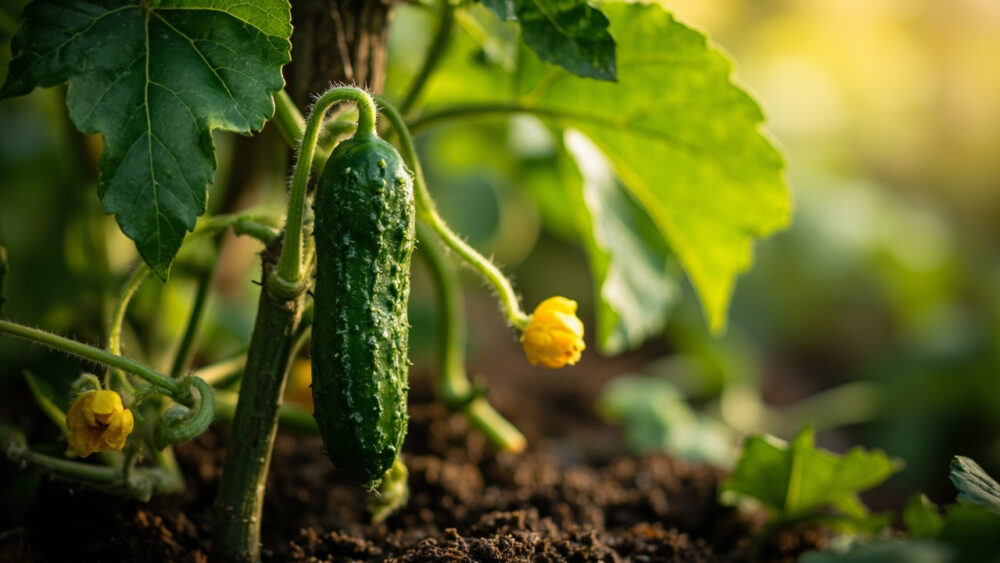
Here’s the sign people panic over: the first flowers falling off without producing fruit. That’s not disease and it’s not failure. Cucumbers produce male flowers first, sometimes for a week or two, before female flowers (the ones with a tiny cucumber-shaped bulge behind the petals) show up and get pollinated. It’s normal and it resolves itself.
The real threats worth watching for:
- Powdery mildew: white, dusty patches on leaves in humid weather. Improve airflow with proper spacing and trellising, and treat early with a fungicide labeled for powdery mildew, following the label exactly.
- Cucumber beetles: small striped or spotted yellow beetles that chew leaves and spread bacterial wilt. Row covers early in the season, removed once flowers open for pollination, are the best prevention.
- Bacterial wilt: sudden collapse of a vine that was fine yesterday. There’s no cure once it sets in; pull and discard the plant so it doesn’t spread.
- Blossom end issues and bitterness: almost always inconsistent watering, not a soil deficiency.
Handle these early and most seasons stay boring in the best way.
Which brings us to the moment this whole guide has been building toward.
When and How to Harvest Pickling Cucumbers
This is where most pickling attempts actually fail, not in the jar but on the vine. Pick pickling cucumbers at 2 to 4 inches long for whole small pickles, or up to 5 to 6 inches for spears and chips. Check plants daily once flowering starts, because in warm weather a cucumber can grow from pickle-sized to baseball-sized in a single day.
Look for firm, bright green skin with small bumps and no yellowing. Yellowing means overripe, and overripe pickling cucumbers turn bitter and seedy, no amount of vinegar fixes that.
Harvest by snapping or cutting the stem just above the fruit rather than twisting, which can damage the vine. Frequent picking, every 1 to 2 days at peak, actually signals the plant to keep producing more flowers. Let fruit sit too long and the plant slows down, thinking its job is done.
Most varieties reach first harvest 50 to 60 days after sowing, and a healthy plant will keep producing for 4 to 6 weeks if you stay on top of picking.
Everything up to now has been leading to the one thing worth saving.
Pickling Cucumbers at a Glance
- When to plant: after soil hits 65 to 70°F and nights stay above 50°F, roughly 1 to 2 weeks after last frost.
- Spacing: 12 inches apart on a trellis, or 24 to 36 inches apart if left to sprawl.
- Planting depth: ½ to 1 inch for seeds, same depth as the pot for transplants.
- Watering: 1 to 1.5 inches per week, consistent, never let soil dry out and rebound.
- Days to harvest: 50 to 60 days from sowing, then 4 to 6 weeks of continuous production.
- Harvest size: 2 to 4 inches for whole pickles, up to 6 inches for spears.
- Watch for: powdery mildew, cucumber beetles, bacterial wilt, and bitterness from uneven watering.
Pick a real pickling variety, water on a schedule instead of a whim, and check the vines every single day once flowering starts.
Do those three things and the jars of pickles take care of themselves.