The fastest way to narrow 15 sweet potato varieties down to one is deciding what you actually want out of the harvest: dry and starchy for baking, moist and sweet for casseroles, or ornamental foliage with edible roots as a bonus. That single choice eliminates half this list immediately. Best sweet potato varieties for a Southern market grower and best sweet potato varieties for a short-season backyard bed are often not the same plants at all.
Most beginners grab whatever slip is labeled “sweet potato” at the garden center, which is usually a standard orange-fleshed type bred for shelf life and yield, not necessarily flavor. There is nothing wrong with it, but it is picking for the wrong reason if what you actually wanted was a dry, nutty roaster or a purple-fleshed variety with real antioxidant color. Meanwhile there is one old-fashioned white-fleshed type experienced growers keep quiet about because it outproduces everything else in poor soil and nobody else is growing it.
Number 13 on this list is the one most people get completely wrong, buying it expecting a sweet dessert potato and getting something closer to a starchy baking potato instead. Keep scrolling. The last few entries and the simple method for choosing your own variety, based on space, climate, purpose, and how much fuss you want to deal with, are waiting at the bottom.
The Classic Orange-Fleshed Varieties
These are the sweet potatoes most people picture, and for good reason, they are reliable, sweet, and widely adapted.
1. Beauregard
The default commercial variety for a reason: Beauregard produces heavily even in mediocre soil, matures in about 90 to 100 days, and stores well. Flesh is deep orange, moist, and sweet. It is the safe first choice for anyone growing sweet potatoes for the first time.
2. Covington
A refinement on Beauregard with better skin color: Covington has rose-copper skin and deep orange flesh with a slightly drier texture that holds up well in fries and roasting. It needs a full 100 to 110 days of warm soil to size up properly, so it suits longer growing seasons better than short ones.
3. Georgia Jet
The one to plant if your season runs short: Georgia Jet matures in as little as 90 days and tolerates cooler soil at planting time better than most. Flesh is sweet and moist, vines are vigorous, and it is a strong choice for northern gardeners pushing the limits of what sweet potatoes can handle.
4. Centennial
An older variety still worth growing for its carrot-orange flesh and smooth texture: Centennial is a heavy, reliable producer with roots that size up uniformly, which matters if you hate digging up a plant that gave you one giant root and six stubs.
Those four cover the flavor most people expect, but not every gardener wants sweet at all.
Dry, Starchy, and White-Fleshed Types
If dessert-sweet is not what you are after, these bake up drier and denser, closer to a russet potato in texture.
5. O’Henry
A white-skinned, cream-fleshed sport of Beauregard: O’Henry has the same vigorous growth habit but milder, less sugary flesh. It roasts up fluffy rather than syrupy, which makes it a good pick for people who find orange sweet potatoes cloying.
6. Nancy Hall
A moist-fleshed heirloom with a custardy, almost pineapple-like flavor when baked: Nancy Hall is not a heavy yielder compared to modern hybrids, but its flavor is distinct enough that home growers keep it in circulation. It needs a long, warm season to perform.
7. White Triumph
The quiet workhorse experienced gardeners keep growing in poor or sandy soil: White Triumph produces reliably where richer soil would push modern varieties toward all vine and no root. Flesh is dry, starchy, and mild, closer to a baking potato than a candied yam. It is not showy, but it is dependable.
Dry-fleshed types earn their keep in the kitchen, but color is where the next group really shows off.
Purple and Colorful Specialty Types
These varieties trade some yield for pigment, flavor complexity, or both.
8. Stokes Purple
Deep purple flesh from skin to core: Stokes Purple has a firm, dense texture and a mildly sweet, slightly nutty flavor that holds its color even after cooking. It yields respectably but generally less than Beauregard, and it appreciates a full 110-day season.
9. Okinawan (Purple Sweet Potato)
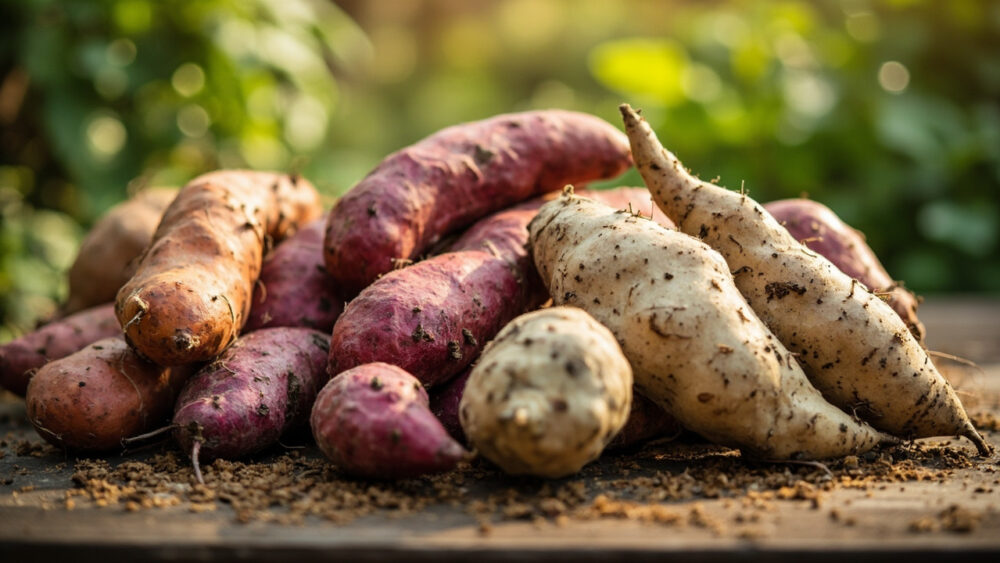
Pale, unassuming tan skin hiding vivid purple flesh: Okinawan sweet potatoes are sweeter and starchier than Stokes Purple, prized in Hawaiian and Japanese cooking. They want warm soil and a long season, and they sulk in cool climates.
10. Purple Majesty
Bred more for looks than yield: Purple Majesty has purple skin and purple flesh with a drier texture than most dessert types. It is a fine choice for a gardener who wants color on the plate as much as flavor, but do not expect Beauregard-level harvests from it.
Color is one kind of specialty, but some sweet potatoes are grown for their leaves as much as their roots.
Ornamental and Dual-Purpose Vines
These varieties earn a spot in flower beds and containers, with edible roots as a legitimate bonus rather than an afterthought.
11. Blackie
The near-black, deeply lobed foliage variety used in ornamental containers everywhere: Blackie is grown mostly for its dramatic leaf color, but it does produce edible tubers, usually smaller and less sweet than dedicated food varieties. Treat the harvest as a curiosity, not the main event.
12. Margarita (Ipomoea batatas ‘Margarita’)
Chartreuse, heart-shaped foliage that lights up hanging baskets: Margarita is another ornamental-first sweet potato vine, thriving in full sun to light shade and trailing aggressively over container edges. Its roots are edible but rarely worth digging for flavor.
13. Japanese Sweet Potato (Satsuma-imo type)
Purple-red skin with pale, almost white flesh that bakes up dry and dense, not sweet and syrupy: this is the variety most people buy expecting dessert-level sweetness and are surprised by, because the flavor is closer to chestnut than candy. Give it a long warm season and it rewards you with a genuinely different eating experience, but know what you are planting before you commit a whole bed to it.
Ornamentals and specialty types cover looks and novelty, but a couple of workhorse varieties still deserve a place on any serious list.
Reliable All-Around Performers
Rounding out the list, these are varieties that consistently deliver without asking much in return.
14. Jewel
A classic orange-fleshed variety bred for consistency and good storage: Jewel resists some of the soil-borne diseases that plague sweet potato beds over time, making it a solid choice if you are replanting the same ground year after year.
15. Vardaman
A compact, bush-type sweet potato for small spaces: Vardaman produces short, restrained vines rather than the usual sprawl, which makes it a genuinely good option for raised beds or gardeners short on room. Flesh is deep orange and sweet, yield is smaller than sprawling varieties but respectable for the footprint.
How to Choose the Right One
- Start with space: if you are working with a small raised bed or container, pick a compact type like Vardaman rather than a sprawling vine that needs 3 to 4 feet per plant.
- Match your season length: count the warm days from your last frost to your first fall frost; under 100 warm days, favor Georgia Jet or Beauregard, over 120, you can grow almost anything on this list including the slower purple types.
- Decide on purpose before flavor: baking and candying want moist orange flesh, savory roasting wants dry white or Japanese types, and containers or beds wanting color want the ornamental vines.
- Check your soil: loose, sandy, well-drained soil grows the smoothest roots; heavy clay grows forked, misshapen ones regardless of variety, so raised beds or mounded rows help everything on this list perform better.
- Be honest about your care appetite: heirlooms like Nancy Hall reward patience with unique flavor but yield less, while modern hybrids like Covington and Jewel forgive more mistakes and produce more pounds per plant.
- Buy certified slips when you can: disease-free starts matter more to final yield than the variety name on the label.
Fifteen varieties is plenty of choice, but the right one was always going to come down to your season, your space, and what you actually plan to do with the harvest.
Pick one, get slips into warm soil after your last frost has passed, and let the vines do the rest.