Learning how to grow horseradish comes down to one core truth: this plant wants to be left alone in deep, loose soil for a full season, and almost every problem gardeners hit comes from planting it in the wrong spot or expecting a summer harvest. Plant root cuttings called crowns 2 to 4 weeks before your last frost, 2 to3 inches deep, at a 45 degree angle, and give it a full 140 to 160 days before you dig. Skip ahead if you want, the roots do not read the calendar the way you think they do.
Here is what trips people up. Most gardeners plant horseradish in a regular garden bed, and by August it has walked ten feet in every direction through underground roots you never touched.
There is also a harvest sign almost everyone misreads, and a feeding mistake that grows you a beautiful plant with a bland, woody root. All of it gets answered below, and I put a save-able Horseradish at a Glance card at the very bottom so you can skip back to it all season.
When to Plant Horseradish
Plant in early spring, about 2 to 4 weeks before your last expected frost, as soon as the soil can be worked and is no longer waterlogged. Horseradish tolerates real cold and light frost fine once it is in the ground.
Soil temperature matters less here than with heat-loving crops, but anything above roughly 45°F at planting depth is fine. In zones 3 through 9, spring planting is standard.
Warmer zones (8 and 9) can also plant in fall for a late spring harvest the following year, since the plant needs a cold spell to break dormancy properly anyway.
Get the timing right and the next decision, where you actually put it, matters even more.
Choosing the Spot and Prepping the Soil
This is the decision that makes or breaks the whole attempt. Horseradish is a perennial that spreads aggressively from root fragments, and once it is established in open garden soil, total removal can take years.
Pick a spot where it can stay for good, ideally against a fence, in a dedicated bed, or better yet inside a bottomless container or large tub sunk into the ground to contain the roots.
The plant wants full sun to light shade and deep, loose, well-drained soil, at least 12 to 15 inches deep with no rocks or heavy clay to deflect the root.
Work in a couple inches of compost before planting, but go easy on nitrogen-rich amendments for now, that mistake comes back to bite you later.
Once the bed is loose and deep enough for a root to run straight down, you are ready to actually plant it.
Planting Horseradish Step by Step
Horseradish grows from root cuttings, called crowns or sets, not seed. You can buy dormant crowns or use a piece cut from an existing root with a bud visible on the top end.
Steps to plant
- Prep the crown: trim the top end flat and the bottom end at an angle so you can tell which way is up, since planting upside down delays or kills growth.
- Dig the hole: a narrow hole or furrow 2 to 4 inches deep.
- Set the angle: place the crown at a 45 degree angle, angled end (bud) up and pointing toward the soil surface, flat end down.
- Space generously: 18 to 24 inches apart if planting more than one, rows 30 inches apart.
- Cover and firm: backfill so the top of the crown sits about 1 to 2 inches under the surface, then water in well.
New growth usually shows in 2 to 4 weeks depending on soil temperature.
Once it is in the ground, the real work shifts to what you do, or mostly do not do, for the rest of the season.
Watering and Feeding Through the Season
Horseradish wants consistent moisture, not soggy soil. Water when the top 2 inches of soil dry out, roughly 1 inch of water a week during dry stretches, more during summer heat.
Here is the feeding mistake that quietly ruins flavor and texture. Heavy nitrogen feeding pushes lush top growth and a fast-growing but fibrous, watery, mild-tasting root, which is the opposite of what you actually want from horseradish.
If your soil was decently amended at planting, skip additional fertilizer entirely. If it needs a boost, use a low-nitrogen, phosphorus-and-potassium-leaning feed once in early summer at most.
Some growers pull soil away from the crown in midsummer, remove the smaller side roots that sprout from the main root, then re-cover it, a step called “wrestling” that some say produces a thicker single root. It is optional, not required.
Feeding and watering are the easy part. Knowing what actually goes wrong out there is where most guides fall short.
Problems That Actually Show Up
Horseradish is genuinely low-trouble compared to most vegetables, but a few things are worth watching for.
Flea beetles chew small round holes in the leaves, mostly a cosmetic issue since the plant is growing a root, not a leaf crop, but heavy infestations weaken the plant. Floating row cover early in the season heads this off without any spray.
White rust and leaf spot fungal issues show up as pale blistering or dark spots on leaves in humid, wet summers. Improve airflow, avoid overhead watering late in the day, and remove badly affected leaves. If a fungal problem is severe enough to warrant a fungicide, choose one labeled for the issue and follow the product label exactly.
The bigger long-term problem is not a pest at all, it is the plant itself escaping its bed through root fragments left in the soil.
Once you know what to watch for, the only real question left is when to dig.
When and How to Harvest Horseradish
Horseradish matures in about 140 to 160 days, and the sign everyone misreads is the foliage. A lot of gardeners wait for the leaves to look lush and impressive, thinking bigger top growth means a bigger root.
The real signal is the opposite. Wait until after one or two hard fall frosts have knocked the leaves back and killed the top growth, usually late fall into early winter depending on your zone. Cold actually concentrates the pungent flavor in the root.
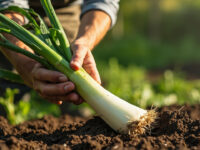
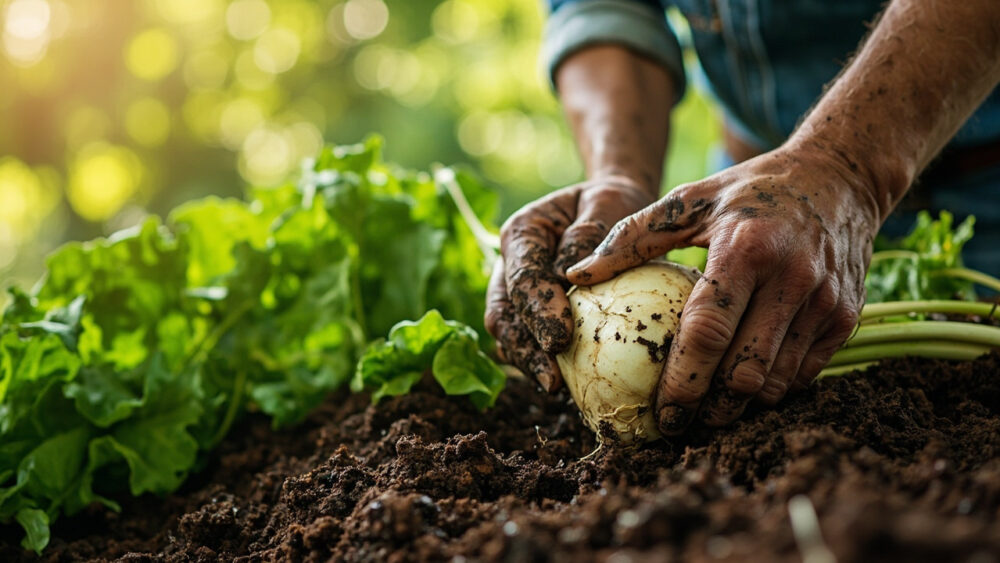
Dig carefully with a fork well outside the crown to avoid slicing the root, and lift the whole thing gently since horseradish roots run deep and brittle side roots snap off easily. The main root should be thick, firm, and pale, roughly 8 to 14 inches long at full size.
Save a few smaller side roots with a growing point to replant immediately for next year’s crop, since horseradish does not come back reliably true from seed and most gardeners just replant crowns.
You can also leave roots in the ground over winter in most zones and dig as needed, since cold soil keeps them in good condition.
That is the whole cycle from crown to root, and the quick-reference card below is what to save before you head out to plant.
Horseradish at a Glance
- When to plant: 2 to 4 weeks before your last frost in spring, or fall in zones 8 to 9.
- Depth and angle: crowns 2 to 4 inches deep, set at a 45 degree angle, bud end up.
- Spacing: 18 to 24 inches between plants, rows 30 inches apart.
- Soil and site: loose, deep, well-drained soil in full sun, in a contained bed since it spreads aggressively.
- Water: about 1 inch a week, consistent moisture without soggy ground.
- Feeding: little to none, heavy nitrogen makes fibrous, mild-flavored roots.
- Harvest: after one or two hard frosts kill the foliage, around 140 to 160 days from planting, roots 8 to 14 inches long.
The plant does most of the work itself once it is in the right spot. Give it room, poor-to-average feeding, and a frost before you dig, and you will get a root worth the trouble.