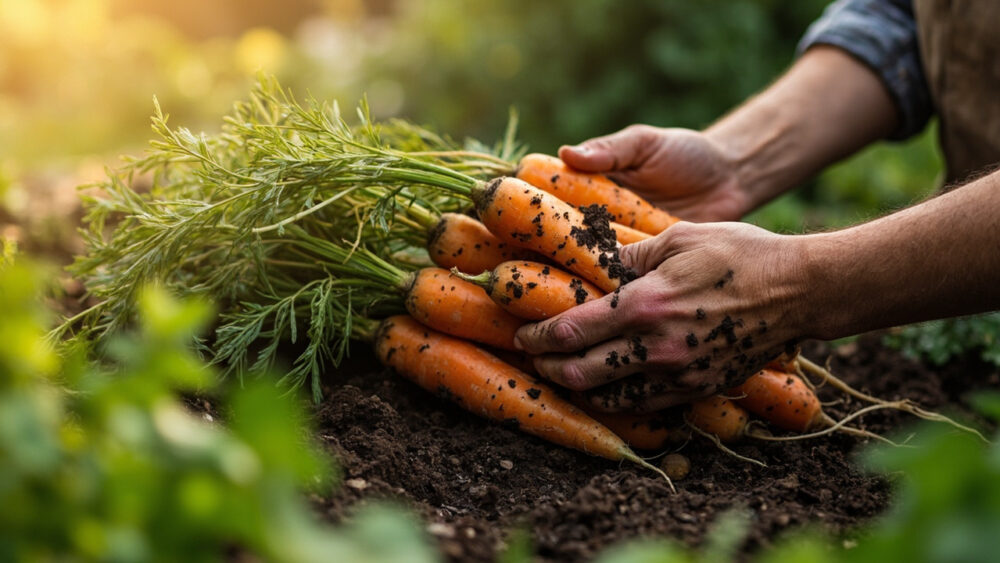
The best way to store carrots is to cut the tops off, leave them unwashed, and keep them cold and humid, either buried in damp sand in a root cellar or sealed in a perforated bag in the crisper drawer. Done right, carrots hold for four to five months in a cellar and three to four weeks in the fridge, sometimes longer. Done wrong, they go rubbery, sprout hairy little roots, or turn slimy in under a week.
Most of that failure traces back to one habit almost everyone brings from the grocery store: tossing carrots in the crisper still wearing their green tops. That single mistake drains moisture out of the roots faster than anything else you can do to them.
There is also a sign people misread constantly, a soft white fuzz that shows up on stored carrots and gets mistaken for mold when it is actually something else entirely. And if you grew your own, there is an honest answer coming about whether you really need to cure them like a squash or an onion.
Stick with me through the method, the timing, and the mistakes, because the save-able Carrots at a Glance card at the very bottom sums up everything you need for your phone.
The Method That Actually Works
Start by removing the tops, cutting them off about half an inch above the shoulder of the root. Leave the tops on and the greens will keep pulling moisture out of the carrot for weeks, which is exactly why bagged carrots with feathery tops still attached go limp so fast.
Do not wash them yet if you are going long-term storage. A thin coat of soil actually helps protect against moisture loss and rot.
For a root cellar or an unheated garage that stays between 32 and 40 F, layer the carrots in a box or bucket of barely damp sand, peat, or sawdust, making sure no two roots touch. For the fridge, brush off loose dirt, leave them dry to the touch, and seal them in a perforated plastic bag in the crisper.
Next comes the part where most people guess wrong about how long any of this actually lasts.
How Long Each Method Really Keeps
If you assumed the fridge and the cellar give you roughly the same window, that assumption is what leads to a lot of wasted carrots. Cold storage and refrigeration are not the same game.
On the counter, carrots are done in days, a week at most, especially in a warm kitchen. In the fridge, unwashed and bagged, expect three to four weeks, sometimes six if your fridge runs cold and humid. In sand in a true root cellar around 32 to 40 F with high humidity, carrots easily go four to five months, occasionally into early spring. Frozen, blanched and packed well, carrots hold a solid ten to twelve months with barely any quality loss.
Fresh, un-cured, unwaxed carrots from your own garden behave differently than the shrink-wrapped ones from the store, and that difference shows up fastest in the freezer.
Freezing: The Step Almost Everyone Skips
Raw carrots frozen straight from the garden turn mushy and lose flavor within a couple months. The fix is blanching, and skipping it is the second-biggest mistake behind leaving the tops on.
Peel and slice or chop the carrots to your preferred size, then boil them for two to three minutes, no longer. Immediately plunge them into ice water for the same amount of time to stop the cooking.
Drain thoroughly, pat dry, and spread the pieces on a tray to freeze solid before bagging. That single step keeps the texture firm instead of watery once thawed.
Skip blanching and you are not really storing carrots, you are just delaying the moment you throw them out.
Do Carrots Need to Be Cured?
Here is the honest answer to the question you were probably about to ask: no, not the way you cure onions, garlic, or winter squash. Carrots do not need days of drying time in the sun or a warm shed.
What they do need is a short rest, a day or two in a cool, shaded, well-ventilated spot after harvest, just enough for any cut or nicked ends to dry over slightly. That small pause reduces rot once they go into sand or the fridge.
Rush straight from garden to sealed bag with wet, freshly washed roots and you are setting up the exact conditions mold prefers.
That brings us to the sign almost every home gardener misreads on stored carrots.
The Sign Everyone Gets Wrong
Pull a carrot out of cold storage after a few weeks and you might see a fine, white, hairy fuzz along the root, especially near cut ends. Most people assume that is mold and pitch the whole batch.
It is usually not mold. It is a natural response called root regrowth, tiny hair roots trying to sprout because the carrot is sitting in high humidity, which is actually a sign your storage conditions are working. Rinse it off and the carrot underneath is almost always fine to eat.
True mold looks different: fuzzy patches in blue, green, gray, or black, often with a sour, musty smell and a soft, sunken spot underneath. That carrot goes in the compost, not the pot.
Knowing the difference between the two saves more carrots than any storage trick on this list.
Real Signs Carrots Have Turned
Set aside the white fuzz question and look for the signs that actually mean spoilage. A carrot that has genuinely gone bad tells you plainly.
- Sliminess: a wet, slick film on the surface means bacterial breakdown has started.
- Soft or mushy spots: firm carrots stay firm, any give under light pressure means rot underneath.
- Strong sour or ammonia smell: fresh carrots smell earthy, spoiled ones smell sharp and off.
- Dark, sunken patches: especially near the ends, a sign rot is spreading inward.
- Excessive sprouting: a little hair root is fine, thick green shoots mean the carrot has been in storage too long.
Most of these problems trace back to a short list of avoidable mistakes, which is where things really go wrong for most people.
The Mistakes That Ruin a Whole Batch
Leaving the tops on tops the list, since the greens siphon moisture and nutrients from the root for as long as they stay attached, even sitting loose in a fridge drawer.
Washing before long-term storage is a close second. Wet skin invites rot in sand or a cellar, even though a quick rinse is fine right before cooking.
Piling carrots so they touch in sand or a bin lets one rotting root spread trouble to its neighbors fast. Space them so no two are in contact.
Storing near apples or pears is an easy one to miss. Those fruits release ethylene gas, which makes stored carrots turn bitter over time.
Ignoring humidity finishes the list. A cellar or crisper that runs too dry shrivels carrots even if the temperature is perfect.
Fix those five habits and almost any storage method you choose will actually work the way it is supposed to.
Carrots at a Glance
- Best short-term storage: unwashed, tops removed, sealed in a perforated bag in the fridge crisper, good for three to four weeks.
- Best long-term storage: layered in barely damp sand in a cellar or unheated space at 32 to 40 F, good for four to five months.
- Freezer storage: blanch two to three minutes, cool in ice water, freeze on a tray before bagging, good for ten to twelve months.
- Prep before storing: cut tops off, skip washing until you’re ready to cook, let cut ends dry for a day or two before burying in sand.
- Harmless sign: fine white hair roots or fuzz, just rinse off before eating.
- Real spoilage signs: sliminess, soft spots, sour smell, dark sunken patches.
- Keep away from: apples and pears, which speed up bitterness through ethylene gas.
Cut the tops, skip the wash, and keep them cold and humid. Get those three right and everything else about storing carrots takes care of itself.