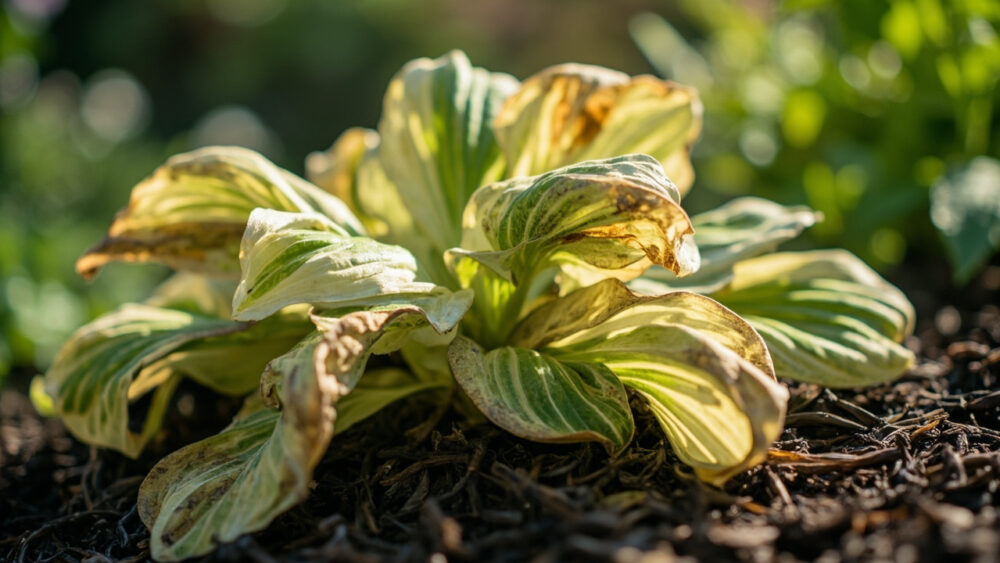
Hostas wilting in hot weather is usually just moisture stress, and the fix is a deep watering session, an inch or so of water applied slowly at the base, followed by a check of the soil a few inches down. If the ground is already damp and the plant is still drooping, the cause is something else entirely, and that’s where most people get stuck.
Everyone blames the sun first. Sometimes that’s right, but hostas can wilt from too much water just as easily as too little, and the two look almost identical from three feet away. There’s also a slower kind of wilt, the kind that shows up on one side of the plant only, that points to something happening underground where you can’t see it.
The detail that tells you which cause you’re actually dealing with is usually right at the base of the plant or on the underside of a leaf, and I’ll walk you through exactly where to look. Stick around for the honest recovery odds too, because not every wilting hosta bounces back, and I’ll tell you straight which ones do. Save-able diagnosis checklist is waiting at the bottom, run it at the plant in about two minutes.
Causes of Wilting Hostas, Most to Least Likely
1. Underwatering or Heat Stress
This is the everyday cause, especially in the first hot stretch of summer or right after transplanting. Confirm it by pushing a finger two to three inches into the soil near the crown. If it’s dry and crumbly, and the wilting is worst in the afternoon but the plant perks up somewhat by morning, this is your answer.
Fix it with a slow, deep soak, about an inch of water, rather than a quick daily sprinkle. Add two to three inches of mulch to hold moisture and keep the roots cooler.
But if the soil’s already wet and the plant still looks limp, don’t reach for the hose again.
2. Overwatering or Poor Drainage
Soggy soil suffocates hosta roots, and a root system that can’t breathe can’t take up water, so the plant wilts even though it’s sitting in a puddle. Confirm it by checking if the soil stays wet and heavy for days after rain, or if the pot has no real drainage. Leaves may look dull, yellowish, and soft rather than crisp before they droop.
Fix it by holding off watering until the top few inches actually dry out, and improve drainage long term by working compost into heavy clay or moving the plant to a raised spot. In containers, make sure the drainage holes aren’t clogged.
If the crown itself feels mushy when you press it, skip ahead to the rot section below, because that’s a different problem.
3. Crown Rot or Root Rot
This is the one that gets misdiagnosed as drought the longest, because the leaves wilt and brown just like a thirsty plant. Confirm it by gently digging near the crown and checking for a soft, mushy, foul-smelling base instead of a firm one. Leaves may pull away from the crown with almost no resistance.
There’s no fixing rot that’s already advanced through the crown. If you catch it early, on just one or two stems, cut away the affected tissue with a clean blade, improve drainage immediately, and stop watering until the soil dries out.
A hosta with a fully mushy crown is usually not coming back, and that’s worth knowing before you spend another month nursing it.
4. Vine Weevil or Root-Feeding Pests
Vine weevil larvae chew through hosta roots below the soil line, and a plant with half its roots gone wilts no matter how much you water it. Confirm it by checking for notched, scalloped edges on the leaves (adult weevil feeding) combined with wilting, then scratching into the top few inches of soil to look for small, cream colored, C-shaped larvae.
Fix it by removing and destroying any larvae you find by hand, and consider a nematode-based biological control applied to the soil, following the product label exactly. Severely infested plants often need to be lifted, have their roots rinsed and inspected, and be replanted in fresh soil.
Wilting from pests below ground rarely shows up alone, so check for other clues before settling on this diagnosis.
5. Transplant Shock
A hosta that was just divided, moved, or bought from a nursery pot often wilts hard for the first week or two, even with perfect watering. Confirm it by checking the timeline: if the wilting started within days of planting or dividing, this is almost certainly it.
Fix it with consistent moisture, a bit of afternoon shade for the first couple of weeks even if the spot is meant to be sunnier, and patience. Don’t fertilize a stressed, newly moved plant, it needs to settle roots first, not push new growth.
Most transplant-shock wilting resolves on its own, which is more than you can say for the next cause.
6. Foliar Nematodes or Disease
Less common, but worth ruling out if leaves wilt in streaky, discolored patches between the veins rather than as a whole-leaf droop. Confirm it by looking for yellow-to-brown streaks running parallel to the leaf veins, worse by late summer, sometimes with a slightly collapsed, water-soaked look to the streaked tissue.
There’s no cure for foliar nematodes. Remove and destroy affected leaves, avoid overhead watering that splashes water between plants, and don’t divide or share infected clumps, since the pest spreads through moisture and plant contact.
Once you’ve got a short list of suspects, the next step is comparing exactly where and how the wilting shows up.
How to Tell the Causes Apart
Where it starts matters most. Drought stress wilts the whole plant fairly evenly. Rot and pest damage often show up on one side or a few stems first, because the damage underground isn’t symmetrical.
Old leaves versus new growth is another tell. Transplant shock and heat stress hit older, larger leaves hardest since they lose the most water. Rot tends to take out whole shoots, old and new alike, starting from the crown outward.
Feel the crown. This is the single fastest test in the whole diagnosis, and it’s the one most people skip.
Will It Recover?
Drought and transplant stress recover well, usually within a few days to two weeks of consistent, correct watering. These are the good-news causes.
Overwatering recovers if you catch it before the roots rot, typically within one to two weeks of drier soil and better drainage. Give it a fair trial before giving up.
Crown rot is the one to be honest about. A plant with a fully soft, collapsed crown is not coming back, and replanting the same spot with a new hosta without fixing the drainage just repeats the problem. Pest damage recovers slowly, often needing a full season to rebuild the root system, so judge it by next year’s growth, not this week’s.
Recovery odds are only half the story, prevention is what keeps you from running this diagnosis again next July.
How to Keep It From Happening Again
Plant hostas in soil that drains but doesn’t dry out fast, worked with compost, and mulch every spring to buffer both moisture extremes. That single habit prevents most of the causes above.
Water deeply once or twice a week rather than lightly every day, so roots grow down instead of staying shallow near the surface where heat and drought hit hardest.
Check new nursery plants for weevil larvae or notched leaves before you plant them, and give any newly moved hosta two weeks of shade and steady moisture no matter the season.
Run through the checklist below next time a hosta droops, it takes less time than a trip back to the garden center.
Diagnosis Checklist
- Check soil moisture two to three inches down at the crown: dry means water stress, wet and heavy means drainage or overwatering.
- Press the crown gently: firm means the plant is structurally fine, soft or mushy means rot, act fast.
- Look at leaf edges for notches or scalloping: present means check the soil for C-shaped grub larvae.
- Check whether wilting is whole-plant or one-sided: whole-plant points to water or heat, one-sided points to rot or root damage.
- Check the timeline against recent planting or dividing: within two weeks of transplant means shock, not disease.
- Look for yellow-brown streaks between leaf veins: present means foliar nematodes, remove those leaves and stop overhead watering.
- If soil and crown both check out fine, water deeply once and recheck the plant in twenty-four hours before assuming the worst.
Most wilting hostas are telling you something simple about water, not something fatal.
Give the checklist two minutes at the plant, and you’ll know which one you’re dealing with before you even reach for a shovel.