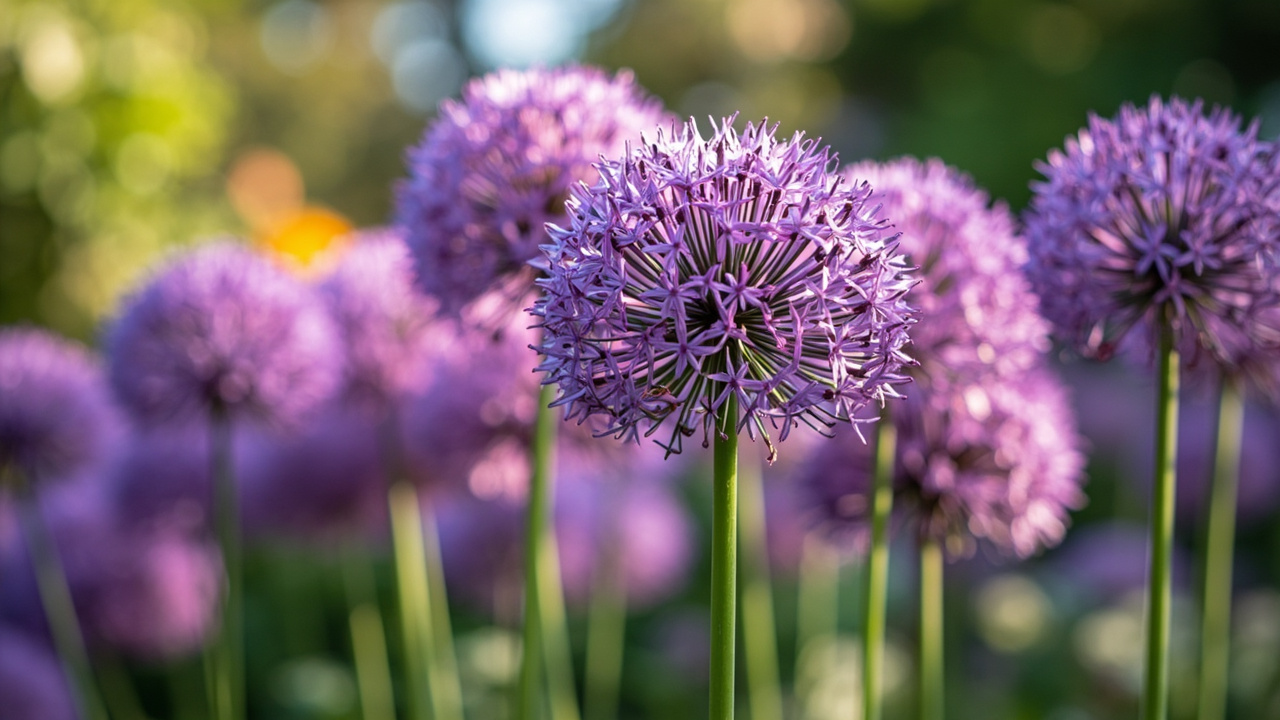
Most ornamental alliums bloom in late spring through early summer, roughly May through June in most of the country, with a few types stretching the show into July. Each flower head holds for about three to four weeks before it fades and dries into that papery seed head everyone photographs. The exact timing when your allium blooms depends on which type you planted, your zone, and how the season is running, which is the part most people never check.
There is also a sizing trick almost nobody uses on purpose: the depth and spacing you gave the bulb at planting time is quietly deciding how tall and how many flowers you get this year. And if your allium never opened at all this spring, the reason is almost never what you think first.
Stick around for the full quick-reference card at the bottom. It is built to save and check against your own bed before you decide anything is wrong.
The Real Bloom Window, and Why It Is a Range
Allium bloom time splits by type more than by exact date. Early small species like Allium moly or golden garlic can open in mid to late spring. The big drumstick and globe types, Allium giganteum and its relatives, typically peak in late spring into early summer.
Nodding onion and other later species push into summer, sometimes July. So “when do allium bloom” really has three answers stacked on top of each other depending on what is in the ground.
A single bulb’s flower head lasts three to four weeks before color fades, though the dried seed head often stays attractive for weeks after that.
Knowing your type is step one, but your zone and this year’s weather are what actually move the date around.
What Actually Controls the Timing
Allium bulbs need a real winter chill to bloom well, so your USDA zone sets the general season: colder zones bloom later into early summer, milder zones can open a few weeks earlier in spring.
Soil temperature matters more than the calendar. Allium wants to wake up once soil warms into the mid 50s Fahrenheit, so a slow, cold spring pushes bloom back regardless of the date on your seed packet or nursery tag.
Planting depth and timing from last fall also echo forward. Bulbs planted shallow, planted late, or planted in soil that stayed too wet over winter often bloom later and smaller, if they bloom at all.
That soil-temperature detail is also the key to reading your own yard instead of guessing from a calendar date.
How to Read Your Own Yard Instead of a Calendar
Skip the date and check the plant. Once you see a tight green bud sheath rising above the foliage, bloom is usually one to two weeks away.
Foliage that is already yellowing before any bud appears is a different story, and it usually means the bulb bloomed weak or skipped this year, not that bloom is still coming.
South-facing beds and raised beds warm faster and bloom earlier than low, shaded, or heavy-clay spots by as much as two to three weeks in the same yard.
If your neighbor’s allium is blooming and yours is not, sun exposure and soil drainage are the first two things to compare, not the variety tag.
How to Get More Blooms, or a Longer Show
More flowers next year starts with fall planting depth: set bulbs about three times their own height deep, deeper in cold zones, and give big types 8 to 12 inches of space so they are not competing for food underground.
Full sun is non-negotiable for a strong bloom count. Six or more hours a day produces noticeably more flower heads than a partly shaded spot, where you often get foliage and few or no blooms.
To stretch the season rather than just the count, plant an early, mid, and late allium type together. That alone can turn a three-week show into a bloom window covering eight to ten weeks.
Feed lightly in early spring with a balanced bulb fertilizer as shoots emerge, then let the foliage die back fully before cutting it, since that is how the bulb recharges for next year’s flowers.
All of that is next year’s bloom, though, so let’s deal with the allium that simply did not show up this spring.
Why Your Allium Isn’t Blooming
If you assumed a no-show allium just needs more water, that guess is usually backwards. Allium bulbs rot in soil that stays wet, and rot is one of the most common reasons a planted bulb never sends up a flower at all.
The other frequent culprits, in order of how often gardeners hit them:
- Too young or too small a bulb: newly divided offsets often need one to two seasons of foliage-only growth before they bloom.
- Not enough sun: partial shade gives you leaves, not flowers, on most allium types.
- Foliage cut too early last year: that starves the bulb of the energy it needed to form this year’s bud.
- Bulb planted too shallow: shallow bulbs are also more prone to heaving and drying out over winter.
None of these mean starting over except true rot, which does mean pulling and replacing the bulb.
Once you know why it skipped a year, the aftercare below is what keeps a good bloom going as long as possible.
Deadheading and Aftercare That Extend the Show
You can deadhead spent allium heads for a tidier bed, and it will not hurt the bulb. But leaving a few heads to dry in place gives you that architectural seed-head look many gardeners actually plant allium for in the first place.
The one aftercare rule that really matters is leaving the foliage alone until it yellows and goes limp on its own, usually four to six weeks after bloom ends. Cutting green foliage early is the single most common mistake that shrinks next year’s bloom.
Stop watering once foliage yellows. Allium bulbs want a dry summer rest, and soggy summer soil is a fast way to lose bulbs to rot before next spring.
Handle the bulb the same way each year and the bloom you get next spring will match the bulb you fed this year, not the other way around.
Allium: Quick Reference
- Bloom window: late spring through early summer for most types, with early species opening sooner and nodding onion types running into July.
- How long each flower lasts: about three to four weeks per head, plus extra weeks of dried seed-head interest.
- What sets the exact date: your zone’s chill, plus soil temperature reaching the mid 50s Fahrenheit in spring.
- Sign bloom is close: a tight bud sheath rising above the foliage, usually one to two weeks before opening.
- Main causes of no bloom: bulb rot from wet soil, too little sun, a too-young bulb, or foliage cut early the previous year.
- Aftercare rule: let foliage yellow and die back fully before removing it, and stop watering once it does.
Match your allium type to this card and the timing stops feeling random.
Next spring’s bloom count is already being decided by how you treat this year’s foliage.