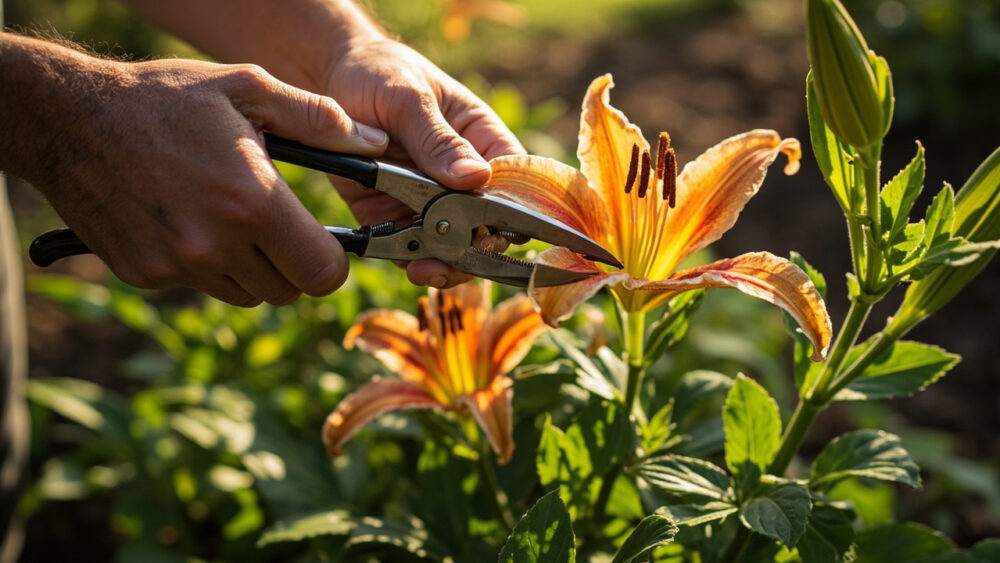
The honest answer is that you barely prune true lilies at all while they’re growing, you only deadhead spent blooms and cut back stalks after they’ve fully browned in fall. If you’re wondering how to prune lilies mid-summer to make them bushier or shorter, that instinct will cost you next year’s flowers. Lilies store next year’s bloom in the bulb through their leaves all summer, so cutting green foliage now is the fastest way to get a sad, flowerless stalk in 2027.
There’s a specific mistake almost everyone makes the first year they grow lilies, and it happens right after the last petal drops. There’s also a sign on the stalk that tells you exactly when it’s safe to cut, and most people either cut too early or leave the whole mess standing until it rots. And you’re probably about to ask whether “pruning” lilies is even the right word for what you’re doing, since it isn’t like pruning a rose or a shrub.
Stick with me through the sections below and you’ll know exactly where to cut, how much stalk to leave, and why. There’s a save-able Lilies at a Glance card at the very bottom with every number in one place.
When to Cut Lilies, and When to Leave Them Alone
There are really only two moments you touch a lily with pruners. The first is deadheading, right after each flower fades, any time from early to late summer depending on your bloom window. The second is the fall cutback, which happens only after the foliage has yellowed and browned on its own, usually four to six weeks after the last bloom.
Everything in between is hands-off. Green leaves and green stalks are still photosynthesizing, feeding energy down into the bulb for next year’s flower count. Cut them early and you’re not shaping the plant, you’re starving it.
The one exception is a stalk that’s snapped or is visibly diseased. Remove only that stalk, right at ground level, and leave every healthy neighbor standing.
Next up is the prep step that determines whether your cuts actually help the plant instead of just looking tidy.
The Tools and the One Prep Step That Matters
You need bypass pruners or a sharp, clean knife, nothing heavier. Lily stalks are fibrous but not woody, so anything that handles a thick basil stem will handle a lily.
The prep step nobody mentions is wiping your blade with rubbing alcohol between plants, especially if any of your lilies have shown streaking, mottling, or stunted growth. Lily mosaic virus and various fungal issues spread easily on pruner blades, and one infected bulb can quietly ruin a whole bed over a couple seasons.
If you see mottled or twisted new growth in spring, that plant should be dug up and discarded, not pruned and kept. There’s no cure for a virus-infected lily, and it will only spread to the ones next to it.
That’s the last of the setup, now here’s exactly where the cuts go.
Step 1: Deadhead the spent flower, not the stalk
As each individual bloom fades and shrivels, snip it off just below the flower head, right where it meets the stalk. Leave the stalk and every leaf standing. This stops the plant from wasting energy on seed production and redirects it back into the bulb.
Step 2: Leave the stalk fully green through summer
Resist every urge to shorten a lily stalk for looks once the flowers are gone. A bare green stalk with leaves is still doing real work underground. This is the stage where most people guess wrong, assuming a leggy, flowerless stalk is doing nothing, when it’s actually building next year’s bloom.
Step 3: Cut back only when the stalk has browned end to end
Wait until the entire stalk has yellowed and then browned, with leaves crisp and dry. Cut it down to an inch or two above soil level. If even a few inches near the base are still green, give it another week or two.
Step 4: Clear the debris, don’t compost diseased material
Rake up the cut stalks and dead leaves rather than leaving them to mat down over the bulb. Healthy debris can go in the compost pile, but anything that showed spotting, mold, or virus symptoms should go in the trash instead.
Once you’ve made those cuts, here’s what the bed should look like, and what tells you something’s off.
What to Expect After You Cut Lilies Back
A properly deadheaded lily keeps its foliage looking reasonably tidy through late summer, with the stalk staying upright and green until it decides on its own that the season’s over. You shouldn’t see new flower buds after a fall cutback, that part of the plant’s work is done for the year.
Below ground, nothing visible happens, and that’s the point. The bulb is quietly fattening up and forming next year’s bud inside it. A lily that got proper deadheading and a well-timed fall cutback typically comes back with the same or a slightly larger flower count the following year, assuming the bulb wasn’t stressed by drought, poor drainage, or disease.
If a stalk you cut back in fall comes up thin or blind, meaning it grows leaves but skips flowering, that’s usually a sign the bulb was cut too early the previous year, or the clump has gotten crowded and needs dividing.
Crowding brings up the mistake that quietly ruins more lily beds than bad pruning ever does.
The Mistakes That Cost You Next Year’s Flowers
Most lily disappointments trace back to one of these, and none of them are about the cut itself.
- Cutting green foliage after bloom: this is the single most common mistake, and it directly reduces or eliminates next year’s flowers since the bulb never finishes recharging.
- Braiding or folding down leaves to “tidy up”: this kinks the stalk’s vascular tissue and cuts off the same energy flow as pruning would.
- Removing the stalk in fall while it’s still partly green: give it the extra two weeks, the payoff is worth the untidy look.
- Letting clumps go three or more years without dividing: crowded bulbs compete for nutrients and stop flowering even with perfect pruning technique.
- Deadheading by pulling instead of cutting: pulling can tear the stalk below the flower and invite rot into the wound.
Fix the timing mistake alone and most lily beds bounce back within a single season.
Lilies at a Glance
- Deadhead: snip each spent flower just below the bloom, as soon as it fades, all summer long.
- Never cut: green stalks or leaves at any point during the growing season.
- Fall cutback timing: only once the entire stalk is yellow to brown and dry, usually four to six weeks after the last bloom.
- Cutback height: down to one to two inches above the soil.
- Tools: bypass pruners or a sharp knife, wiped with rubbing alcohol between plants.
- Divide clumps: every three to four years, in fall, if flower count drops or stems come up thin.
- Warning sign: mottled or twisted new spring growth means virus, dig up and discard, don’t prune and keep.
The whole job comes down to patience, not skill. Let the stalk finish its work, then cut, and your lilies will do the rest on their own next spring.