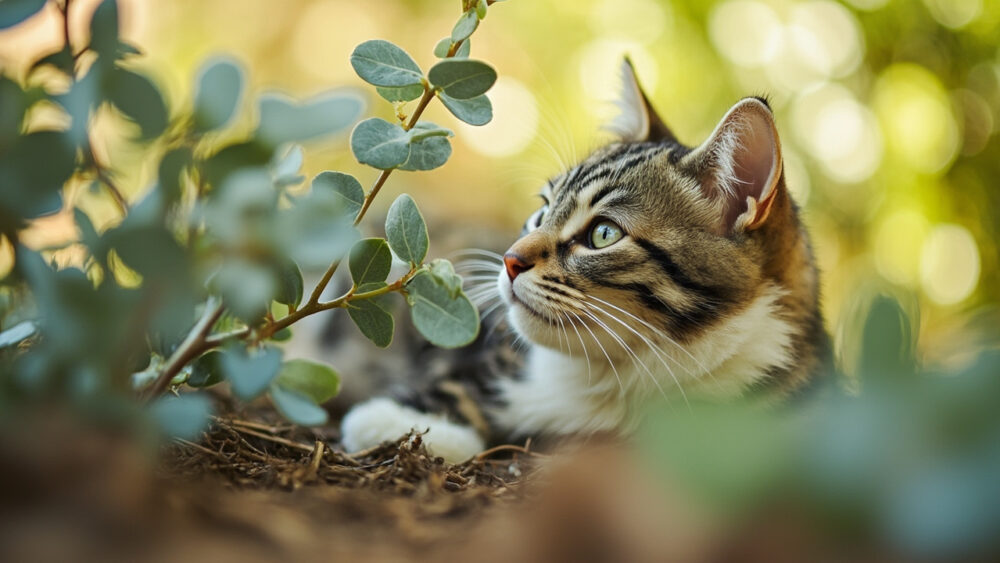
Yes, eucalyptus is toxic to cats. Every part of the plant, leaves, bark, stems, and the essential oil, contains compounds that cause problems if a cat chews, licks, or ingests enough of it. The eucalyptus oil is the bigger concern of the two, since it’s more concentrated and absorbs faster than the raw leaf.
That plain yes does not mean every cat that brushes past your eucalyptus bundle is headed for an emergency vet visit. How much matters, which form matters, and what your particular cat’s relationship with the plant looks like matters too. There’s also the question of what’s actually in your house right now, since dried eucalyptus in a wreath behaves differently than a fresh potted stem your cat can shred.
Stick with this one. Below you’ll get the signs to watch for, exactly what to do if you think your cat got into it, a few safer plants that give you the same look, and a save-able quick-reference card at the very bottom that sums up the whole answer in one glance.
Why Eucalyptus Is a Problem for Cats Specifically
Cats lack certain liver enzymes that dogs and humans use to break down some plant compounds efficiently, and eucalyptol is one of the substances they process poorly. That means a dose that a dog might shrug off can hit a cat harder.
Concentration is the real variable. A cat mouthing one leaf and immediately spitting it out is a very different event than a cat chewing through several leaves or getting eucalyptus oil on its fur, which it will then lick off while grooming.
That grooming detail is the part most owners miss entirely.
Fresh Leaves, Dried Stems, and Essential Oil Are Not the Same Risk
If you assumed a dried eucalyptus wreath hanging on the door is basically harmless because it’s not “growing” anymore, that guess is only half right. Dried leaves still contain the toxic oils, just in a less potent, less aromatic form than fresh growth. A cat would generally need to eat more dried material to get sick than fresh.
Fresh cut stems and live potted eucalyptus carry the highest risk because the oil content is at its peak and the leaves are easier for a curious cat to shred and mouth.
Undiluted essential oil is the most dangerous form by far. A diffuser, a few drops on skin or fur, or a spilled bottle a cat walks through and then licks off its paws can cause a faster, more serious reaction than chewing on leaves ever would.
Knowing which form you actually have in the house changes how urgently you need to act.
Signs That Something Is Wrong
Watch for these general signs after any known or suspected contact with eucalyptus leaves, stems, or oil:
- Drooling or repeated lip licking
- Vomiting or diarrhea
- Loss of appetite or unusual lethargy
- Wobbliness, stumbling, or apparent disorientation
- Skin irritation or redness where oil contacted the fur or paws
- Unusual breathing or a strong eucalyptus smell on the breath or coat
None of these signs are exclusive to eucalyptus poisoning, which is exactly why you don’t try to diagnose it yourself at home. They’re worth noticing and worth acting on, not worth guessing about.
Here’s what “acting on it” actually looks like.
What to Do If Your Cat Ate Eucalyptus
Call your veterinarian or an animal poison control line right away, even if your cat seems fine. Toxic reactions don’t always show up immediately, and getting ahead of it matters more than waiting to see what happens.
Before you call, try to gather a few specifics that will speed up the vet’s assessment:
- What form was involved: fresh leaf, dried stem, or essential oil
- Roughly how much is missing or how much oil was accessible
- When you noticed it, as close to the actual time as you can estimate
- Any signs your cat is already showing
If oil got on your cat’s fur or skin, your vet may want to talk you through safely removing it, but let them guide that step rather than reaching for your own home remedy first. Do not induce vomiting, give milk, or apply any oils or ointments without direct veterinary instruction.
A same-day call, even a cautious one that turns out to be nothing, is always the right move here.
Cat-Safe Plants That Give You a Similar Look
If you love eucalyptus for the silvery blue-green foliage or the scent, you don’t have to give up the aesthetic entirely, you just have to swap the plant.
For the color and texture, try dusty miller, blue fescue ornamental grass, or artemisia, all of which give you that soft silver-gray foliage without the toxicity.
For fresh-cut arrangements and wreaths, look at silver dollar-style foliage substitutes like seeded eucalyptus alternatives sold as dried lunaria (money plant), or simply lean on non-toxic greens like ferns, spider plant trimmings, or air plants for texture.
For scent, cat-safe options are more limited since most aromatic herbs carry some risk in quantity, but catnip and cat grass (wheat, oat, or barley grass grown specifically for cats) give your cat something to interact with safely instead of your eucalyptus.
The safest houseplant strategy is always the same: know what’s on the shelf before the cat does.
Eucalyptus: Quick Reference
- Core answer: yes, eucalyptus is toxic to cats, including leaves, bark, stems, and oil
- Highest risk form: undiluted essential oil, followed by fresh leaves and stems, then dried material
- Why cats are sensitive: they process eucalyptol and related compounds less efficiently than dogs or humans
- Common signs: drooling, vomiting, diarrhea, lethargy, wobbliness, skin irritation, or a strong eucalyptus smell on the coat
- What to do: call your veterinarian or an animal poison control line right away for any suspected ingestion or oil exposure, and never treat it at home
- Safer swaps: dusty miller, blue fescue, artemisia, ferns, or cat grass for a similar look without the risk
Keep eucalyptus, in any form, somewhere your cat genuinely cannot reach.
A quick call to the vet costs you nothing but a few minutes, and it’s always cheaper than guessing wrong.