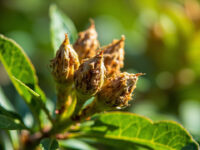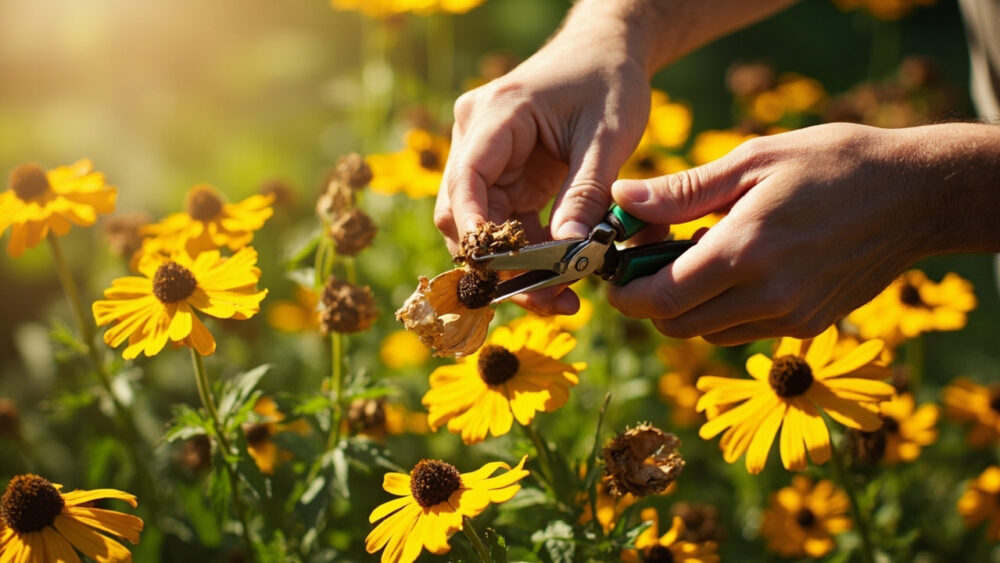
To deadhead tickseed, snip or pinch each spent flower stem down to the first set of healthy leaves or side buds, not just the bare flower head, as soon as the petals fade and curl. Do this every few days through the bloom season and you will get a second and often third flush of flowers instead of one short show in early summer. Skip it, and coreopsis (the plant most people mean when they say tickseed) shuts down bloom production to focus on setting seed.
That part is simple. What trips people up is how much to cut, when to stop for the season, and the one grooming mistake that quietly costs you half your flowers without you ever noticing a single dead bloom on the plant.
There is also a harder truth waiting near the end of the season, about when deadheading stops helping and starts hurting. Stick around for the Tickseed at a Glance card at the bottom, it is built to save to your phone so you have the numbers in front of you next time you are standing at the flower bed with pruners in hand.
When to Deadhead, and When to Leave It Alone
Start deadheading as soon as the first flowers begin to brown and shrivel, usually a few weeks after the plant’s first flush, which itself typically starts in late spring to early summer depending on your zone. Keep at it weekly, or every few days during peak bloom, right through summer.
Stop the aggressive deadheading about four to six weeks before your first fall frost. After that point, let some spent blooms go to seed.
Tickseed self-sows readily, and those late seed heads also feed goldfinches and other birds through fall and winter.
The plants that never seem to slow down are usually the ones getting groomed on a schedule, not just when they look bad.
The One Prep Step Most People Skip
You do not need fancy tools. A sharp pair of bypass pruners or even clean garden scissors works fine, and for the wiry-stemmed, small-flowered types you can often just pinch with your fingernails.
The prep step that matters is wiping your blades with rubbish alcohol or a disinfectant wipe before you start, especially if you deadheaded a different plant right before this one. Tickseed is generally trouble-free, but fungal issues spread fast on wet blades moving from plant to plant.
Do this in the morning after dew has dried, or in early evening. Cutting wet, humid-afternoon growth invites problems you do not need.
Tools ready, dry plant, clean blade, now the actual cutting.
How to Deadhead Tickseed Step by Step
Step 1: Find the Real Cutting Point
Here is the mistake almost everyone makes on their first pass: they snip the flower stem right below the dead bloom, leaving a bare, leafless inch or two of stem sticking up. It looks tidy for about a day, then you are left with a forest of naked stubs and no new buds forming.
Trace the flower stem down instead, past the first bare section, to where you find a leaf, a leaf node, or a small side shoot already forming. Cut there.
That leaf node is where the next flower stem will branch from.
Step 2: Cut at an Angle, Just Above Growth
Make your cut about a quarter inch above that node, angled slightly so water sheds off the cut rather than sitting on it. Cutting too close to the node can damage it; cutting too far above just leaves more dead stub to look at.
For the mounding, fine-textured types like threadleaf coreopsis, you will often be cutting whole clusters of small stems at once rather than one flower at a time.
Step 3: Shear Instead of Snip, When It Makes Sense
Mid to late summer, when the plant is covered in dozens of spent blooms mixed with fresh ones, one-by-one deadheading gets impractical. This is when a lot of gardeners reach for hedge shears instead.
Shear the whole plant back by about a third, taking off the top layer of spent flowers along with some healthy foliage and unopened buds. Yes, you lose a few days of bloom.
You get a fuller, denser flush back within two to three weeks, which for a plant this fast-growing is a good trade.
Once you know where to cut, the next question is what the plant actually does with that cut.
What Happens After You Deadhead
Within seven to fourteen days in warm weather, you should see new buds forming at or near your cut points. The plant redirects the energy it would have spent maturing seed into new stems and flowers instead.
If nothing happens after two weeks, check the obvious suspects first: is the plant getting at least six hours of direct sun, and has it dried out completely between waterings. Tickseed tolerates poor, dry soil far better than it tolerates being smothered by rich, constantly moist ground, and stalled rebloom is more often an overwatering or shade problem than a deadheading problem.
Expect each rebloom flush to be a little lighter than the last as the season goes on, that is normal, not a sign you are doing it wrong.
The mistakes that actually cost people flowers are rarely about the cutting technique itself.
The Mistakes That Cost You Flowers
If you assumed the biggest risk was cutting too much off, that is the wrong worry. Tickseed is tough and forgiving of a hard shearing.
The real mistakes run the other direction.
- Leaving bare stubs: cutting above the dead flower instead of down to a leaf node, which stalls rebloom even though the plant looks deadheaded.
- Deadheading too late in fall: removing every seed head right up to frost strips winter food from finches and kills off the self-sowing that keeps a patch full for free.
- Ignoring the whole plant: deadheading only the tallest, most visible blooms and leaving spent flowers buried in the foliage, which still signals the plant to slow down.
- Skipping the summer haircut: letting a leggy, floppy plant sprawl instead of shearing it back, which leads to weak, rot-prone stems by August.
- Deadheading stressed plants: pruning heavily during a drought or heat wave adds stress right when the plant needs to conserve energy, water first, then cut a day or two later.
Get those five things right and tickseed will out-bloom almost anything else in a sunny bed with minimal fuss.
Tickseed at a Glance
- When to deadhead: as soon as flowers fade and shrivel, continuing weekly to every few days through summer.
- When to stop: about four to six weeks before your first fall frost, then let seed heads stand for birds and self-sowing.
- Where to cut: down to the first healthy leaf, leaf node, or side shoot, never leaving a bare stub above the cut.
- How much to remove in a haircut: about one third of the plant’s height when shearing back mid to late summer.
- Sun and soil needs: at least six hours of direct sun, average to poor, well-drained soil, drought-tolerant once established.
- Time to rebloom: new buds typically show within seven to fourteen days of a proper deadheading or shearing.
- Tools: sharp bypass pruners, garden scissors, or fingernails for pinching, wiped clean before you start.
Cut to the leaf, not to the flower, and do it on a schedule instead of waiting for the bed to look ragged.
That single habit is the difference between one good bloom flush and a plant that keeps flowering into fall.