Lavender moves through five distinct growing stages: germination or rooting, the seedling or young plant stage, vegetative bushing, the first bloom flush, and the woody, mature-shrub stage that a healthy plant settles into by year three. Each stage has its own look and its own job for you to do. Understanding lavender growing stages is really about knowing when to leave the plant alone, because that is where most people go wrong.
Here is the honest part nobody tells you upfront: the stage where lavender most often dies is not the delicate seedling phase, it is the very first winter after a strong, lush first summer. That surprises almost everyone. There is also a sign of “trouble” that is actually the plant working exactly as it should, and if you do not know what it is you will probably yank a perfectly fine plant out of the ground.
Stick with this and you will know exactly what your lavender should look like at every point in its life, plus the one mistake that costs people an entire season of bloom. There is a save-able Lavender at a Glance card at the very bottom with the numbers you will want on your phone next time you are standing in front of a nursery flat.
Stage One: Germination and Rooting (Weeks 1 to 4)
If you are starting from seed, germination is slow and uneven, often taking 14 to 30 days at a soil temperature around 65 to 70°F, and seeds sown too deep simply will not come up. Lavender seed needs light to germinate, so press it into the surface of the mix and barely dust it with soil, no deeper than 1/8 inch.
If you are rooting cuttings instead, expect roots in 3 to 6 weeks in a well-draining mix kept barely moist, never wet. Overwatering at this stage rots more cuttings than dry air ever does.
Most home gardeners skip this stage entirely and buy a started plant, which is a completely reasonable shortcut.
Either way, the next stage is where you find out if what you started with is actually going to make it.
Stage Two: The Young Plant, Weeks 4 to 12
A young lavender plant looks thin, a little scraggly, and unimpressive, with soft gray-green leaves and no real branching yet. This is normal. Do not judge lavender by its looks in the first few months.
This is also the stage where the guess most people make is wrong. If you assume a small, sparse plant needs more water and fertilizer to “catch up,” that guess is what kills more young lavender than neglect does. Lavender at this stage wants infrequent, deep watering, roughly once a week if there has been no rain, and it wants poor to average soil with no rich compost or high-nitrogen feed pushed at it.
Plant or transplant young lavender 2 to 3 weeks after your last frost date, once soil has warmed past about 60°F, spacing plants 18 to 24 inches apart depending on the variety’s mature width.
Get the spacing and watering right here and the plant does the rest of the work itself.
Stage Three: Vegetative Bushing, Months 3 to 8
This is where lavender turns from a sad little sprig into an actual shrub. Stems multiply, the plant widens, and by the end of its first full growing season a healthy plant should be 12 to 18 inches across, depending on variety.
The plant’s only real need here is a light shaping trim once it hits 6 to 8 inches tall, cutting back the top third to force branching low on the plant. Skip this and you get a lavender that is tall, leggy, and prone to splitting open and flopping in a couple of years.
Full sun, at least 6 to 8 hours a day, and soil that drains fast are non-negotiable through this stage. Standing water or heavy clay will stall growth or rot roots faster than almost anything else you could do wrong.
Once the framework of the plant is built, it starts asking a completely different question: when do I get to bloom.
Stage Four: First Bloom, Typically the Second Season
Most lavender varieties do not put on a real flower show until their second year in the ground, though vigorous plants sometimes throw a few token spikes the first summer. English lavender types (Lavandula angustifolia) usually bloom once, in early to midsummer. French and Spanish types and many lavandins can rebloom later in the season if you deadhead promptly.
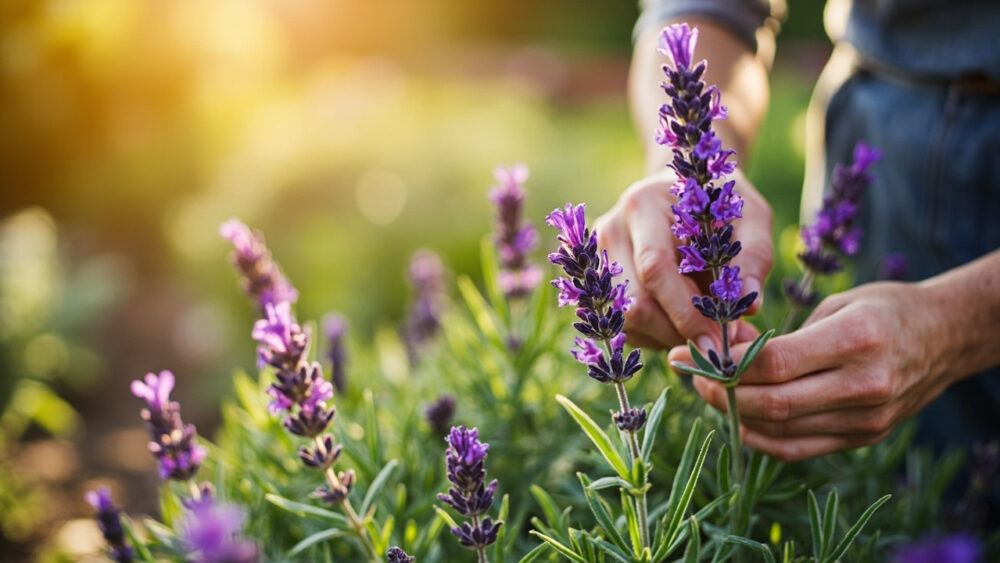
You will see flower spikes emerge from the stem tips, elongate over 2 to 3 weeks, and open from the bottom of the spike upward. Harvest or deadhead once about half the flowers on a spike have opened, for the strongest fragrance and to encourage a second flush.
This is the payoff stage, but it is not the stage where lavender is most at risk.
That comes right after, once the show is over and the plant looks like it is done for the year.
The Stage Where Most Lavender Actually Dies
Here is the loop from the intro: it is not the seedling stage that kills the most lavender, it is the first winter after a big, lush first bloom. A plant that grew fast and soft in rich, well-watered soil goes into cold weather with tender growth and shallow cold tolerance, and that combination is what rot and winter kill actually feed on.
The fix is to stop feeding and reduce water by late summer, letting the plant harden off naturally, and to avoid mulching right up against the woody base, which traps moisture against the crown. In colder zones, roughly zone 5 and below, a loose mulch of gravel or straw around, not on top of, the plant helps.
Do not prune hard in fall. A fall hard-prune removes the very growth that would otherwise protect the crown through winter, and that mistake alone costs more established plants than any pest or disease.
If your plant makes it through that first winter looking gray and tired but alive at the base, you are past the hardest stage lavender will ever face.
Telling Healthy Progress From a Stall
A stalled lavender and a resting lavender look almost identical, and this is the sign everyone misreads. Gray, dull-looking foliage in late fall or after a hard prune is not a warning sign, it is completely normal dormancy behavior.
Check the stems, not the color. Bend a stem gently: if it flexes and springs back, the plant is alive and simply resting. If it snaps dry and hollow, that section is dead wood and should be cut out down to green growth in spring.
A true stall shows up as no new growth at the stem tips once spring soil hits 55 to 60°F for two or three weeks running, combined with a base that stays soft, blackened, or mushy. That combination, not gray leaves alone, is your actual signal to worry.
Once you know the difference, the rest of caring for mature lavender is mostly about maintaining what you have built.
Stage Five: The Mature, Woody Shrub, Year Three and Beyond
By year three, lavender settles into a dense, woody-based shrub, typically 18 to 30 inches tall and wide depending on variety, blooming reliably each year with far less fuss than it needed early on. The plant’s water needs drop further, and established lavender is genuinely drought tolerant once its root system is in.
The main job now is an annual shape-and-renewal prune right after bloom, cutting back to about one-third of the plant’s height but always leaving some green growth on every stem, never cutting into bare wood, which lavender usually will not resprout from.
Mature plants slow their bloom and get woody and gappy in the center after 6 to 10 years, which is normal aging, not a problem you can fix with fertilizer.
At that point most gardeners simply take cuttings from the good growth and start the next generation rather than trying to rescue an old, woody plant.
Lavender at a Glance
- When to plant: 2 to 3 weeks after your last frost, once soil has warmed past about 60°F.
- Spacing: 18 to 24 inches apart, depending on the mature width of the variety.
- Water needs: deep but infrequent, roughly once weekly with no rain, tapering off further once established.
- Soil: poor to average, fast-draining, no rich compost or high-nitrogen fertilizer.
- First real bloom: usually the second growing season, in early to midsummer.
- Riskiest stage: the first winter after a lush first summer, when soft new growth meets cold.
- Pruning rule: shape after bloom, always leave some green growth on every stem, never cut into bare wood.
Lavender rewards patience more than effort. Get the drainage, sun, and pruning timing right, and the plant genuinely takes care of the rest.