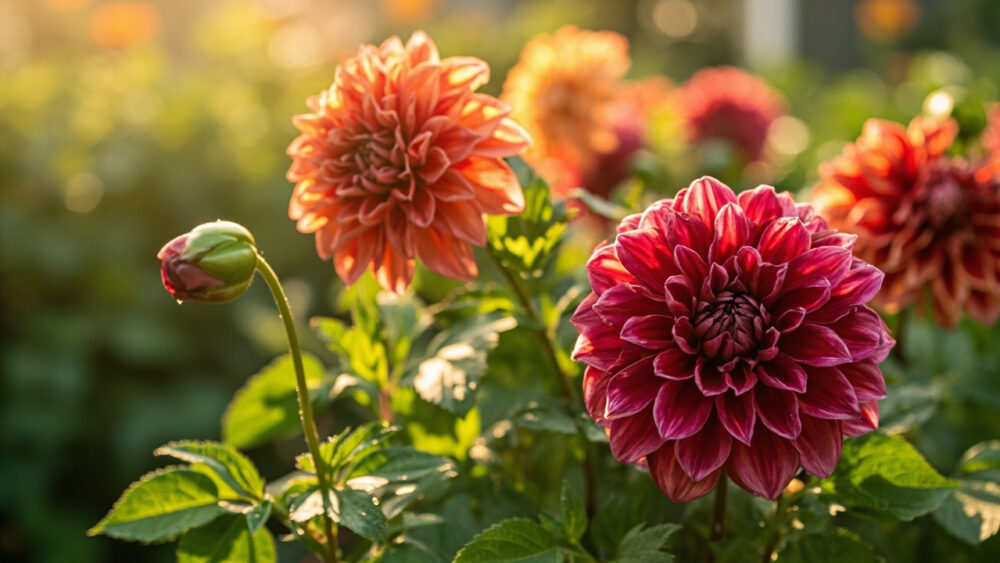
Dahlias are perennials, but whether they act like one depends almost entirely on where you garden. In USDA zones 8 through 11, the tubers can survive right in the ground and send up new growth next spring. In zone 7 and colder, winter will kill them in the soil most years, so the plant only comes back if you dig up the tubers and store them yourself.
That single fact, whether your winter soil freezes hard enough to kill the tubers, decides everything about how you should treat your dahlias this fall.
There is more to this than a zone map, though. The size and health of your tubers this year change what “coming back” even looks like next season, storage mistakes kill more dahlias than actual cold does, and for a lot of gardeners, treating dahlias as annuals on purpose is the smarter, less heartbreaking move. Stick around for the quick-reference card at the bottom, it is built to save so you can check it again in October when you actually need it.
The Plain Answer, By Zone
In zones 8 to 11, dahlia tubers can overwinter in the ground as long as the soil does not stay soggy or freeze solid. Mulch heavily and many gardeners never dig them at all.
In zones 7 and colder, a hard freeze reaches the tubers and turns them to mush. Left in the ground, they simply will not return. This is the boundary that determines everything else in this article.
Zone 7 itself is the gray area. Some winters are mild enough that mulched, well-drained beds pull through. Other winters, the same bed loses everything. If you are in zone 7 and want certainty, dig and store.
Next, what actually happens to the plant between now and spring.
What Happens Over Winter, Realistically
Above ground, dahlias die back completely after the first frost blackens the foliage. That part is normal and not a sign of trouble, it happens every year regardless of zone.
Below ground is where the real story plays out. The clump of tubers either sits dormant in place (warm zones) or needs to be lifted, dried, and stored somewhere cool and dark until spring (cold zones).
If you assumed a dahlia that dies back to nothing in October is dead for good, that guess is wrong for most of the country, it is dormant, not dead, as long as the tubers stay intact. The plant that comes back in June will not be the same single stem you planted, either. Healthy tubers multiply underground, so a single plant often becomes a clump you can divide into three or four new plants by spring.
That multiplication is the upside, but only if you handle the tubers right.
How to Actually Get Yours to Return
If you are in a cold zone and want the same dahlia back next year, digging and storing is the job, and the timing matters more than people think.
- Wait for frost to blacken the foliage, then cut the stems down to about 2 to 4 inches. Do not dig early, the tubers are still building strength from the dying leaves.
- Lift the clump carefully with a garden fork, keeping soil loosely attached rather than power-washing it clean.
- Cure them upside down in a dry, ventilated spot for a few days to a week so the cut stems callus over.
- Pack them in a box with dry peat moss, vermiculite, or wood shavings, and store between 40 and 50 degrees Fahrenheit, somewhere dark and not humid.
- Check monthly. Shriveled tubers need a light misting, rotting ones need to be removed before they spread to the rest of the clump.
Rot from too much moisture kills far more stored tubers than cold ever does, so err dry, not damp.
Even with perfect storage, though, there is a point where digging them up simply is not worth your time.
When Treating Dahlias as Annuals Is Honestly the Better Call
Digging, curing, and storing tubers is real work, and it is fair to skip it. If you bought inexpensive dahlia tubers this spring, buying fresh ones again next year often costs less than the time and storage space the old ones demand.
Storage failure is common, even experienced growers lose a portion of their tubers every winter to rot or shriveling, so “saving money” by storing is not guaranteed anyway.
If you garden in containers, have no cool dark spot that stays reliably above freezing, or just want the simplest path, buying new tubers or starts each spring is a completely legitimate strategy, not a failure. Many gardeners in zone 6 and colder do this on purpose, year after year, and get better blooms than the neighbors fussing over storage bins.
Whichever path you choose, here is everything worth saving in one place.
Dahlias: Quick Reference
- Perennial or not: technically a tender perennial, hardy in the ground only in zones 8 through 11.
- Zones 7 and colder: tubers die in frozen ground, dig and store to bring them back.
- Zone 7 specifically: a gray area, mild winters may spare mulched beds but there is no guarantee.
- Dieback in fall: normal, happens after the first hard frost, not a sign the plant is dead.
- Storage temperature: 40 to 50 degrees Fahrenheit, dark, dry, not humid.
- Storage risk: rot from excess moisture kills more tubers than cold does, check monthly.
- Bonus outcome: healthy stored tubers multiply, one plant can become several by spring.
- Skipping storage: a completely reasonable choice, buying new tubers each year is common and simple.
Save this list before frost hits, it is the difference between a full clump next June and an empty bed.
Either way you go, the choice is yours to make, not the weather’s.