Yes, bleeding hearts come back every year in USDA zones 3 through 8, and they do it by an odd trick: the whole plant disappears completely by mid to late summer, then pushes back up from the same root the following spring. That vanishing act scares a lot of first-year growers into thinking the plant died. It didn’t.
But the honest answer has an asterisk. Where you garden changes the story, how you treat the plant after it flowers changes the story, and whether you want a permanent shady corner or just one great spring show changes the story too.
Stick around for the part most people get wrong: assuming a bare patch of dirt in July means a dead plant. I’ll also tell you exactly what to do right now to make next year’s bloom bigger than this year’s, and there’s a save-it-for-later quick reference card waiting at the bottom.
The Plain Answer: Perennial, With a Zone Catch
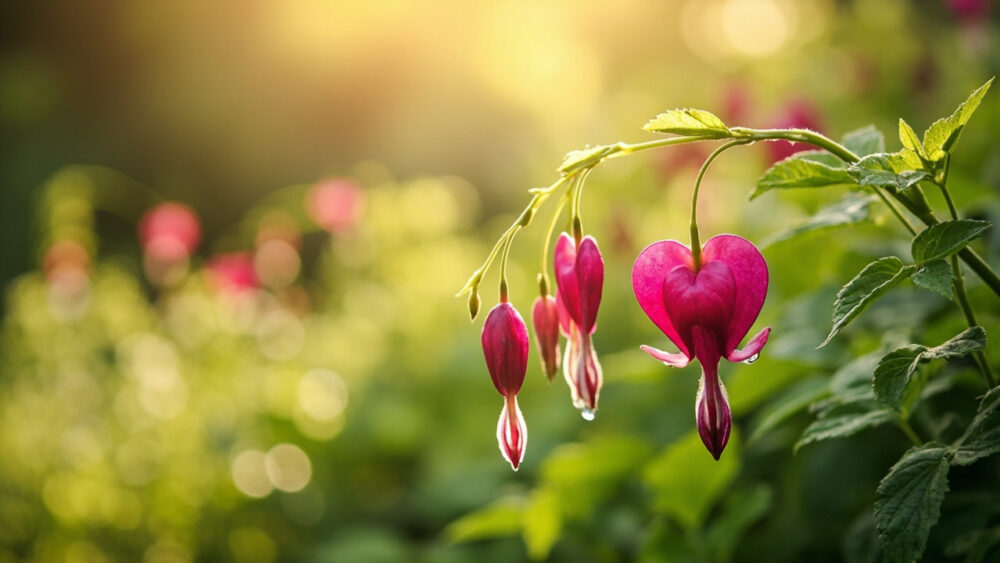
Bleeding heart (Lamprocapnos spectabilis, the classic pink-and-white heart-shaped one) is a true herbaceous perennial in zones 3 through 8. Plant it once, and barring disaster, it returns every spring for years, often a decade or more.
Below zone 3, winter cold can kill the crown outright, especially without reliable snow cover for insulation. Above zone 8, and especially in zone 9 and warmer, summer heat is the real killer, not winter. The plant wants cool roots and shade, and hot climates just don’t offer that for long enough.
Fringed bleeding heart (Dicentra eximia), a smaller native relative, tolerates a bit more heat and stays semi-evergreen in mild climates, so it’s worth knowing which one you actually bought.
Your zone tells you which category you’re in, but your own yard tells you the rest.
What Happens Over Winter, and Why the Plant “Disappears”
Here’s the part that trips people up. Bleeding heart is a spring ephemeral by habit. It leafs out early, blooms hard for four to six weeks, then as summer heat climbs, the foliage yellows, flops, and eventually melts away to nothing by July or August in most climates.
If you assumed that dying-back foliage means the plant is finished, that guess costs more bleeding hearts than winter cold does. People dig up the “dead” spot, or plant something else right on top of it, and wonder next spring why nothing comes up.
Underground, the fleshy root system is alive and just resting. Over winter it needs nothing from you except to be left alone. No watering, no fertilizing, ideally a light natural mulch of fallen leaves for insulation in colder zones.
The real skill here isn’t keeping it alive, it’s remembering where it’s buried.
How to Help It Return Stronger Next Spring
Mark the spot. Seriously, a small stake or plant tag saves you from an accidental shovel through the crown in fall when you can’t see a trace of the plant.
Leave the foliage alone as it yellows instead of cutting it back early. The leaves are feeding energy back into the root for next year’s bloom, same principle as daffodils. Once it’s fully brown and pulls away with no resistance, then you can tidy it up.
Give it a two-inch layer of leaf mulch or compost in fall, especially in zones 3 and 4 where the ground freezes hard. In milder zones 6 through 8, mulch mainly conserves moisture and keeps roots cool through summer dormancy.
Skip heavy nitrogen fertilizer. A light topdress of compost each spring as new shoots emerge is plenty; too much nitrogen pushes floppy growth at the expense of flowers.
Do this and most established plants get slightly larger and bloom slightly heavier each year for their first four or five seasons.
There’s one more question worth answering honestly before you plan your whole shade bed around this: is it even worth treating as a perennial where you live.
When Treating It as an Annual Is Honestly the Smarter Play
If you’re in zone 9 or warmer, or you garden somewhere with hot, humid summers and mild winters, be honest with yourself: bleeding heart often behaves like a one-season annual no matter what you do. The bloom is gorgeous for its few weeks, but the plant frequently doesn’t survive summer heat to come back reliably.
In that situation, you have two reasonable choices. Buy fresh plants each year and enjoy them as a spring-only feature, the same way people treat pansies. Or grow it in a container you can move to a cooler, shadier spot for summer, which buys marginal-zone gardeners real odds of a second year.
Containers also help zone 3 gardeners who worry about winter kill; you can tuck the pot into an unheated garage or bury it in mulch over winter for extra insurance.
Neither approach is a failure. It’s just matching the plant to your actual climate instead of fighting it.
Whichever camp you’re in, here’s the whole thing condensed so you can save it.
Bleeding Hearts: Quick Reference
- Core answer: yes, bleeding hearts are perennial and return every spring in USDA zones 3 through 8.
- Zone risk, cold side: below zone 3, winter cold without snow cover can kill the crown outright.
- Zone risk, hot side: zone 9 and warmer, summer heat is the usual killer, and many gardeners there treat it as an annual.
- Summer dieback is normal: foliage yellows and disappears by mid to late summer, this is dormancy, not death.
- Mark the spot: stake or tag the location before it vanishes so you don’t dig into the dormant root.
- Let leaves finish naturally: wait until foliage is fully brown and pulls away easily before cutting back.
- Winter care: two inches of leaf mulch in fall, no fertilizer needed until new spring growth appears.
- Container option: a movable pot gives marginal-zone gardeners in both cold and hot climates better odds of a second year.
Treat the dormancy as a feature, not a funeral, and this one comes back reliably for years.
Mark the spot, skip the nitrogen, and next spring’s show should beat this year’s.