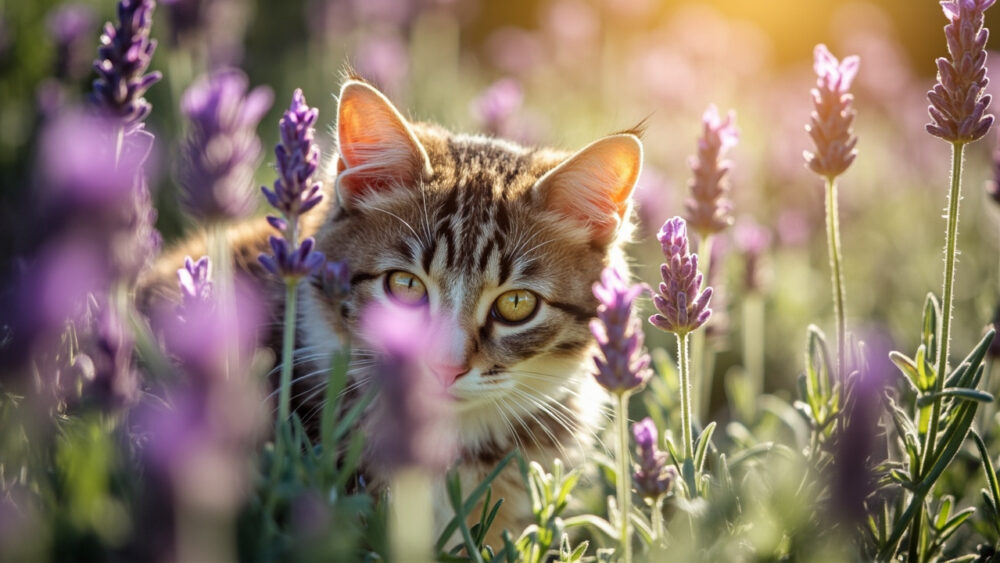
Yes, lavender is toxic to cats, but the honest answer has more nuance than a flat yes. The plant contains linalool and linalyl acetate, compounds cats cannot process the way we can, and in small amounts a curious sniff or a single nibbled leaf is unlikely to cause serious harm. Eating a real quantity, or drinking lavender essential oil, is a different and much more dangerous situation.
What changes the answer is dose and form. A cat that brushes past your lavender pot in the yard is not the same as a cat that chews through a stem daily, and neither is close to a cat that laps up spilled essential oil or a diffuser reservoir. That last one is the version that sends cats to the emergency vet.
Stick around and I will show you the signs to watch for, what to actually do if your cat ate some, and which fragrant plants you can grow instead that will not land you an emergency vet bill. There is also a save-able quick-reference card at the very bottom of this page for exactly this reason.
The Plain Answer: Lavender and Cats Do Not Mix Well
Lavender (Lavandula) is classified as toxic to cats by veterinary and animal poison control sources. The whole plant carries the risk, not just one part. Flowers, leaves, and stems all contain the same problem compounds, just in varying concentrations.
Dried lavender, like the sachets and potpourri people keep in drawers and closets, is still a hazard if a cat eats it. Drying does not remove the toxic compounds, it just changes the texture your cat is chewing on.
Cats are more sensitive to lavender than dogs are, largely because cats lack certain liver enzymes needed to break down and clear these compounds efficiently.
That sensitivity is exactly why concentration matters so much, and that is the next thing to understand.
Why Essential Oil Is a Different Problem Than a Nibbled Leaf
A cat chewing on a fresh lavender stem in the garden is getting a low dose of the plant’s natural oils, diluted by all the plant fiber and water around it. It is unpleasant for the cat and can cause mild stomach upset, but it is rarely an emergency.
Lavender essential oil is concentrated, often by a factor of dozens compared to the raw plant. A cat that licks up spilled oil, chews an oil-soaked cotton ball, or grooms oil off its fur after you applied it topically is getting a much larger, more dangerous dose in one shot.
This is also true of lavender-scented cleaning products and some diffuser blends, which is a separate concern from the live plant but worth knowing if you have both in the house.
The form your lavender takes changes the stakes, and the signs your cat gives you change with it too.
Signs Your Cat May Have Had Too Much
Watch for drooling, vomiting, diarrhea, loss of appetite, or general lethargy. These are the most common signs after a cat eats lavender in any form.
With essential oil exposure specifically, signs can be more serious: wobbliness or difficulty walking, tremors, unusual breathing, or skin irritation and redness if the oil touched the fur or paws directly.
- Drooling or pawing at the mouth
- Vomiting or diarrhea
- Loss of appetite or unusual quietness
- Wobbly gait, tremors, or disorientation (more common with oil exposure)
- Skin redness or irritation where oil contacted fur or paws
None of these signs are exclusive to lavender poisoning, which is exactly why context matters when you call your vet.
What to Actually Do If Your Cat Ate Lavender
Call your veterinarian or an animal poison control line right away if you know or suspect your cat ate lavender, whether it was fresh plant, dried sachet material, or oil. Do not wait to see if signs appear.
Have this information ready when you call: roughly how much you think your cat ate, what form it was in (fresh plant, dried, essential oil, scented product), and how long ago it happened. If you have the plant tag or product bottle, keep it nearby.
If oil got on your cat’s fur or skin, do not apply anything yourself or try to wash it off with soap, oils, or home remedies before talking to a professional. Let the vet guide you on that.
This is not a wait-and-watch situation once oil is involved, and a same-day call is always the right call, even if your cat seems fine.
Once you have that handled, it helps to know why lavender keeps ending up within paw’s reach in the first place.
Why This Trips Up So Many Pet Owners
Most people assume that if a plant is “natural” or commonly used in aromatherapy, it must be gentle. That assumption is exactly backwards for cats.
Cats process plant compounds very differently than humans and dogs do, and lavender’s calming reputation for people does not translate to safety for them. The same oils that make lavender smell soothing to you are the ones their livers struggle to clear.
The other common mistake is treating dried lavender as safer than fresh. Sachets tucked into drawers, gift bags, or linen closets look harmless, but a cat that finds and chews one is getting the same toxic compounds as the fresh plant.
If you want the fragrance and the pollinator appeal of lavender without the risk, there are real alternatives worth planting instead.
Cat-Safe Plants With Similar Appeal
If you love lavender for its scent, its look, or its bee and butterfly traffic, a few genuinely cat-safe options can fill that role.
- Catmint (Nepeta): similar silvery foliage and purple-blue spikes, and actually safe and enjoyable for cats to nibble
- Rosemary: upright, fragrant, drought-tolerant, and non-toxic to cats in normal garden amounts
- Calendula: bright, easy-care flowers that are considered non-toxic and add color where lavender might have gone
- Cat grass (oat, wheat, or barley grass): grown specifically for cats to chew, satisfies the same urge that gets them into your flower beds
Swapping even one bed or pot to catmint or cat grass gives your cat something to investigate that will not end in a vet call.
Keep the details straight with the card below, and save it before you go.
Lavender: Quick Reference
- Toxic to cats: yes, all parts of the plant, fresh or dried
- Toxic compounds: linalool and linalyl acetate, poorly processed by cats’ livers
- Low risk: a small nibble of fresh plant in the garden, usually mild stomach upset at most
- High risk: essential oil, ingested or applied topically, or lavender-scented products in concentrated form
- Signs to watch: drooling, vomiting, diarrhea, lethargy, and with oil exposure, wobbliness, tremors, or skin irritation
- What to do: call your veterinarian or animal poison control immediately for any suspected ingestion, note the amount and form, do not attempt home treatment
- Safer swaps: catmint, rosemary, calendula, or cat grass for a similar look and appeal without the toxicity risk
Lavender and cats can share a yard, they just should not share a mouth.
When in doubt about what your cat got into, the phone call to your vet is always cheaper than the wait.