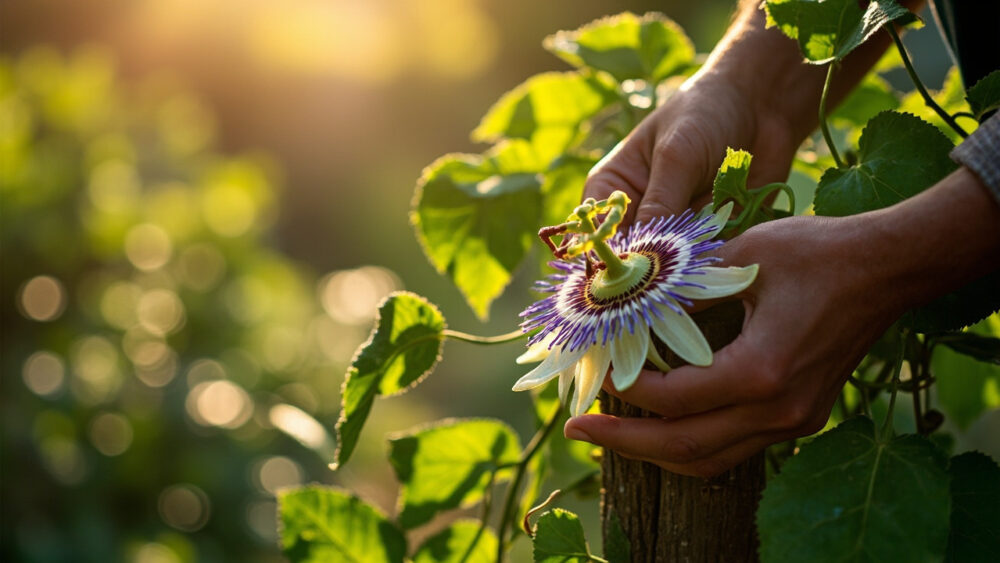
Here is how to grow passionflower without wasting a season on it: plant it after your last frost once soil has warmed past 60°F, give it full sun and something sturdy to climb, keep the soil evenly moist but never soggy, and be patient, because most passionflower vines bloom in their second year, not their first. That single fact ends more gardener frustration than any pest or disease ever will.
There is a mistake almost everyone makes with this vine, and it has nothing to do with watering or feeding. It is planting location: passionflower roots run and sucker aggressively once established, and the spot that looked perfectly reasonable in April can turn into a takeover by August.
There is also a sign most people misread entirely. A passionflower vine that drops leaves and looks half dead in late fall is not dying, it is doing exactly what it is supposed to do. Stick with this guide and you’ll know the difference between dormancy and death, plus the exact bloom-to-fruit timeline, and I’ll hand you a save-able Passionflower at a Glance card at the very bottom for quick reference.
When to Plant Passionflower
Wait until all frost danger has passed and soil temperature sits reliably above 60°F, usually two to four weeks after your last spring frost date. Passionflower is native to warm climates and sulks, or outright dies back to the roots, if planted into cold, wet soil.
In zones 7 and warmer, established vines are perennial and often survive winter outdoors with mulch protection. In zones 6 and colder, treat it as a die-back perennial or grow it in a container you can move indoors, since hard freezes will kill the roots, not just the top growth.
If you started seed indoors, wait for nighttime lows to stay above 55°F before transplanting. Seed-started plants are slow, often taking three to four weeks just to germinate, so nursery starts are the faster route if you want blooms this year.
Timing is the easy part, the spot you choose is where most plans go sideways.
Choosing the Spot and Prepping the Soil
Passionflower wants six or more hours of direct sun daily. It will grow in partial shade, but flowering drops off fast without real sun exposure.
Give it distance from garden beds you care about. This vine spreads by root suckers, sometimes popping up several feet from the original plant, so plant it where a spreading vine is welcome, near a fence, arbor, or trellis it can claim as its own.
Soil should be well-draining and only moderately fertile. Rich, heavily amended soil actually pushes leafy growth at the expense of flowers.
Work in an inch or two of compost if your soil is heavy clay or pure sand, otherwise leave it alone. A pH between 6.1 and 6.5 is ideal, though passionflower tolerates a wider range without much complaint.
Once the site is picked and the soil is ready, the planting itself is quick.
Planting Passionflower Step by Step
1. Set the support first
Install your trellis, arbor, or fence panel before you plant. Passionflower climbs by tendrils and needs something to grab within the first few weeks or growth stalls.
2. Dig the hole
Dig a hole twice as wide as the root ball and just as deep, so the crown sits at the same level it was growing in the pot.
3. Space for the spread
Plant vines 6 to 10 feet apart if you’re growing more than one. A single vine easily covers 10 to 15 feet of trellis in a good season once mature.
4. Backfill and water
Backfill with native soil, tamp gently to remove air pockets, and water deeply right away, about a gallon per plant.
5. Mulch
Add a 2 to 3 inch mulch layer around the base, keeping it a couple inches clear of the stem itself to prevent rot.
Get the vine in the ground correctly and the next job is simply keeping it fed and hydrated through summer.
Watering and Feeding Through the Season
If you assumed more water always means more flowers, that guess actually delays blooming in passionflower. Overwatering and over-fertilizing, especially with high-nitrogen feed, encourages lush vine growth and very few flowers.
Water deeply once or twice a week during the first growing season, letting the top inch or two of soil dry between waterings. Established vines are fairly drought-tolerant and need supplemental water only during extended dry spells.
Feed lightly, if at all. A balanced, low-nitrogen fertilizer applied once in spring is plenty. Skip nitrogen-heavy feeds entirely, they are the single biggest reason a healthy-looking vine refuses to flower.
Prune in early spring before new growth starts, cutting back to shape and remove dead wood. Vines respond to pruning by branching harder, which means more flowering wood.
Feed it too well and you’ll get a jungle with no flowers, which brings up the other things that go wrong.
Problems That Actually Show Up
The follow-up question most people are about to ask: why isn’t it blooming yet? The honest answer is usually age, not a mistake. Most passionflower vines need to reach a full growing season or two of maturity before they flower reliably, regardless of care.
Watch for these real issues:
- Yellowing leaves with fine webbing: spider mites, common in hot, dry conditions. Increase humidity around the plant and treat with insecticidal soap per the label if it spreads.
- Skeletonized leaves fast: caterpillars, sometimes fritillary butterfly larvae, which actually depend on passionflower to complete their life cycle. Light damage is worth tolerating since these are pollinator larvae, not a true threat to an established vine.
- Root rot, mushy base: almost always overwatering or poor drainage. Pull back watering and improve drainage before the plant is lost.
- No flowers despite healthy growth: too much nitrogen, too much shade, or a vine still too young.
A safety note: passionflower fruit is generally considered safe in small amounts for people, but the unripe fruit, leaves, and other plant parts contain compounds that can cause issues if pets or livestock eat significant quantities. If you suspect a pet has eaten a large amount of the plant and is showing symptoms like vomiting or lethargy, contact your veterinarian rather than waiting it out.
Handle the common problems early and the vine will reward you with the part everyone actually clicked for.
When and How to Harvest
Flowering typically begins in the vine’s second year, from mid to late summer, with each individual bloom lasting only a single day. Don’t panic when a flower closes by evening, that’s normal, not a problem.
Fruit follows the flowers by roughly 6 to 10 weeks if pollination succeeds. You’ll know fruit is ripe when it turns from green to yellow, orange, or deep purple depending on variety, and the skin starts to wrinkle slightly and soften.
Harvest by twisting or snipping the fruit free once it reaches full color and gives slightly to gentle pressure. Fruit that drops on its own is also ready, and passionflower often drops ripe fruit before you’d think to pick it.
That die-back you’ll see after the first hard frost, brown leaves, collapsing vine, is the plant going dormant, not dying, as long as the roots are mulched and protected in colder zones.
Everything above is the real work, here is the short version to save.
Passionflower at a Glance
- When to plant: two to four weeks after last frost, once soil is consistently above 60°F.
- Sun and soil: full sun, six or more hours daily, well-draining soil of only moderate fertility.
- Spacing and depth: plant at the same depth as the nursery pot, space vines 6 to 10 feet apart.
- Watering: deep watering once or twice weekly the first season, drought-tolerant once established.
- Feeding: light, low-nitrogen fertilizer once in spring, skip nitrogen-heavy feeds.
- Bloom time: usually the second growing season, mid to late summer, each flower lasts one day.
- Harvest window: fruit ripens 6 to 10 weeks after bloom, ready when color deepens and skin softens slightly.
Give this vine a support to climb, sun to bask in, and the patience to skip a bloom season without worry.
Do that and it will spread, flower, and fruit far past whatever you originally planned for it.