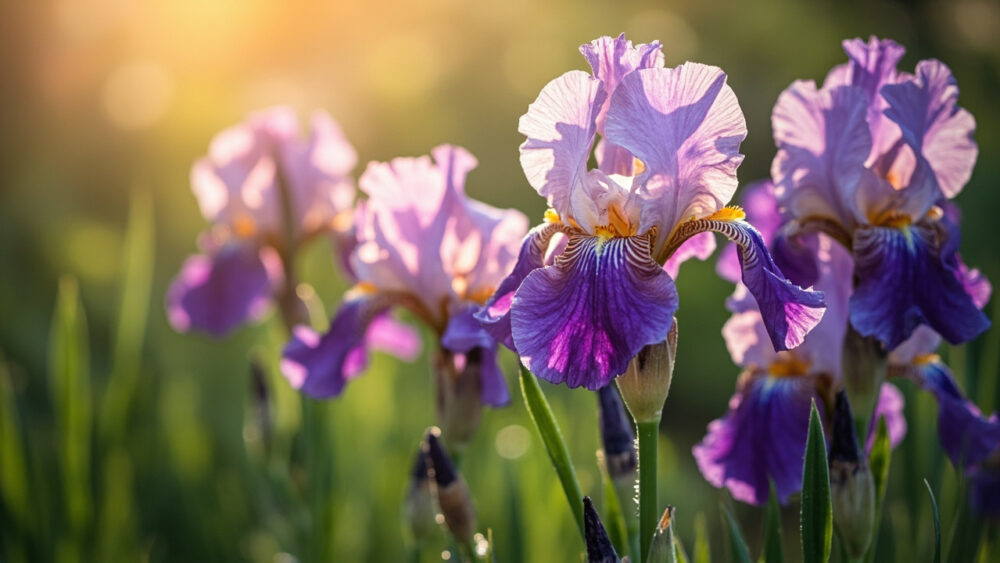
Yes, irises are perennials, and most types come back reliably every year as long as they’re hardy in your zone and planted where they get decent drainage and at least half a day of sun. Bearded irises are hardy roughly zones 3 through 9, Siberian irises zones 3 through 9 as well, and Japanese irises zones 4 through 9, so the vast majority of readers asking this question have a plant that is genuinely built to return.
But “comes back” and “blooms well” are two different questions, and that’s where most disappointment starts. A rhizome can survive winter just fine and still skip flowering the following spring if it’s planted too deep, too crowded, or too shaded.
There’s also a rot problem that quietly kills more established iris clumps than cold ever does, and a planting depth mistake that looks harmless but stops blooms cold. Stick around, because the save-able quick-reference card at the bottom covers the exact answer plus the details that change it for your specific yard.
The Plain Answer, and Where It Changes by Zone
Bearded, Siberian, and Japanese irises are all long-lived perennials that come back from the same rhizome or root clump year after year, often for a decade or more without replanting. This isn’t a one-and-done annual situation.
The zone edges are where things get honest. In zone 3 and colder pockets of zone 4, bearded irises can survive but bloom less reliably if winters are brutal and snow cover is thin. In zone 9 and warmer, Siberian and Japanese irises can struggle with heat and humidity more than cold.
Dutch iris and other bulb-type irises are the exception worth flagging. They’re less reliably perennial in colder zones and are often grown and treated more like a tulip, fading out after a year or two in heavy or wet soil.
Knowing which type you actually have changes everything that follows.
What Happens to an Iris Over Winter
The foliage dies back or goes tattered and brown, and that’s completely normal, not a sign of death. Bearded iris leaves often flatten and yellow after a hard freeze; Siberian iris foliage can hold on longer into winter before collapsing.
Underground, the rhizome or roots go dormant but stay alive, storing the energy that becomes next year’s flower stalk. This is why cutting back foliage too early, while it’s still green and photosynthesizing, can actually weaken next season’s bloom.
If you’re standing over a mushy, foul-smelling clump right now, that’s not normal winter dieback. That’s rot, and it’s covered honestly in the next section.
What you do in fall largely decides what you see next spring.
How to Help an Iris Actually Return and Bloom
The single most common reason an iris survives but won’t flower is planting depth. Bearded iris rhizomes want to sit at or just barely below the soil surface, with the top slightly exposed to sun. Bury them 2 to 3 inches deep like a typical bulb and you’ll get leaves for years with no flowers.
Overcrowding is the second-biggest cause. A bearded iris clump left undivided for 4 to 6 years gets so congested that individual rhizomes stop producing bloom stalks. Dig, divide, and replant every 3 to 4 years, discarding the old woody center and keeping the younger outer rhizomes with a fan of leaves attached.
Rot is the real winter killer, not cold. Soft, mushy, bad-smelling rhizomes usually mean bacterial soft rot from wet, poorly drained soil. Cut out and discard affected tissue, let the area dry out, and don’t replant irises in standing water or heavy clay without amending drainage first.
Skip the mulch pile directly on top of the rhizome. A couple inches of mulch around the plant is fine in cold zones, but mulch stacked over the crown traps moisture and invites the rot that actually ends an iris’s run.
Fertilize lightly after bloom, not heavily in spring, since too much nitrogen pushes leafy growth at the expense of flowers.
Get the depth and spacing right once, and this becomes one of the lowest-maintenance perennials you’ll ever grow.
When Treating an Iris as an Annual Is the Honest Move
If you’re in a zone edge case or growing a bulb-type iris in heavy, wet soil, replacing it yearly can genuinely be less work than fighting its odds. Dutch iris in particular is often better treated as a one-season bulb in colder or soggier gardens, since it declines fast in conditions that don’t drain well.
Container-grown irises are another honest exception. A bearded iris in a small pot left outside in zone 4 or colder winters can freeze through solid, rhizome and all, in a way the same plant in the ground would survive.
If you want that container iris back, move the pot into an unheated garage or bury the pot in the ground for winter rather than leaving it exposed on a deck or patio.
Once you know which category your plant and yard fall into, the rest is just maintenance.
Irises: Quick Reference
- Core answer: yes, most irises are perennials that return every year from the same rhizome or roots, often for 10 or more years.
- Zone range: bearded and Siberian irises are hardy roughly zones 3 through 9, Japanese irises zones 4 through 9.
- Exception: Dutch and other bulb-type irises are less reliably perennial and are often grown as annuals in cold or wet soil.
- Planting depth: bearded iris rhizomes need to sit at or just below the soil surface, not buried 2 to 3 inches deep, or they won’t bloom.
- Division schedule: divide overcrowded clumps every 3 to 4 years to keep blooms coming.
- Biggest threat: soft, wet soil causing rhizome rot, not winter cold.
- Containers: potted irises in cold zones need winter protection since exposed pots freeze through.
Get the depth right, divide on schedule, and keep the crown dry, and an iris will outlast most other perennials in your garden.
That’s the whole trick, and it’s a lot less fussy than people expect.