Nine times out of ten, this is just the bulb finishing its natural cycle after blooming, and the leaves are supposed to yellow and die back so the bulb can rest. If your amaryllis bloomed weeks or months ago and the yellowing is starting at the leaf tips or the oldest, outermost leaves, let it happen and stop watering as much. That is the fix for the most common case, but it is not the only one, and overwatering is the cause most people jump to that is actually wrong about half the time.
The detail that actually tells you which cause you have is where the yellow starts on the plant and how fast it spreads. A slow fade from the leaf tips inward means something different than sudden yellow blotches or a leaf that yellows and goes limp at the base overnight.
amaryllis leaves turning yellow almost always traces back to one of five things: normal dormancy, watering that is off in one direction or the other, too little light, a root or bulb rot, or a nutrient shortfall from an old, tired bulb. Keep reading and you will know exactly which one you are looking at, whether the plant bounces back, and there is a two-minute diagnosis checklist waiting at the bottom you can run right now, standing next to the pot.
Most Likely Causes, Ranked
1. Natural dormancy after blooming
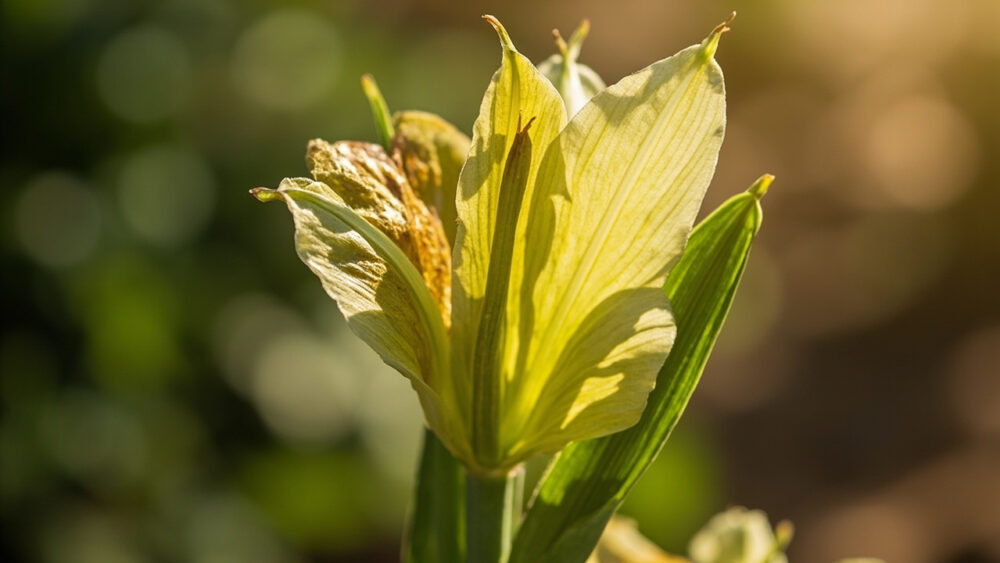
This is the default explanation if your amaryllis flowered at any point in the last two to four months. Confirm it by checking the calendar and the leaves: yellowing that starts at the tips of the oldest, outer leaves, spreads slowly over several weeks, and leaves the newest growth green is the plant winding down on schedule.
The fix is to let it finish. Stop fertilizing, cut back watering to just enough to keep the bulb from shriveling, and let the foliage yellow and die back completely before cutting it off at the base.
This one needs patience, not intervention.
2. Overwatering and soggy roots
Amaryllis bulbs rot fast in wet soil, and yellowing from overwatering usually shows up on lower and newer leaves at the same time, often paired with a soft or mushy feel at the base of the bulb. Confirm it by sticking a finger an inch into the soil. If it is consistently wet and the pot has no drainage hole, or you have been watering on a fixed schedule rather than checking first, this is your answer.
Fix it by letting the soil dry out most of the way between waterings, only watering when the top two inches feel dry, and repotting into a container with real drainage if there is none. Trim off any leaf that has gone fully yellow or mushy.
If the bulb itself feels soft, there is a second problem hiding underneath, and that one is worse.
3. Underwatering and drought stress
This looks similar to overwatering at first glance but feels completely different at the soil line. Confirm it by checking if the soil is bone dry more than an inch or two down, the pot feels unusually light, and the yellowing leaves feel thin, papery, or slightly crisp at the edges rather than soft.
The fix is straightforward: water thoroughly until it runs from the drainage holes, then get on a real schedule of checking the soil weekly rather than guessing. Amaryllis in active growth wants soil that stays lightly moist, not wet and not dry for long stretches.
Get the watering rhythm right and the next flush of leaves usually comes in green.
4. Not enough light
Low light does not usually turn leaves fully yellow on its own, but it weakens the plant enough that yellowing shows up faster and the new growth comes in pale, floppy, and stretched toward the window. Confirm it by looking at where the plant has been sitting. A spot more than a few feet from a bright window, or a north-facing room with no direct sun, is enough to cause this.
Move it to a spot with several hours of bright, indirect to direct light a day, a south or east window is ideal, and rotate the pot every few days so growth does not lean permanently in one direction.
Light fixes the new growth going forward, but it will not undo yellow that is already there.
5. Root or bulb rot
This is the cause worth taking seriously. It usually follows a long stretch of overwatering and shows up as yellowing that spreads unusually fast, sometimes across the whole plant within a week or two, often with a bad smell at the soil line. Confirm it by gently tipping the bulb out of the pot and pressing on it. Soft, brown, or mushy tissue, especially at the base, means rot.
Cut away any soft, discolored tissue with a clean blade, let the bulb dry out in the open air for a day, and repot into fresh, dry, fast-draining soil. Water sparingly until you see new growth.
How much bulb is left after trimming determines whether this fix actually works, which is exactly what the next section is honest about.
6. An old, exhausted bulb
Amaryllis bulbs can rebloom for years, but a bulb that has been in the same worn-out soil for three or more years without feeding can start producing weak, pale, yellowing leaves simply because it is running on empty. Confirm it by checking bulb size and history: if it feels small or lightweight for the pot and hasn’t been fertilized during its last growth cycle, this is likely contributing.
Fix it with a balanced liquid fertilizer during active leaf growth, and fresh potting mix every one to two years. Feeding will not fix this season’s yellow leaves, but it sets up a stronger bulb for the next cycle.
Even a tired bulb usually has one good comeback left in it if you give it what it’s missing.
How to Tell the Causes Apart
Where it starts matters most. Tip-first yellowing on old outer leaves after blooming points to dormancy. Yellowing that hits new and old leaves together points to water stress in either direction.
Speed is the next clue. Slow, over-weeks yellowing is dormancy or light. Fast, over-days yellowing paired with a soft bulb is rot, and that one does not wait for you to finish researching.
Feel the soil and the bulb before you decide anything.
Will It Recover?
Dormancy: full recovery is guaranteed, the plant is doing exactly what it should. Just let the leaves finish dying back naturally.
Overwatering and underwatering: both recover well once corrected, usually within two to four weeks of new growth once watering is fixed.
Low light: existing yellow leaves stay yellow, but new growth improves within the next flush once the plant is moved.
Rot: recovery depends entirely on how much healthy bulb tissue is left after trimming. A bulb that is still mostly firm usually pulls through. One that is soft through the core rarely does, and that is the honest point to cut losses and start a new bulb instead.
An old bulb: recovers over a full growth cycle with feeding, not overnight.
Prevention is what keeps you from running this diagnosis again next year.
How to Keep It From Happening Again
Water by feel, not by schedule. Check the top two inches of soil before every watering and only water when it’s dry there.
Always use a pot with drainage holes, no exceptions, and repot into fresh soil every one to two years.
Give it bright light for several hours daily during active growth, and feed with a balanced fertilizer through the leafy growth phase, stopping once the plant heads into dormancy.
Let dormancy happen on its own terms instead of fighting it with water and fertilizer.
None of this is complicated, but it’s the difference between a bulb that reblooms for a decade and one that rots in year two.
Diagnosis Checklist
- Check the calendar: if it bloomed in the last two to four months, expect natural yellowing and skip to letting it finish.
- Feel the soil one to two inches down: wet and heavy points to overwatering, bone dry points to underwatering.
- Press the bulb gently at the base: firm means healthy, soft or mushy means check for rot.
- Smell the soil line: a foul odor confirms rot, move to trimming and repotting immediately.
- Look at where yellowing started: tips of old outer leaves first means dormancy or age, new and old leaves together means water stress.
- Check the light: less than a few hours of bright light daily means relocate the plant regardless of other findings.
- Check bulb size and feeding history: small, light, or unfed for over a year means it needs fertilizer next growth cycle.
- Match your findings to the matching cause above and apply that fix today, not next week.
Most yellow amaryllis leaves are not an emergency, they are a bulb telling you what it needs.
Fix the water and light, and this plant will likely bloom for you again next year.