The window for planting poppies is late winter into early spring, while the soil is still cold, ideally when nighttime temperatures are still flirting with frost. That sounds backward if you have started every other flower after your last frost date, and that backward feeling is exactly why so many people miss it. Poppy seed needs cold, damp soil to germinate well, and by the time the ground has warmed up and dried out for typical spring planting, your real window already closed.
Here is the mistake that wrecks most first attempts: waiting until the soil feels like normal “planting weather,” then wondering why nothing came up. There is also a sign almost everyone misreads as failure when it is actually just poppies being poppies, and a straight answer to the question you are probably about to ask, which is whether you can still plant them right now, today, this week.
Stick with me through the how and why, because the save-able Poppies at a Glance card at the bottom has the exact numbers, the depth, the spacing, and the timing anchors you will want pulled up on your phone next time you are standing in the garden with a seed packet in your hand.
The Real Planting Window, Anchored to Frost and Soil
Poppy seed germinates best in cold soil, roughly 50 to 65 F, and actually tolerates a light frost on the seedlings once they emerge. That means the ideal window runs from about 4 to 6 weeks before your average last frost date, sometimes even earlier in mild climates where the ground rarely freezes solid.
In practical terms, this is a late winter job, not a spring job. Gardeners in the Upper Midwest or Northeast often scatter seed in February or March, straight onto frozen or half-thawed ground, weeks before they would dream of planting tomatoes.
In milder regions, zones 7 through 9, fall planting works even better. Seed sown 6 to 8 weeks before your first hard freeze overwinters as small rosettes and blooms earlier and stronger the following spring than anything started fresh in February.
The common thread across every region is cold, not calendar, and that distinction is what the next section actually helps you nail down.
How to Read Your Own Yard’s Window
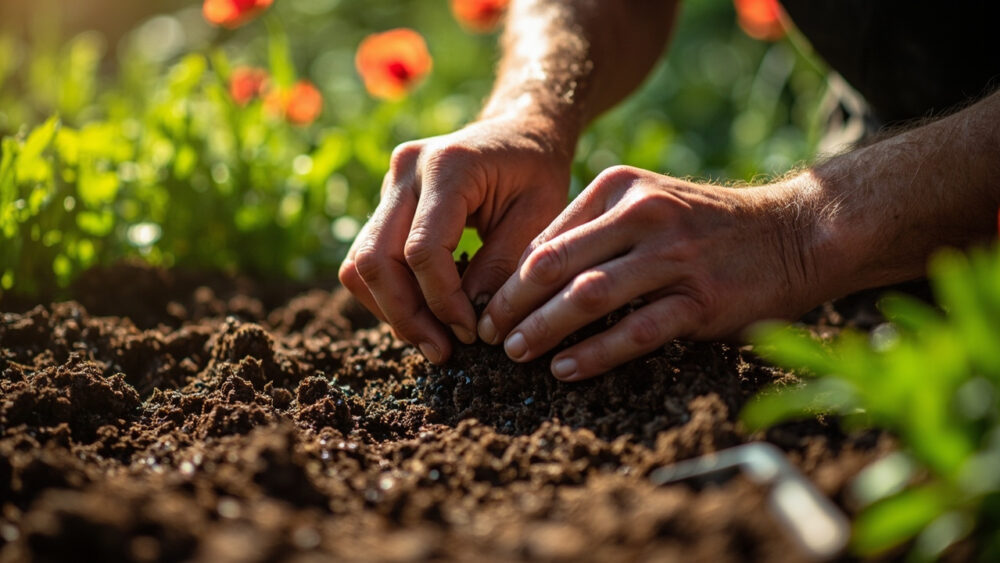
Forget the calendar for a minute and look at the ground. The test that matters is soil, not air temperature. Grab a handful an inch or two down. If it is cold, moist, and crumbles rather than balls up sticky, you are close to the window or already in it.
Snow on the ground is not a problem. Poppy seed sown on top of a light, melting snow cover is an old trick that works, because the melt pulls the tiny seed down into good contact with soil without you having to bury it.
Watch for the freeze-thaw cycle too. Several nights below freezing followed by daytime thaws is prime poppy weather, since that repeated freeze and thaw action naturally works the seed into the soil surface for you.
Once you know how to spot your window, the next question is what actually happens if you miss it in either direction.
Planting Too Early or Too Late: What You Actually Lose
If you assumed “too early” is the risky mistake, that guess has it backward. Poppy seed sown on frozen ground in the dead of winter is genuinely fine. It sits dormant and germinates the moment conditions turn favorable.
The real damage happens on the late side. Planting after the soil has warmed past the mid 60s and dried out gives you spotty, weak germination, and any seedlings that do come up will be small and stressed heading straight into summer heat.
Poppies are famously bad transplants too, because of a long taproot that resents disturbance. So late planting does not just mean a slower start, it often means a shorter bloom window before heat shuts the plant down for good.
This is also the sign that trips people up: seedlings that look thin, pale, and sparse for weeks. That is not failure, that is just how poppy seedlings behave before they finally take off.
Once you understand what a normal, healthy poppy start actually looks like, the prep work below gets a lot less mysterious.
Prep to Do Before the Window Opens
Do your bed work in fall, before winter locks up the soil, because you will not want to be tilling frozen ground in February. Loosen the top few inches, work in a light layer of compost, and rake it reasonably smooth and free of clumps.
Poppy seed is tiny and needs light to germinate, so it goes on the surface or barely a sixteenth of an inch deep, never buried like a bean or squash seed. Mixing the seed with a cup of dry sand before scattering helps you see where you have sown and avoids the clumpy patches that turn into overcrowded seedlings.
Skip fertilizer at planting time. Rich soil pushes leafy growth over flowers and can also encourage the kind of soft growth that flops in wind and rain.
Space or thin seedlings to roughly 6 to 12 inches apart depending on the variety, since crowded poppies stretch, lean, and bloom smaller than plants given real elbow room.
With the bed ready, the last piece is knowing how your particular climate should shift this whole timeline.
Zone and Region Notes That Actually Change the Timing
Cold-winter zones, roughly 3 through 6, do best with a true late winter sowing, 4 to 6 weeks before last frost, right onto snow or frozen ground. Fall sowing here is riskier since seed can wash around or germinate too early during a warm spell and then get killed by hard freezes.
Mild-winter zones, 7 through 9, flip the strategy. Fall sowing, 6 to 8 weeks before your first freeze, gives poppies a full season of root development and consistently earlier, bigger blooms than a spring-only planting.
Hot-summer, short-spring regions have the narrowest true window of all, since the gap between “soil finally workable” and “too hot for poppies” can be just a few weeks. Gardeners there often get the best results seeding in very late winter and accepting that the season will be shorter but still worthwhile.
However you shift the calendar, the underlying rule never changes: cold soil first, warm soil last.
Now for the part you can actually save.
Poppies at a Glance
- When to plant: 4 to 6 weeks before your last frost in cold-winter climates, or 6 to 8 weeks before first frost in mild-winter zones 7 through 9.
- Soil temperature target: 50 to 65 F, cold and moist, not warm and dry.
- Planting depth: on the surface or no deeper than a sixteenth of an inch, since seed needs light to germinate.
- Spacing: thin to 6 to 12 inches apart depending on variety, to avoid weak, leggy plants.
- Bed prep: loosen and lightly amend soil in fall, skip fertilizer at planting time.
- Frost tolerance: seedlings handle light frost fine, so early sowing is low risk.
- Biggest mistake to avoid: waiting for warm, dry spring soil, which gives sparse germination and stunted plants.
Get the timing anchored to cold soil instead of the calendar, and poppies pretty much plant themselves.
Everything else, the sparse seedlings, the slow start, the eventual flush of color, follows from that one decision.