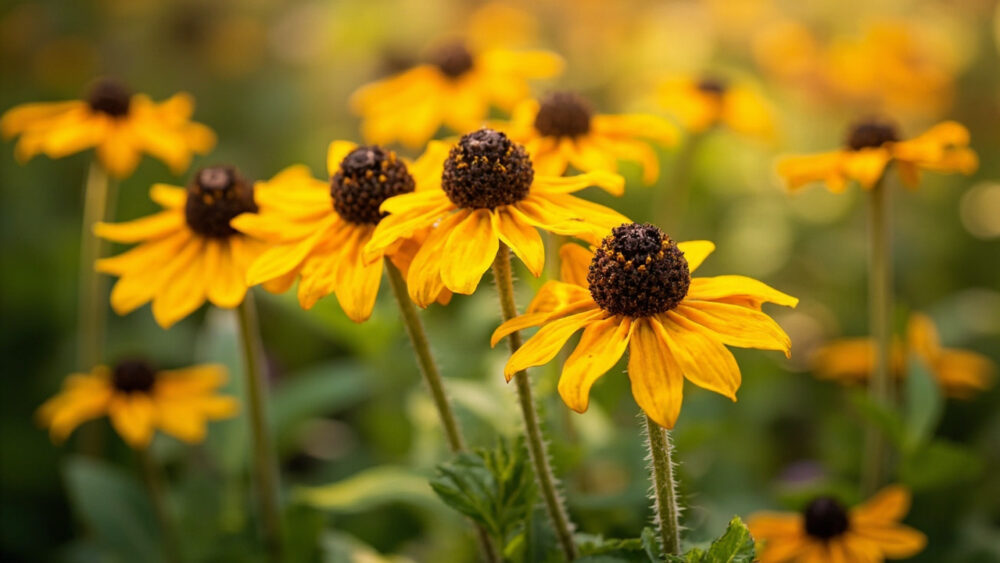
Black eyed susans bloom from early summer into fall, typically starting sometime in June and running through September or even October depending on your climate. That is a long window, and a single plant can hold color for two to three months straight once it gets going. But the exact answer for your yard depends on a few things most people never think to check.
First year plants from a nursery pot behave differently than an established patch that has been in the ground three years. Sun exposure changes the timing by weeks. And whether you deadhead or not decides if you get one big flush or a season-long parade.
Stick with this one. Down at the bottom is a save-able quick-reference card with the bloom window, the conditions that shift it, and the fixes for a plant that refuses to flower.
The Bloom Window and How Long It Actually Lasts
Most black eyed susans (Rudbeckia hirta and the related perennial species like Rudbeckia fulgida) open their first flowers in late June to early July in most of the country. In warmer zones, that can slide into late May. In colder northern zones, you might not see the first blooms until mid to late July.
Once they start, individual plants keep producing new flowers for 8 to 12 weeks. A well-fed, deadheaded plant in decent sun can push blooms right up until the first hard frost.
That is the plant’s total bloom season, not one flower’s lifespan.
Here is what changes that timeline for your specific plants.
What Actually Controls When Yours Bloom
Sun exposure is the biggest lever. Black eyed susans want a minimum of 6 hours of direct sun. Plants getting 4 to 5 hours will still bloom, just later and thinner. Deep shade plants may barely flower at all.
Plant age matters almost as much. A black eyed susan started from seed this spring often does not bloom heavily until its second season. Nursery starts already a few months old, or a division from an established clump, will flower the same year you plant it.
Species matters too. Rudbeckia hirta is often grown as an annual or short-lived biennial and tends to bloom fast and hard its first year. The perennial types like Goldsturm bloom a bit later but come back reliably for years.
Soil temperature also plays a role. Direct-sown seed needs soil around 70 degrees F to germinate well, which pushes bloom time later if you seeded straight into cool spring ground.
If yours is behaving differently than the calendar says it should, the fix usually lives in one of these four factors.
How to Get More Blooms, or a Longer Show
Deadheading is the single biggest lever you control. Snip spent flowers just below the flower head, down to the next leaf set or bud. This stops the plant from putting energy into seed production and redirects it into more flowers. Do this every week or two through the season.
Feeding matters, but go light. A balanced fertilizer once in early summer is plenty. Too much nitrogen gives you a bushy green plant with fewer flowers, which is the opposite of what you want.
Water consistency beats water volume. Black eyed susans are drought tolerant once established, but even watering during dry stretches keeps flower production steady instead of stop-and-start.
Dividing overcrowded perennial clumps every 3 to 4 years also renews bloom vigor, since congested roots produce fewer flowers over time.
If you are doing all of that and still not seeing much color, the problem is probably something else entirely.
Why Your Black Eyed Susan Might Not Be Blooming
If you assumed a non-blooming plant just needs more fertilizer, that guess is usually backwards. Overfeeding is a more common cause of no-bloom than underfeeding.
Too much shade is the most common real cause. Count the actual hours of direct sun the spot gets, not what you assume it gets. Trees fill in by midsummer and quietly steal light a plant had in spring.
A second common cause is a too-young plant. First-year seed-grown plants sometimes spend their whole first season building roots and leaves, and simply skip flowering until year two.
Overcrowding is a third cause. A dense clump that has not been divided in years puts most of its energy into surviving, not blooming.
Rabbit or deer browsing can also strip buds before you ever see them open, which looks like a no-bloom problem but is really a wildlife problem.
Once flowers do start showing up, how you treat the plant decides whether that show lasts eight weeks or eighteen.
Aftercare That Stretches the Season
Keep deadheading through the entire bloom season, not just once. Every spent bloom you remove is a signal to the plant to make another.
Leave the very last flush of flowers standing in fall. Black eyed susan seed heads feed goldfinches and other birds through winter, and the dried heads add structure to a winter garden.
Cut plants back to a few inches above ground in late fall or early spring, whichever your climate allows. Removing old growth prevents disease from overwintering in dead foliage.
One honest note on safety: black eyed susan is generally considered mildly toxic to pets if eaten in quantity, and can cause mild stomach upset. If a pet eats a significant amount and shows symptoms, call your veterinarian rather than waiting it out.
All of that adds up to one simple card worth keeping on hand.
Black Eyed Susans: Quick Reference
- Bloom window: late June through September, sometimes into October, starting earlier in warm climates and later in cold ones.
- Length of show: 8 to 12 weeks per plant with regular deadheading, shorter without it.
- Sun needs: minimum 6 hours direct sun for strong bloom, less sun means fewer and later flowers.
- First-year plants: seed-grown plants may not bloom until their second season, nursery starts usually bloom the same year.
- Best bloom booster: weekly deadheading plus light, balanced fertilizer once early in the season.
- Common no-bloom causes: too much shade, overcrowded roots needing division, or a plant still too young.
- Pet caution: mildly toxic if eaten in quantity, contact a veterinarian for any suspected ingestion with symptoms.
Get the sun right and keep the shears handy, and this is one of the longest-blooming flowers you can plant.
Everything else is just timing you now know how to read.