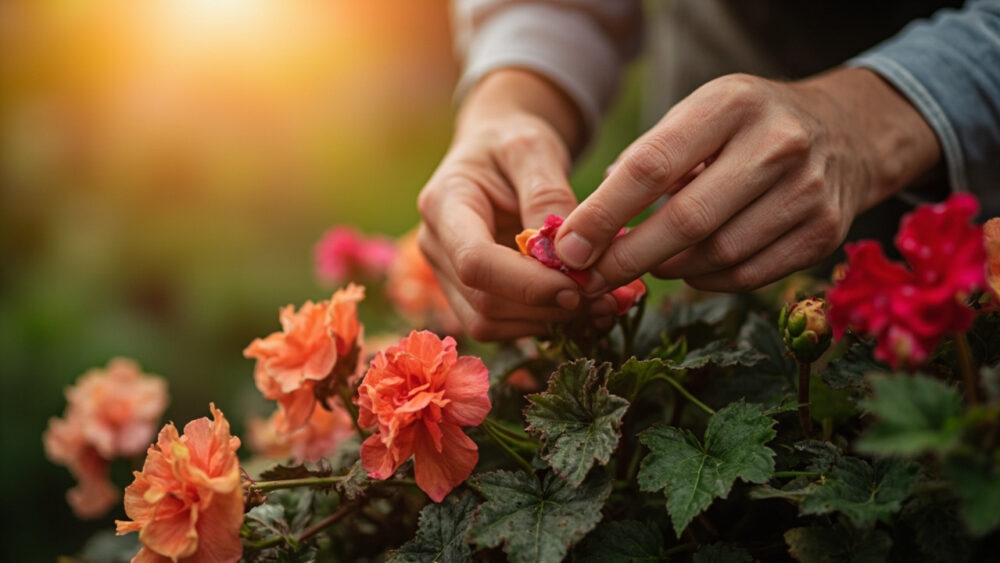
Deadheading begonias means pinching or snipping off the spent bloom plus the short stem it sits on, cutting back to just above the next leaf or leaf node. Do it as soon as a flower fades and starts going papery or brown at the edges, not weeks later. That is the whole mechanical answer to how to deadhead begonias, but the timing and the technique are where most people quietly go wrong.
Here is the thing almost nobody tells you: some begonias barely need deadheading at all, and doing it on the wrong type wastes your time or, worse, strips off next season’s bulb reserves. There is also one cut location that determines whether you get a bushier plant or a leggy, bare-legged one. And there is a very common assumption about “more flowers, more often” that is not quite true for every begonia in your yard.
Stick around for the mistakes section, because it covers the one that quietly stops flowering cold for weeks. Then at the bottom you will find the Begonias at a Glance card, the kind of thing worth screenshotting before you walk back out to the plant.
When to Deadhead, and When to Leave the Flowers Alone
Deadhead continuously through the growing season, roughly from a few weeks after your last frost through early fall, whenever you spot a bloom that has faded, gone mushy, or dropped most of its petals. Wax begonias and fibrous types rebloom fast and reward frequent light deadheading. Tuberous begonias bloom in bigger flushes, so you will do it in batches rather than daily.
Skip deadheading in two situations. If you are trying to save seed, let a few spent flowers stay on to mature. And in the last four to six weeks before your first fall frost, on tuberous types, ease off entirely so the plant can redirect energy into the tuber instead of new flowers.
That fall pullback surprises people who assume more deadheading always means more blooms.
The One Prep Step That Actually Matters
You do not need fancy tools. A clean pair of small snips or your fingernails work fine on soft begonia stems.
The prep step people skip is wiping the blades with rubbing alcohol between plants, especially if any plant nearby has shown spotted or mushy leaves. Begonias are prone to botrytis and bacterial leaf spot, and dirty blades move both around your bed for free.
Work in the morning after dew has dried, not right after watering or rain. Wet foliage plus fresh cuts is exactly the combination that invites fungal trouble.
Once your tools are clean and the leaves are dry, you are ready for the actual cut.
How to Deadhead Begonias Step by Step
Step 1: Find the right stem
Follow the faded flower down to where its short stalk meets the main stem or a leaf axil. That junction, not partway down the flower stalk, is your target.
Step 2: Pinch or snip just above a leaf node
Cut or pinch the stalk off close to where it joins, leaving no long bare stub. Cutting into a node, rather than mid-stalk, is what triggers a new side shoot instead of just leaving a dead stick behind.
Step 3: Take the whole flower cluster when it is spent, not petal by petal
Many begonias bloom in clusters on one stalk. Wait until the whole cluster is done rather than plucking individual dying petals, then remove the entire spent cluster at its base in one cut.
Step 4: Drop debris, do not leave it in the bed
Faded begonia flowers turn to mush fast and become a botrytis magnet if they sit on damp soil or foliage. Collect them and toss them, do not compost them if your pile does not get consistently hot.
That single habit, clearing debris instead of letting it lie, prevents most of the fungal problems begonia growers blame on “bad luck.”
What Happens After You Deadhead
On wax and fibrous begonias, expect new buds within seven to fourteen days, faster in warm, bright conditions. Tuberous types are slower, often two to three weeks between flushes even with regular deadheading.
If nothing happens after three weeks, the issue is usually not the deadheading itself. Check light first. Begonias in deep shade or, at the other extreme, blasting hot afternoon sun often stall regardless of how well you groom them.
You should also see the plant filling out a little bushier at each cut point rather than staying stringy. If it is not, that is your cue to look at the mistakes below.
The Mistakes That Cost You Flowers
- Cutting mid-stalk instead of at the node: leaves a bare, brown stub that just sits there and does not push new growth.
- Deadheading tuberous begonias right up to first frost: this steals the tuber’s last chance to bulk up for next year and weakens it going into storage.
- Ripping instead of cutting: tearing wet or brittle stems tends to strip a strip of the main stem’s skin with it, opening a wound that invites rot.
- Ignoring foliage while obsessing over flowers: yellow, spotted, or mushy leaves need removal too, and leaving them on drains the plant’s energy from actual bloom production.
- Deadheading in the heat of the day on a stressed, wilted plant: cutting a plant that is already wilting from heat or dry soil adds stress on top of stress. Water first, cut later in the day or the next morning.
Fix those five habits and deadheading stops being a chore that barely moves the needle and starts actually paying off in bloom count.
Begonias at a Glance
- When to deadhead: continuously from a few weeks after last frost through early fall, stopping four to six weeks before first frost on tuberous types.
- Where to cut: just above the nearest leaf node or where the flower stalk meets the main stem, never mid-stalk.
- Tools needed: clean small snips or fingernails, wiped with rubbing alcohol between plants.
- Best time of day: morning, once dew has dried, never right after watering or rain.
- Expected rebloom: seven to fourteen days for wax and fibrous types, two to three weeks for tuberous types.
- Debris handling: remove and discard spent blooms rather than letting them lie on soil or foliage.
- Skip it entirely: in late fall on tuberous begonias, or on any flowers you are letting go to seed.
Get the cut location right and the timing right, and deadheading becomes a five-minute habit, not a project.
Everything else about a healthy, floriferous begonia builds on that one small, correct snip.