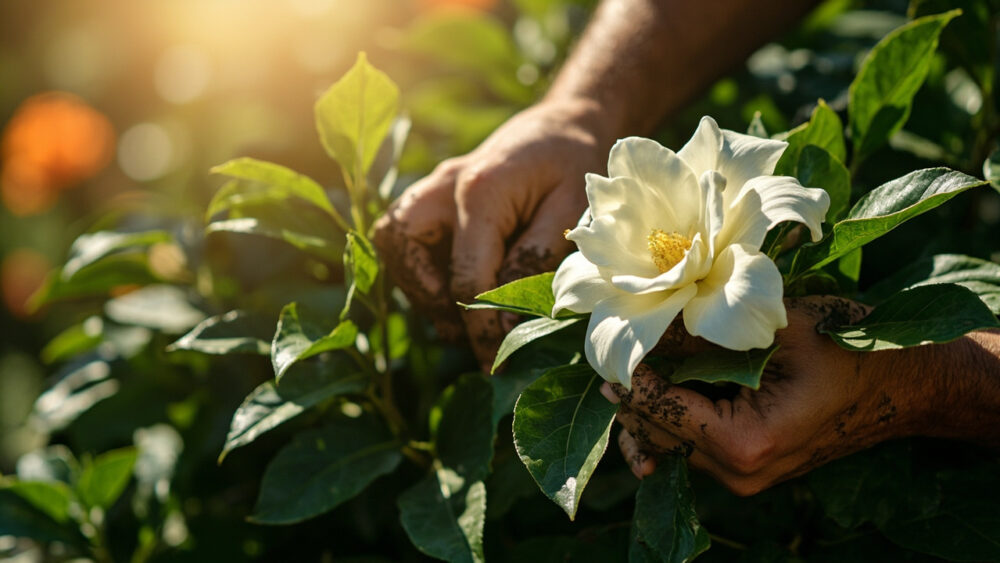
If your gardenia is all glossy green leaves and no flowers, the most likely cause is not enough light or the wrong temperature swing at bud-set time. Gardenias need bright light most of the day and a real temperature drop at night in fall, usually into the 55 to 65 F range for several weeks, to trigger bud formation. Fix the light first, then look at the other causes below, because a gardenia that gets less than four to six hours of direct or very bright light rarely blooms no matter what else you do right.
Everyone blames fertilizer first. Dump on a bloom booster, wait, nothing happens, more fertilizer goes down. That is usually the wrong move, and it can actually make things worse by pushing leafy growth at the expense of buds or burning roots that were never hungry to begin with.
There is one detail on the plant that tells you which cause you actually have: whether buds form and then drop, or whether no buds show up at all. Those are two different problems with two different fixes, and mixing them up wastes a whole season. Stick around for the honest recovery timeline too, because gardenias are notorious for testing a gardener’s patience even after you fix the real issue, and the full diagnosis checklist is waiting at the bottom so you can run it right at the plant in about two minutes.
Causes, Ranked Most to Least Likely
1. Not enough light
Confirm it: check how many hours of bright, direct-ish light the spot actually gets. Gardenias grown indoors near an east or west window, or outdoors under a porch overhang or tree canopy, often get two or three hours when they need four to six of strong light, ideally with some direct morning sun.
Leaves stay dark green and healthy-looking, which is exactly what tricks people into ruling this out. Fix it: move a potted plant to your brightest window or outdoors to a spot with morning sun and afternoon shade, or thin overhanging branches on an outdoor shrub. Indoors, a grow light run 12 to 14 hours a day over the plant will make up the difference.
Light is the foundation everything else sits on.
2. No cool night period in fall
Confirm it: think back to where the plant sat six to eight weeks before you expected blooms. Gardenias kept in a heated house or a mild climate that never drops below 65 F at night often skip bud formation entirely, even with perfect light and feeding.
They need roughly four to six weeks with nights in the 55 to 65 F range to set buds. Fix it: for potted plants, move them somewhere cooler at night in early fall, an unheated porch or garage that stays above freezing works. For in-ground shrubs in warm climates, there is not much you can do about a mild fall except choose a more heat-tolerant cultivar next time.
This is the cause almost nobody thinks to check, and it explains a lot of “healthy plant, zero flowers” seasons.
3. Buds forming, then dropping before opening
Confirm it: this is different from the first two causes. You will see swollen green buds that brown, shrivel, and fall off before they ever open, instead of no buds at all.
The usual triggers are a sudden temperature swing, dry soil right when buds are forming, low humidity, or moving the plant to a new spot while buds are developing. Fix it: keep watering consistent through bud season, never letting the pot dry out completely, raise humidity with a pebble tray or humidifier for indoor plants, and stop rearranging the plant once buds appear.
Bud drop feels like the plant is close to blooming and failing at the last step, and often it is exactly that.
4. Overfeeding or the wrong fertilizer balance
Confirm it: check the growth pattern. Lots of soft, leafy new growth with a slightly leggy shape and no flower buds points to too much nitrogen, often from repeated feeding with an all-purpose or high-nitrogen fertilizer.
Gardenias also want acidic soil, roughly pH 5.0 to 6.0, and fertilizers meant for alkaline-loving plants throw that off. Fix it: switch to a fertilizer formulated for acid-loving plants like azaleas and camellias, feed on the product label’s schedule rather than more often, and ease off nitrogen-heavy feeding from late summer onward so the plant shifts energy toward buds instead of leaves.
More food is not the fix most people assume it is.
5. Underwatering or inconsistent watering
Confirm it: stick a finger two inches into the soil. Gardenias want soil that stays evenly moist, never bone dry and never soggy, and they sulk fast when watering swings between the two extremes.
Wilting between waterings, followed by bud drop or no buds at all, is the pattern. Fix it: water on a consistent schedule based on soil feel rather than the calendar, and use a pot with drainage holes so you can water thoroughly without leaving roots sitting wet.
Inconsistent watering stresses the plant right when it needs steady conditions to commit to flowering.
6. Root-bound or recently repotted
Confirm it: slide the plant out of its pot if you can. Roots circling tightly around the root ball, or a plant that was repotted into a much bigger pot within the last few months, both disrupt blooming.
A gardenia recently shifted to fresh soil often puts energy into root and leaf recovery instead of flowers for a season. Fix it: repot root-bound plants up one pot size, not several sizes at once, using an acidic potting mix, and give a newly repotted plant a full growing season before expecting a normal bloom show.
Now that you have the individual causes, the tricky part is telling them apart on the actual plant in front of you.
How to Tell the Causes Apart
Location matters more than you would think. A plant in low light usually looks otherwise fine, uniformly green, no distorted growth, just quiet. A plant with a temperature problem also looks healthy but never even attempts buds.
Bud drop is unmistakable once you know to look for it: you will find small, browned, shriveled buds on the ground or still attached but dead, rather than a total absence of buds. That is your signal it got far enough to start, then stopped.
Overfeeding shows up as new growth: soft, fast, leggy stems with leaves larger and more numerous than the rest of the plant. Watering problems show up as leaf feel and texture: wilting, slight curling, sometimes a dull sheen instead of gloss.
A root-bound plant tells its own story the moment you check the pot, roots visibly wrapped and no loose soil left to speak of.
Once you know which one matches your plant, the next question is how long recovery actually takes.
Will It Recover?
Light and temperature fixes are the most forgiving. Correct the light or give the plant a proper cool fall period, and most gardenias bloom the following season, sometimes within eight to twelve weeks if you catch it early enough in bud-set timing.
Bud drop from a single stressful event, one cold draft, one missed watering, is also very recoverable. The plant usually sets a new round of buds once conditions steady out, though you may lose that particular bloom cycle.
Overfeeding and pH problems take longer, often a full season, since you are waiting for the plant’s nitrogen levels and soil chemistry to settle down along with a full root system flush.
Root-bound plants need the most patience: expect a season of mostly recovery growth before flowers return in force.
Honest cutoff: if you have corrected light, temperature, watering, and feeding, and gone two full growing seasons with zero buds forming at all, something structural is likely wrong, often chronic poor drainage or root damage, and it may be time to start a new plant rather than keep troubleshooting the old one.
Fixing the current problem matters, but preventing the repeat is what actually gets you consistent blooms year after year.
How to Keep It From Happening Again
Lock in the light first. Pick a spot with four to six hours of bright light, including some direct morning sun, and leave the plant there rather than moving it around the house or yard by season.
Give it a genuine cool period in fall, nights in the 55 to 65 F range for four to six weeks, before you expect winter or spring blooms.
Water on a consistent schedule tied to soil feel, not a fixed number of days, and keep the soil acidic with a fertilizer built for acid-loving plants, fed on label schedule and eased off in late summer.
Repot only when actually root-bound, moving up one size at a time, and avoid disturbing the plant once flower buds appear.
Run through the checklist below at the plant right now and you will know within two minutes which fix to start with.
Diagnosis Checklist
- Count the hours of bright or direct light the spot gets today: if under four hours, move the plant or add grow light time before troubleshooting anything else.
- Recall the plant’s nighttime location six to eight weeks before bloom time: if it never dropped into the 55 to 65 F range for several weeks, that is your likely cause.
- Look for shriveled, browned buds on the plant or ground: if present, this is bud drop, not a failure to bud at all.
- Check recent growth for soft, leggy, oversized leafy stems with no buds: if present, ease off nitrogen fertilizer and switch to an acid-plant formula.
- Press a finger two inches into the soil: if it swings between soggy and bone dry, fix the watering routine before anything else.
- Slide the plant from its pot if potted: if roots circle tightly with no loose soil, it is root-bound and needs a size-up repot.
- Note whether the plant was repotted or relocated in the last two to three months: if so, give it one full season before expecting normal blooms.
Most gardenias that refuse to bloom are not sick, just missing one specific condition they need before they will commit to flowers.
Fix that one condition, give it a full season, and the buds usually come back on their own.