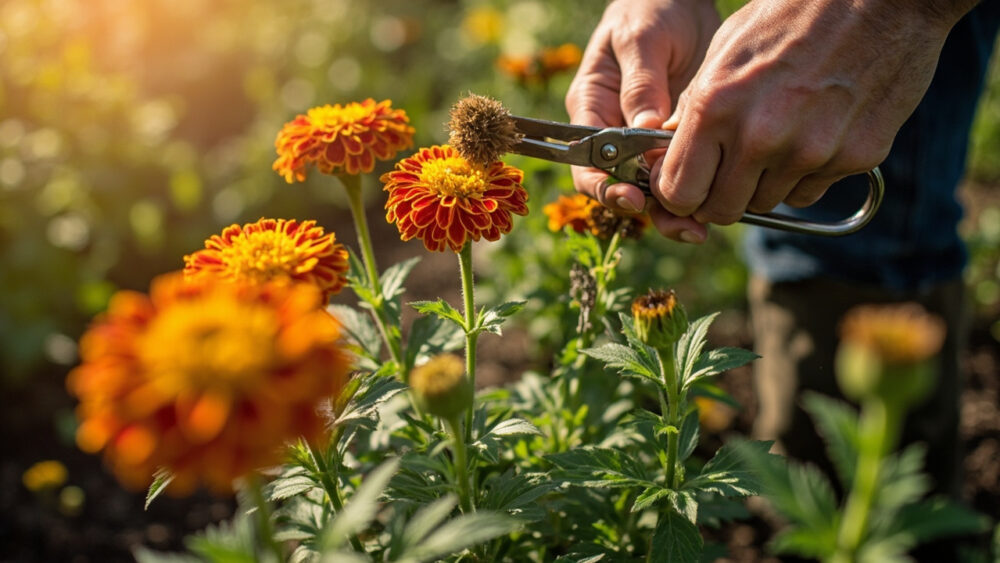
Here’s how to deadhead gaillardia: once a flower’s petals have dropped or gone papery and the center cone has darkened, snip the stem down to the next set of leaves or side bud, not just the flower head itself. Do this every 7 to 10 days through the bloom season, starting as soon as the first flush of flowers fades. Skip the flowers that still have any color left in the petals, even ragged color, because you’ll cut off blooms that had more days left in them.
That’s the short version, and it works. But there are a few things about deadheading gaillardia that trip people up badly enough to cost them their second and third bloom flush entirely.
Most people cut in the wrong spot, snipping just under the flower head and leaving a bare, leafless stem sticking up that never produces another bud. There’s also a stopping point most gardeners miss completely, a point in late summer where continuing to deadhead actually works against the plant instead of for it. And if you’ve been wondering whether all that snipping is even worth it compared to just letting the plant self-clean, the honest answer is not what you’d guess. Stick around for the full breakdown, and save the “Gaillardia at a Glance” card at the bottom for the exact numbers on timing, spacing, and depth.
When to Deadhead, and When to Leave It Alone
Start deadheading as soon as the first blooms fade, typically 6 to 8 weeks after the plant begins flowering. Gaillardia (blanket flower) blooms in flushes, not one continuous wave, so you’re managing a cycle, not a single event.
The stage that matters is the flower’s, not the calendar’s. Look at the center disk. While it’s still bright and slightly domed with petals fanned out around it, leave it. Once petals curl, brown, or drop and the disk flattens and darkens, that flower is done contributing and it’s fair game.
Stop deadheading roughly 4 to 6 weeks before your first fall frost. Late blooms left alone at that point will form seed heads that feed birds through winter and self-sow a few volunteers, which is a fine trade once the growing season is basically over.
The exact cut you make matters just as much as the timing.
Tools and the One Prep Step That Actually Matters
A clean pair of bypass pruners or garden snips is all you need. Scissors work in a pinch on young plants with thin stems. What you don’t want is dull blades that crush the stem instead of slicing it, since a crushed stem heals slower and invites rot.
The prep step people skip is wiping down the blades before you start, especially if you used those same pruners on a diseased plant recently. Gaillardia isn’t disease-prone, but it can pick up powdery mildew and fungal leaf spot in humid weather, and dirty blades are a needless way to introduce it.
A quick wipe with rubbing alcohol or a household disinfectant wipe takes 15 seconds. Do it once at the start of a deadheading session, not between every single cut, unless you’re moving between plants you know are struggling.
Once your blades are clean, the actual cutting is where most of the guesswork lives.
How to Deadhead Gaillardia, Step by Step
Step 1: Find the spent bloom
Confirm the flower is actually done. Petals dropped, curled, or bleached out, and the center cone gone dark brown or black instead of the fresh yellow-green or reddish tone of an active bloom.
Step 2: Trace the stem down to the next junction
Follow the flower’s stem downward until you hit the first set of leaves, a leaf node, or a smaller side bud branching off. This is almost always somewhere between 2 and 6 inches below the flower head, depending on the plant’s size.
Step 3: Cut just above that junction
This is the step that separates a plant that reblooms fast from one that sulks. Cutting right above a leaf node or side bud gives the plant a place to redirect energy immediately. Cutting an inch below the flower head and stopping there just leaves a bare stub that dies back and does nothing.
Step 4: Remove the whole cut stem
Don’t leave clipped stems draped in the plant’s crown. They mat down over the foliage, trap moisture, and become the exact conditions that invite crown rot in a plant that otherwise handles heat and drought without complaint.
Do this across the whole plant in one pass rather than picking off one flower a day, and you’ll actually see the difference within two weeks.
What to Expect in the Weeks After
Gaillardia responds to deadheading faster than a lot of perennials. Expect new buds forming within 10 to 14 days of a thorough deadheading pass, especially if the plant is getting at least 6 hours of direct sun and isn’t sitting in soggy soil.
If you assumed deadheading mainly makes the plant look tidier, that’s true but it’s not the real payoff. The real reason to do it is that gaillardia puts a surprising amount of energy into forming seed once a flower fades, and every seed head you remove is energy the plant redirects into the next round of buds instead.
A well-deadheaded gaillardia in decent sun can push out three to four separate bloom flushes from early summer through early fall, versus one long, thinning bloom that quits by midsummer if you never touch it.
That gap in bloom output is exactly where most of the common mistakes happen.
The Mistakes That Actually Cost You Flowers
Cutting only the flower head. This is the single most common error, and it’s the one that leaves plants looking scraggly with a forest of bare, leafless stems by midsummer. Always cut down to a leaf node or side shoot, never just below the petals.
Deadheading too aggressively too early in the season. Removing flowers the moment petals start looking slightly worn, before the seed cone has actually finished, doesn’t speed up reblooming. It just means you’re cutting flowers that still had pollinator value and a few good days left.
Ignoring the whole-plant shear option. If your gaillardia has gotten leggy and sparse-looking by midsummer with flowers only at the stem tips, individual deadheading isn’t enough. Shear the entire plant back by about a third, right down to a layer of healthy leaves, and it will bush out and rebloom within 3 to 4 weeks. This is different from routine deadheading and it’s the fix most people never try because it looks drastic.
Deadheading right up to frost. Continuing to snip every spent bloom into late fall removes the seed heads gaillardia needs to self-sow, and strips winter food from finches and other seed-eating birds for no real benefit, since the plant isn’t going to squeeze out another flush that late anyway.
Working with dull or dirty blades. Crushed stems heal slower, and any lingering fungal spores from a previous cut get a free ride into a fresh wound.
Get those five things right and gaillardia is genuinely one of the easiest perennials to keep blooming hard all season.
Gaillardia at a Glance
- When to start deadheading: as soon as the first flush of blooms fades, petals dropped or curled and the center cone darkened.
- How often: check every 7 to 10 days through the active bloom season.
- Where to cut: down to the next leaf node or side bud, roughly 2 to 6 inches below the flower head, never just under the petals.
- When to stop: about 4 to 6 weeks before your first fall frost, so late blooms can set seed for self-sowing and bird food.
- If it gets leggy: shear the whole plant back by about a third instead of deadheading one flower at a time.
- Expect rebloom: new buds within 10 to 14 days of a thorough deadheading pass, in at least 6 hours of direct sun.
- Tools: clean bypass pruners or snips, wiped down with alcohol before you start.
Cut to the next leaf or bud, not just under the flower, and clean your blades before you start. Everything else about deadheading gaillardia is timing you’ll pick up after one season of paying attention.