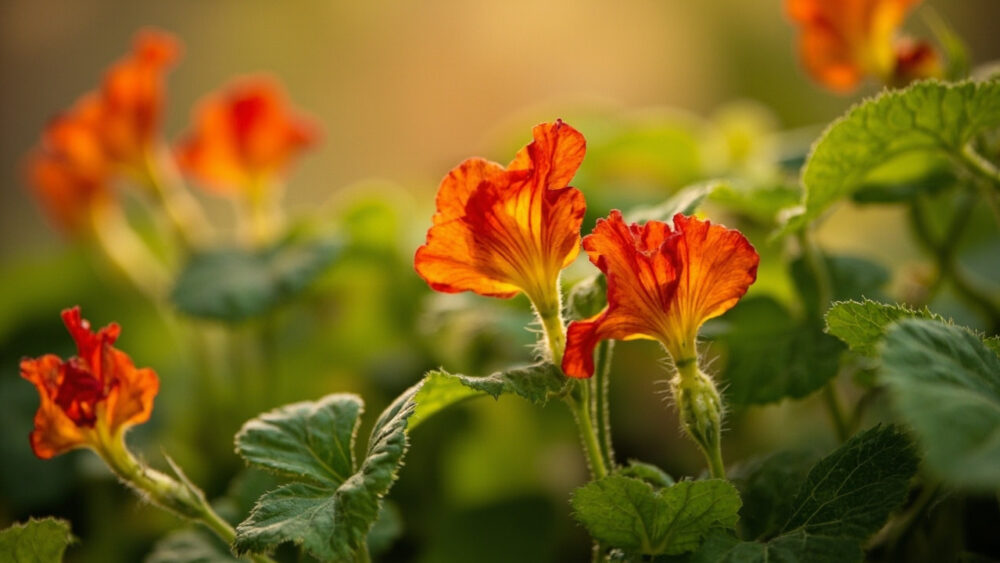
Nasturtiums typically start blooming 5 to 8 weeks after sowing and keep flowering from early summer straight through to your first hard frost, as long as the weather stays on the cool-to-mild side. That is a genuinely long bloom window compared to most annuals, but it comes with a catch most people find out the hard way.
Heat is the one thing that shuts nasturtiums down mid-season, and it fools a lot of gardeners into thinking their plant is dying when it is just taking a break. There is also a fast way to tell whether your specific plant, in your specific pot or bed, is on track or behind schedule, and a couple of habits that stretch the flower show by weeks.
Stick around for the quick-reference card at the bottom. It is built to save and glance at all season, so you are not guessing every time the flowers slow down.
The Bloom Window, and How Long It Actually Lasts
Nasturtiums sown after your last frost usually open their first flowers in 5 to 8 weeks, so if you planted in late spring, expect blooms by early to midsummer. From there, a healthy plant will flower continuously for several months, not just a couple of weeks like some annuals.
In mild coastal or cool-summer climates, that bloom run can stretch from early summer all the way to the first frost in fall, sometimes 4 to 5 months of near-constant flowers. In hot inland climates, expect a strong spring-into-early-summer show, a rough patch during the peak heat of midsummer, and a second flush once temperatures ease in late summer or early fall.
That midsummer lull is normal, not a failure on your part.
What Actually Controls the Timing
Three things decide when your nasturtiums bloom and for how long: sowing date, temperature, and soil richness. Sowing date sets the starting line, since nasturtiums need warm soil, around 55 to 65°F, to germinate well and get moving.
Temperature during the growing season matters more than most people expect. Nasturtiums are cool-weather flowers at heart. They bloom happily in 60 to 75°F weather and start sulking once days consistently push past 85°F, dropping flower production even if the plant itself still looks green and full.
Soil richness runs the show in the opposite direction from what most flowers want. Rich, heavily fertilized soil pushes nasturtiums toward leaf growth instead of flowers. Lean, average, even slightly poor soil is what actually gets you the most blooms.
That last point trips up a lot of gardeners who assume more feeding always means more flowers.
How to Get More Blooms, or Blooms That Last Longer
If you assumed the fix for fewer flowers is more fertilizer, that guess is exactly backwards for this plant. Nasturtiums bloom best when they are a little bit neglected.
Skip the fertilizer entirely, or use it sparingly. Nitrogen-heavy feed grows you a lush, leafy, flower-shy plant. If your soil is already average garden soil, leave it alone.
Give them full sun for the strongest bloom count, 6 or more hours a day. In hot climates, afternoon shade actually helps by keeping the plant out of the worst heat stress, which in turn keeps it flowering longer into summer.
Water consistently but do not drown them. Nasturtiums tolerate dry spells better than soggy soil, and overwatering causes the same leafy, flower-light growth that overfeeding does.
Succession sowing is the other trick worth knowing: drop a second round of seeds 4 to 6 weeks after the first, so a fresh batch is just coming into bloom as the first round starts to fade in the heat.
Get the feeding and sun right and the next question usually solves itself.
Why Your Nasturtiums Might Not Be Blooming Yet
If it has been more than 8 weeks since sowing and you still have no flowers, check these in order:
- Too much nitrogen: lush dark green leaves with few or no flowers almost always mean rich soil or recent fertilizer, especially lawn feed drift or compost that was heavy on manure.
- Not enough sun: fewer than 4 to 5 hours of direct light a day will keep a nasturtium green and healthy but reluctant to flower.
- Still too young: a plant under 5 weeks old simply has not hit its bloom trigger yet, so give it more time before troubleshooting further.
- Heat stress: if this is happening in the peak of summer and the plant looked fine earlier in the season, this is the midsummer lull, not a problem.
- Cool soil at sowing: seeds sown into soil under 55°F germinate slowly and get a late, delayed start on everything that follows.
Most no-bloom cases trace back to one of those five, and the fix is usually just patience or backing off the feeding.
Deadheading and Aftercare That Stretch the Show
Nasturtiums do not strictly require deadheading to rebloom the way roses or dahlias do, but pinching off spent flowers still helps. It redirects energy away from seed production and keeps the plant putting out new buds instead.
Pinch spent blooms at the base of the flower stem every week or two through the season. It takes a couple of minutes and noticeably slows the plant’s slide into seed-making mode.
Trim back leggy, sprawling growth by a few inches in midsummer if the plant looks tired. This often triggers a fresh flush of both leaves and flowers within a couple of weeks.
Let a few flowers go to seed late in the season on purpose. Nasturtiums self-sow readily, and those dropped seeds often come up on their own next spring, sometimes earlier than anything you deliberately plant.
That is the whole cycle, and now here is everything in one place to save.
Nasturtiums: Quick Reference
- First bloom: 5 to 8 weeks after sowing, once soil and air have warmed past roughly 55°F.
- Bloom season: early summer through first hard frost in mild climates, spring through early summer with a midsummer pause in hot climates.
- Ideal temperature: 60 to 75°F, with flowering slowing noticeably above 85°F.
- Soil: lean to average, unfertilized or lightly fed, since rich soil grows leaves instead of flowers.
- Sun: 6 or more hours daily for the most blooms, with afternoon shade tolerated and even helpful in hot climates.
- To extend the show: deadhead every 1 to 2 weeks, sow a second round 4 to 6 weeks after the first, and skip the fertilizer.
Get the sowing time, sun, and lean soil right, and nasturtiums will out-bloom almost anything else in the bed.
The only real trick after that is staying out of their way.