The best time to plant peonies is fall, roughly six to eight weeks before your ground freezes solid, when soil temperatures have cooled into the 50s but the roots still have time to settle before winter. That is the window that actually matters for bare-root peonies, which is how most people buy them. Container-grown peonies are more forgiving and can go in spring, but even then you are working against the plant’s natural rhythm, not with it.
Here is where most people go wrong, and it is not a timing mistake at all. It is a depth mistake, and it quietly ruins more peonies than late planting ever does.
There is also a spring question nobody asks until it is too late: if you find a peony at a garden center in April, do you plant it now or wait? And there is a longer honest answer underneath all of this about why a perfectly planted peony still might not bloom the first year, or even the second. Stick with me through the sections below and the full “Peonies at a Glance” card is waiting at the bottom, worth saving to your phone before you touch a shovel.
The Real Planting Window, Anchored to Frost and Soil
Fall is the window that matters because peonies spend winter growing roots, not leaves, and they need cold to set next year’s flower buds. Aim for six to eight weeks before your average first hard freeze. In much of the country that lands somewhere between mid September and late October.
Soil temperature is your better guide than any calendar date. You want the soil at planting depth, around 2 to 3 inches down, sitting in the 50s Fahrenheit and trending down, not up. Warm soil in fall tells roots to push new top growth right before winter kills it, which wastes the plant’s stored energy.
Spring-planted peonies, usually container stock, can go in as soon as the soil is workable and danger of hard freeze has passed. They will lag a full season behind a fall-planted root doing the same job.
Knowing the calendar window is one thing, reading your own yard is another.
How to Tell Your Actual Window, Not the Almanac’s
Your yard’s window depends on your soil, not just your zip code. Two houses on the same street can have a two-week difference in soil cooling if one has heavy clay and the other sandy loam. Clay holds warmth longer into fall, so clay-soil gardeners should lean toward the later end of the window rather than the earlier end.
Do a simple check. Push a soil thermometer or even a meat thermometer 3 inches down in the bed you intend to use, in the afternoon, a few days in a row. Once you get consistent mid to upper 50s and falling, you are in the real window regardless of what date is on the bag.
Watch your first frost pattern too. If you know roughly when your first light frost tends to hit, count back six to eight weeks from that, not from the first hard freeze that kills everything. Light frost is early enough warning.
Once you know your window, the next question is what happens if you miss it in either direction.
Plant Too Early or Too Late, and Here Is What Actually Happens
If you assumed planting too early just means the peony gets a “head start,” that guess is backwards. Early fall planting in still-warm soil tricks the eyes into pushing tender new growth that has no chance of hardening off before frost hits it, which weakens the crown going into winter.
Planting too late is the more common real-world mistake, especially with mail-order roots that ship late. A peony root planted right before or during a hard freeze has not had time to grow the fine feeder roots it needs. It usually survives, but it sulks. Expect little to no bloom for a year or two while it rebuilds.
Spring planting has its own trap. Plant a bare root too late in spring, once soil is already warm, and it wastes energy on top growth instead of establishing roots, which sets up the same slow start.
None of these mistakes are usually fatal, but every one of them costs you a season of flowers, and that is the part nobody tells you upfront.
The Prep That Matters More Than the Exact Date
Peonies are planted once and left for decadesso the bed prep matters more than hitting the perfect week. Choose a site with at least 6 hours of direct sun; too much shade is the single biggest reason an established peony refuses to bloom.
Dig the hole wide, 18 to 24 inches across, and work in compost or aged manure well before planting so it has time to settle rather than sitting in a loose pocket that drains oddly. Peonies hate wet feet, so if your soil stays soggy after rain, raise the bed 4 to 6 inches or pick a different spot entirely.
Space plants 3 feet apart at minimum. Peonies get wide and dense over the years, and crowding invites the fungal leaf diseases they are prone to in humid summers.
Now for the depth mistake that ruins more peonies than bad timing ever does.
The Depth Mistake That Ruins the Bloom, Not the Plant
Plant peony roots too deep and the plant will live for years while refusing to flower. This is the classic “healthy plant, no blooms” complaint, and it is almost always a depth problem, not a fertilizer or sun problem.
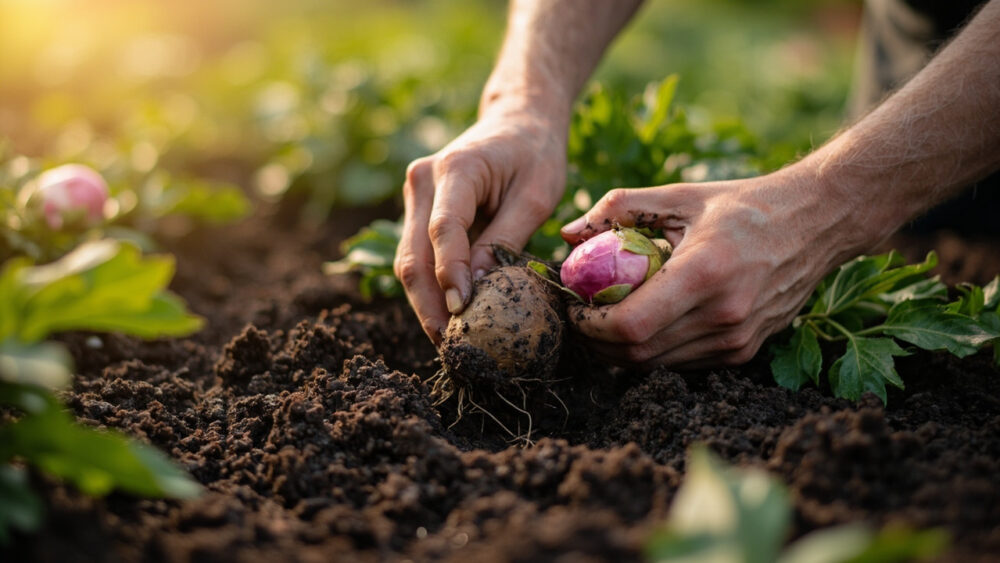
The eyes, the pinkish-red buds on top of the root, need to sit no more than 1 to 2 inches below the final soil surface. In warmer climates, closer to 1 inch is safer. Bury them 3, 4, 5 inches down and the plant survives underground but rarely gets cold enough at the crown to trigger flowering.
This is also the fix if you have an old peony that has never bloomed: dig it in fall, check the depth, and reset it shallower. It sounds drastic but it is often the only cure.
Get the depth right at planting and you skip years of troubleshooting later.
Zone and Region Notes Worth Knowing
Peonies need real winter cold to performwhich is why they thrive in USDA zones 3 through 8 and struggle badly below zone 8’s mild winters. If you garden in zone 9 or warmer, look specifically for heat-tolerant or “southern” peony cultivars, and even then expect fewer, shorter-lived blooms than a gardener in zone 5 gets.
In cold zones 3 and 4, do not stall on fall planting. Your window closes fast and a hard freeze can arrive with little warning once September ends.
In milder zones 7 and 8, you get more room to breathe, sometimes into November, since the ground stays workable longer and the fall cooldown is more gradual.
Wherever you garden, the same card applies once you know your local frost timing, and that card is next.
Peonies at a Glance
- When to plant: fall, six to eight weeks before your average first freeze, when soil at 3 inches deep sits in the 50s Fahrenheit and is cooling, not warming.
- Spring planting: possible with container-grown peonies once soil is workable, but expect a slower first year or two compared to fall-planted roots.
- Depth: eyes no more than 1 to 2 inches below the soil surface, shallower in warmer climates; deeper planting is the top cause of a non-blooming plant.
- Spacing: at least 3 feet between plants to allow for decades of growth and to reduce fungal disease risk.
- Sun: a minimum of 6 hours direct sun. Too much shade is the second most common cause of no blooms.
- Soil: rich, well-drained. Amend with compost ahead of time and raise the bed if the site stays soggy after rain.
- Zones: best performance in USDA zones 3 through 8. Zone 9 and warmer requires heat-tolerant cultivars and modest expectations.
Get the timing close and the depth exact, and everything else about growing peonies is easy.
The plant will reward you for decades if you only get this one planting day right.