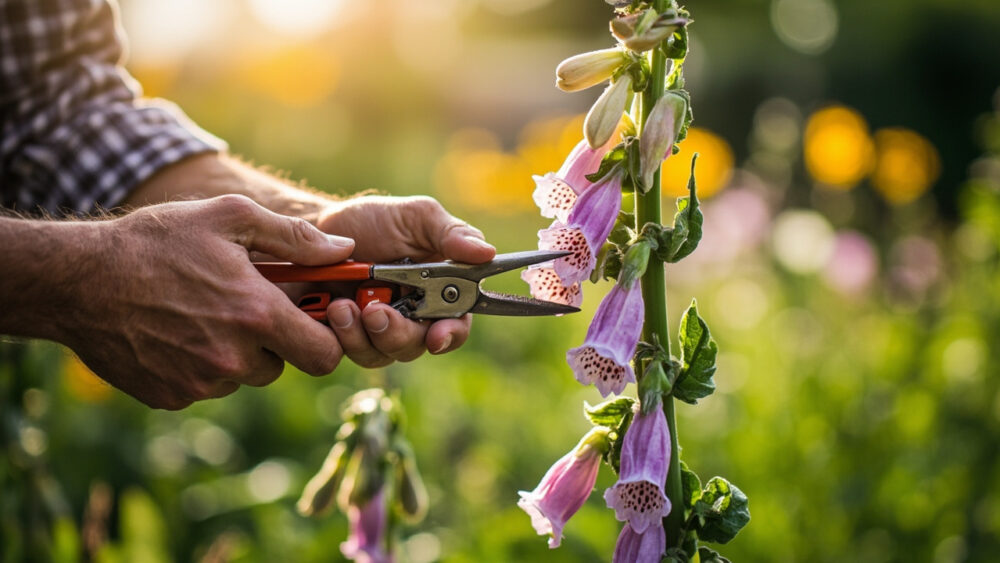
Deadhead foxgloves by cutting the spent flower spike down to its base as soon as the last blooms on it fade and brown, leaving the surrounding leaf rosette untouched. Do this and most foxgloves will throw a second, smaller flush of side spikes within three to four weeks. Skip it, and the plant dumps its energy into seed instead of into next year’s rosette or this year’s rebloom.
Here is where most people go wrong, though: they either deadhead too early, cutting a spike that still has unopened buds farther up, or they cut the whole plant to the ground thinking that is how you “clean it up.” Neither is right, and one of them can cost you the entire secondary bloom.
There is also a decision hiding in this task that nobody tells you about until it is too late: whether to deadhead at all, or let a few spikes go to seed on purpose. If you have a biennial foxglove variety, that choice determines whether you have flowers next year or an empty spot in the border. Stick around, because the Foxgloves at a Glance card at the bottom has the whole timeline saved in one place, cutting stage through seed stage.
When to Deadhead, and When to Leave It Alone
Start deadheading once at least two-thirds of the florets on a spike have faded, browned, or dropped, even if a few buds remain green at the very tip. Waiting for every single flower to finish means you are feeding seed development for weeks longer than you need to. That’s wasted energy the plant could be putting into a second flush.
Do not deadhead in the first two or three weeks of bloom. The lower florets open first and work upward over a month or more on a single spike, so early cutting removes buds that hadn’t opened yet.
And do not deadhead at all in late summer if you’re growing a biennial type (the common Digitalis purpurea is biennial for most gardeners) and you want next year’s flowers guaranteed. Biennials bloom once, set seed, and die. If you deadhead every spike on a biennial, you get a tidy plant and no volunteers next spring, unless you’ve bought or started new seedlings.
Next up: the one prep step that determines whether your cuts heal clean or invite rot.
Tools and the Prep Step Everyone Skips
Use a clean pair of bypass pruners or sharp garden snips, not scissors and not your fingers pinching the stem. Foxglove stems are fibrous enough that pinching crushes the tissue instead of cutting it, and a crushed stem end holds water and invites rot.
Wipe your blades with rubbing alcohol before you start, especially if you’ve just cut anything showing leaf spot or mildew elsewhere in the bed. Foxgloves aren’t especially disease-prone, but a dirty blade is how you move fungal problems from one plant to the next one you cut.
One more thing before you cut anything: foxglove is toxic if ingested, for people and for pets, affecting the heart. Wear gloves if your skin is sensitive, wash your hands after handling the cut stems, and keep the trimmings away from curious dogs, cats, or kids. If you suspect a pet or child has eaten any part of the plant, call a vet or poison control right away rather than waiting to see what happens.
Tools clean and hands protected, now for where the cut actually goes.
Step by Step: Where and How Much to Cut
- Find the base of the spent spike, the flower stalk, not the leafy rosette underneath it, and follow it down to where it emerges from the foliage.
- Cut there, just above the topmost set of healthy leaves, at a slight angle so water runs off the cut rather than sitting on it.
- Leave the rosette alone. Those low, broad leaves are what photosynthesizes and rebuilds the plant’s energy reserves. Cutting into them by mistake is the single most common way people accidentally kill a foxglove’s chance at reblooming.
- Check for side shoots lower on the stem before you cut all the way to the base. If a smaller secondary spike is already emerging, cut just above it instead of below it.
That’s the whole mechanical process, and it takes under a minute per spike once you’ve done it a few times.
What Happens After You Cut
If you assumed cutting the main spike ends the show for the season, that guess is wrong more often than not. Most established foxgloves, especially in their second year or later, push up two, three, or more secondary spikes from the leaf axils lower on the plant within three to four weeks of the first deadheading.
These secondary spikes are shorter and carry fewer flowers than the main spike, usually a third to half the height. That’s normal, not a sign of a struggling plant.
Water and a light feed help here. Foxgloves rebloom on stored energy plus whatever they take up right after the cut, so a balanced liquid feed or a half-inch of compost worked into the soil around the base gives the second flush something to work with. Keep soil evenly moist, not soggy, especially through any dry stretch in the weeks right after deadheading.
Once that second flush finishes, you’re at the real decision point for the season.
The Mistakes That Cost You Flowers or Next Year’s Plants
Cutting the whole plant to the ground is the biggest one. That removes the rosette along with the spike, and without leaves the plant has nothing left to rebuild with. It often does not recover.
Deadheading every last spike on a biennial you want to self-seed is the quieter mistake, the one that shows up as a gap in the border next spring instead of an immediate problem. If you’re growing straight species foxglove and like the drifts they form on their own, let two or three spikes finish and drop seed before you deadhead the rest.
Cutting too high, leaving four or five inches of bare stalk above the leaves, just leaves an unsightly stub that dies back anyway and can invite rot down into living tissue. Cut close to the topmost leaf set, not partway up empty stem.
Ignoring hollow, mushy stems. If a spike feels soft or hollow rather than firm when you go to cut it, that’s usually crown rot or stem rot working up from wet soil, not a normal fading spike. Cut it out and improve drainage around the plant rather than treating it like routine deadheading.
Get those four right and foxgloves are honestly low-maintenance for the rest of the season.
Foxgloves at a Glance
- When to deadhead: once two-thirds of florets on a spike have faded, cutting the spike down to just above the top leaf set.
- When not to deadhead: in the first two to three weeks of bloom, or on any spike you want to leave for seed on a biennial variety.
- Tools: clean, sharp bypass pruners or snips, wiped with rubbing alcohol between plants.
- What to leave alone: the low leaf rosette, the plant’s main energy source for rebloom or next year’s growth.
- After cutting: water evenly, add a light feed or compost, and expect secondary spikes within three to four weeks.
- Safety: foxglove is toxic to people and pets if ingested, affecting the heart, so wash hands after handling and call a vet or poison control immediately for any suspected ingestion.
- For self-seeding: let two or three spikes finish and drop seed before deadheading the rest, especially on biennial types.
The rosette is what keeps the plant alive, so protect it above everything else you cut.
Get the timing and the cut location right, and foxgloves reward you with a second, if smaller, round of bloom most seasons.