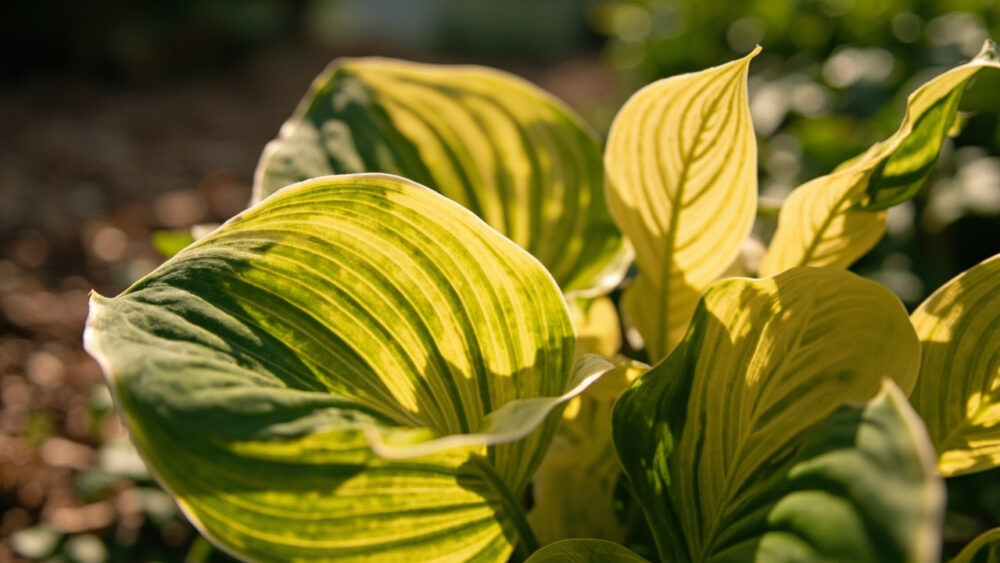
Most of the time, hostas leaves turning yellow means the plant is either getting too much sun for its variety or the soil is staying too wet around the crown. Both are fixable in an afternoon once you know which one you have. The good news is that yellowing hosta leaves are rarely the plant dying, they are the plant telling you something specific about light, water, or age.
Here is the thing almost everyone assumes first and gets wrong: they blame fertilizer, when a hosta that has never been fed a thing in its life will still yellow on schedule every fall. That is normal aging, not a deficiency. The detail that actually tells you which cause you are dealing with is not the color itself, it is exactly where on the plant it started and whether the leaf is limp, crispy, or spotted along with the yellow.
I will walk through every real cause below, most likely to least, with the quick test to confirm each one and the fix. Stick around for the honest recovery odds too, because some of these come back fine and one or two mean you are managing damage, not reversing it. There is a two-minute diagnosis checklist waiting at the bottom you can run right at the plant.
Causes of Yellowing Hosta Leaves, Most to Least Likely
1. Normal end-of-season senescence
Hostas are herbaceous perennials. Every leaf they grow this year is dead by first hard frost, no exceptions.
Confirm it: check the calendar and the pattern. If it is late summer into fall and the oldest, outermost leaves are going yellow first while the center of the plant still looks fresh, this is age, not disease.
Fix it: nothing to fix. Let the foliage die back on its own or cut it to the ground once it has fully collapsed, this also removes overwintering slug eggs.
But if it is early summer and this is happening, keep reading, because that points somewhere else entirely.
2. Too much direct sun for the variety
Blue and gold hostas especially are bred for shade to part shade. Push them into afternoon sun and the leaves bleach out, then yellow, often with crispy brown edges.
Confirm it: look at which side of the plant is worst. Sun scorch hits the side facing the afternoon sun hardest, and the yellowing usually comes with a dulled, faded leaf color before it browns at the margins.
Fix it: you cannot un-scorch a leaf, but you can move the plant this fall or next spring to morning sun or dappled shade, or plant something taller nearby to cast afternoon shade. Damaged leaves stay damaged for the season.
If the sun angle does not match the damage pattern, the next suspect is underground.
3. Soggy soil and root or crown rot
Hostas like consistent moisture, not standing water. A crown sitting in wet, poorly drained soil starts rotting at the base, and yellowing spreads inward from the outer leaves along with a general wilted, deflated look even when the soil is wet.
Confirm it: dig down two or three inches next to the crown. Soil that stays soggy and dark, or a crown that feels soft and mushy rather than firm, confirms rot.
Fix it: stop watering immediately and let the soil dry out. If rot is caught early, gently expose the crown, cut away obviously black or mushy tissue with a clean knife, and improve drainage by working in compost or moving the plant to a raised spot next season.
If the soil test comes back dry instead of wet, flip your assumption entirely.
4. Underwatering and drought stress
New divisions, hostas in containers, and plants under eaves or tree canopies that intercept rain dry out fast. The leaves yellow and go crisp at the tips and edges, and the whole plant looks slightly droopy even in the morning.
Confirm it: push a finger two inches into the soil. Bone dry at that depth, combined with edge-in yellowing rather than base-out, points here.
Fix it: water deeply, about an inch of water once or twice a week during dry spells, aimed at the root zone rather than a light daily sprinkle. Mulch two to three inches deep to hold moisture and keep soil temperature even.
If the soil moisture checks out fine either way, the plant might be hungry instead.
5. Nitrogen deficiency
Hostas in old, depleted soil or containers that have not been fed in a couple of years can run short on nitrogen. This shows as an even, pale yellowing across older leaves first, without the crispy edges of sun or drought damage.
Confirm it: the yellow is uniform across the whole leaf, not patterned at the margins or one side, and newer leaves still look reasonably green.
Fix it: feed with a balanced, slow-release fertilizer in spring as new shoots emerge, following the product label rate. Compost worked into the soil each fall does the same job more gently over time.
If feeding does not help within a few weeks, something biological may be at work instead.
6. Foliar nematodes
This one is less common but worth naming because it does not respond to any of the fixes above. Foliar nematodes cause yellow to brown streaks running between the leaf veins, usually starting in early to midsummer.
Confirm it: hold a suspect leaf up to the light. Streaks that run parallel to the veins in a striped pattern, rather than blotchy or edge-based yellowing, are the tell.
Fix it: there is no cure. Remove and destroy infected leaves and, if the infestation is heavy, the whole plant, since nematodes spread through splashing water and can move to nearby hostas. Do not compost the debris.
Rare as it is, it is worth ruling out before you assume you are dealing with something simpler.
How to Tell the Causes Apart
Where the yellowing starts on the plant is your single best clue. Outer, oldest leaves going first, evenly, in fall: age. Outer leaves scorched on the sun-facing side only: too much light.
Yellowing that spreads inward with a soft or mushy crown: rot. Crispy edges with dry soil: drought. Even, whole-leaf pale yellow with no crispness: nutrients.
Vein-parallel stripes that ignore the leaf’s edge-to-center pattern entirely are the one symptom that does not match any of the cultural causes, and that is your flag for nematodes.
Once you have matched the pattern, the real question is what happens to the plant next.
Will It Recover?
A hosta yellowing from normal fall senescence needs no recovery at all, it comes back fully next spring on schedule. Sun scorch and drought damage will not reverse on the affected leaves this season, but the crown is almost always fine and next year’s growth comes in normal if you fix the light or watering.
Rot is the one to watch closely. Caught early with a firm crown and just a few soft roots, most hostas recover after trimming and a season of drier footing. A crown that has gone fully mushy and collapses when you touch it is usually not coming back, and your best move is to check for any healthy offshoots to save and start over.
Nitrogen deficiency reverses within a few weeks of feeding, new leaves come in green. Foliar nematode damage does not reverse, and heavily infected plants generally need to be removed rather than nursed along.
None of that matters much if the same conditions just cause it again next year.
How to Keep It From Happening Again
Match the variety to the light it actually wants. Read the tag or look it up, blue and gold hostas want more shade than green ones, and no amount of babying fixes a plant in the wrong spot.
Get the drainage right once and you avoid most rot problems for good, amend heavy clay with compost before planting rather than after trouble starts.
Water deeply and less often rather than a little every day, and mulch to even out moisture swings between waterings. Feed lightly once a year in spring if your soil is old or sandy.
Keep the diagnosis steps handy for next time, because hostas will do this again eventually and you will want the two-minute version.
Diagnosis Checklist
- Check the season: if it is fall and only outer leaves are yellowing evenly, this is normal aging, no action needed.
- Check the light: if yellowing and browning are worse on the afternoon-sun side of the plant, suspect too much sun, plan a move for next season.
- Check the soil two inches down: if it is soggy and the crown feels soft or mushy, suspect rot, stop watering and inspect the crown.
- Check the soil again: if it is bone dry and yellowing shows as crispy edges, suspect drought, water deeply and mulch.
- Check the leaf pattern: if yellowing is even across the whole leaf with no crisping and older leaves are affected first, suspect low nitrogen, feed in spring.
- Check for stripes: hold a leaf to the light, if you see yellow to brown streaks running parallel to the veins, suspect foliar nematodes, isolate or remove the plant.
- When in doubt, dig at the crown: a firm, white, healthy crown means the plant will recover, a black, mushy crown means you are managing losses, not saving the original plant.
Yellow hosta leaves look alarming but the plant is usually fine, it is just asking you to adjust one thing.
Fix the light, the water, or the feed, and the next flush of leaves tells you whether you got it right.