Jasmine care comes down to four things it will not compromise on: bright light with a few hours of direct sun, soil that dries slightly between waterings but never goes bone dry, a winter rest around 50 to 55°F for the varieties that bloom on old growth, and something to climb. Get those right and jasmine is forgiving about almost everything else. Get the light or the winter rest wrong and you get a plant that lives for years without ever throwing a single fragrant flower.
Most people who fail with jasmine make the same mistake, and it is not watering. It is putting a plant that bloomed beautifully at the nursery into a spot with decent light and wondering why it goes leafy and flowerless forever after. There is also a sign almost everyone misreads as disease when it is actually the plant asking for something completely different, and a winter question nobody thinks to ask until the leaves start dropping in November.
I will walk through all of it, and at the bottom there is a save-able Jasmine at a Glance card with the numbers you will actually want next time you are standing in front of the plant with dirt on your hands.
Light, Placement, and Temperature
Jasmine wants bright lightideally three to four hours of direct sun, either a south or east-facing window indoors or a spot outside that gets strong morning sun and bright indirect light the rest of the day. Too little light gets you a vigorous green vine that never blooms. That is the mistake that ruins most attempts: people give it enough light to survive and grow, but not enough to flower.
Outdoors, jasmine is happy in USDA zones 9 to 11 year-round; everywhere colder, it needs to come inside or into a garage or unheated porch before frost. Daytime temperatures of 65 to 75°F suit active growth, but here is the part that trips people up: many jasmines, including common jasmine and star jasmine, actually need a cool winter rest of 50 to 55°F to set next season’s buds. A warm living room all winter is often why a plant never blooms again.
A vine with nothing to climb just sprawls and tangles, so give it a trellis, hoop, or string trellis early.
Watering: How Much, How Often, and How to Tell
Water when the top inch of soil feels dry to the touch, then water thoroughly until it runs from the drainage holes. In active growth that is usually every five to eight days indoors, more often in high heat outdoors, less in winter rest. Jasmine does not want to sit in soggy soil and it does not want to shrivel dry either; it wants a rhythm.
Yellow leaves are the sign almost everyone misreads. The instinct is to water more, but yellowing on jasmine is far more often overwatering and poor drainage than drought. Check the soil before you reach for the watering can. If it is still damp two inches down and leaves are yellowing and dropping, ease off and check that the pot actually drains.
Underwatered jasmine tells you differently: leaves go dull, slightly curled, and crisp at the edges rather than yellow and soft.
Get the water right and the next question is almost always what is actually in the pot.
Soil, Potting Mix, and Feeding
Jasmine wants a well-draining, slightly acidic mixroughly a standard potting soil cut with perlite or coarse sand, sitting around pH 6.0 to 6.5. Straight garden soil in a container compacts and holds too much water around the roots, which is how you end up back at that yellow-leaf problem.
Feed every four to six weeks during spring and summer with a balanced liquid fertilizer diluted to half strength, or a bloom-boosting formula (higher phosphorus) once buds start forming. Stop feeding entirely in fall and winter. A fertilized plant that is supposed to be resting will push soft new growth right when it should be shutting down.
Outdoors in the ground, work a couple inches of compost into the planting hole and skip heavy fertilizer. Overfed jasmine in rich soil often grows lush and green with almost no flowers, which is the same failure as too little light, just from the opposite direction.
Feeding solves growth, but shape and size come from what you do with your hands.
Pruning, Repotting, and Cleanup: Timing That Actually Matters
Prune right after the main bloom flush ends, not in fall and not in early spring before flowering. Jasmine sets next year’s buds on growth made shortly after this cut, so pruning too late removes the very growth that would have flowered. Cut back by about a third, remove dead or crossing stems, and pinch growing tips through the season to keep it bushy instead of straggly.
Repot every two to three years, in spring, once you see roots circling the bottom of the pot or growth stalling despite good care. Move up one pot size, no more. Jasmine actually blooms better slightly root-bound.
Wipe dust off leaves every few weeks if the plant lives indoors, since dusty leaves take in less light, which quietly recreates that same low-light, no-bloom problem you worked to avoid.
Even with good timing, jasmine has a short list of problems that show up whether you deserve them or not.
Problems Most Likely to Strike
Jasmine is fairly trouble-free, but three issues turn up often enough to name plainly.
- Aphids and spider mites: look for sticky residue, fine webbing, or stippled leaves, usually on new growth indoors in winter when air is dry. Rinse the plant well and treat with insecticidal soap or horticultural oil, following the product label exactly.
- Powdery mildew: a white, dusty coating on leaves, most common with poor air circulation and overhead watering. Improve airflow, water at the soil line, and use a fungicide labeled for powdery mildew if it persists.
- No flowers despite healthy growth: almost always insufficient light or a winter that was too warm. This is the follow-up question everyone eventually asks, and the honest answer is that you usually cannot force a bloom this season. Correct the light or cool rest and expect results next cycle.
Jasmine, like many fragrant flowering plants, is considered mildly to moderately toxic to dogs and cats in some references, and pets that chew on it can show stomach upset or drooling. If you suspect your pet has eaten any part of the plant, contact your veterinarian rather than waiting to see what happens.
Once pests and bloom issues are handled, the real reward is knowing what a genuinely happy jasmine actually looks like.
Signs Your Jasmine Is Actually Thriving
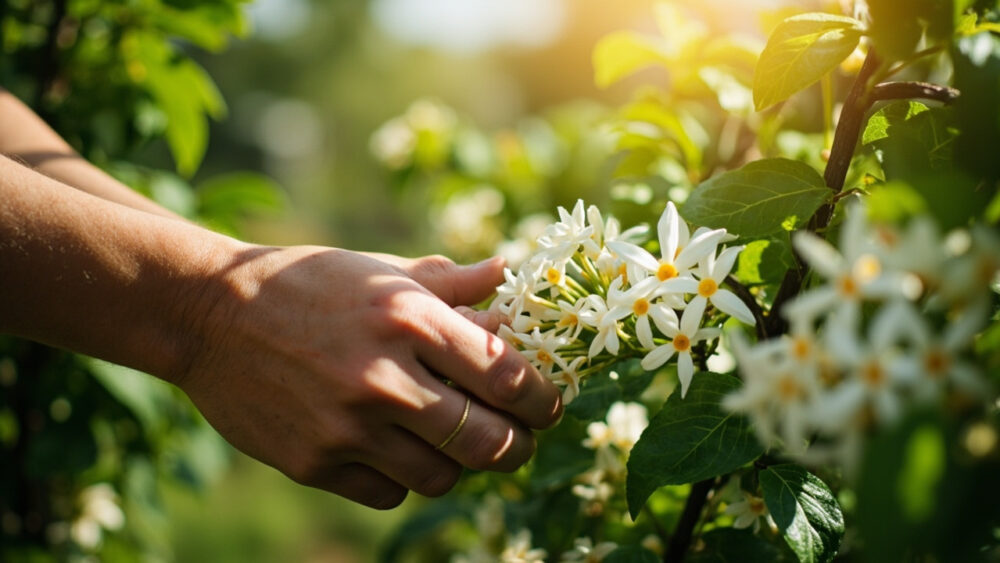
A thriving jasmine pushes new green growth steadily through spring and summer, holds glossy, deep green leaves without yellowing, and produces clusters of white or pale yellow flowers with that unmistakable heavy sweet scent, often strongest in the evening. Vines should feel firm and be actively reaching for whatever they are trained on.
Repeat blooming across a season, rather than one flush that never returns, is the clearest sign you have the light, water, and winter rest genuinely dialed in.
That is the plant working the way it is supposed to, and it is worth pinning down exactly what got you there.
Jasmine at a Glance
- Light: bright light with three to four hours of direct sun daily, south or east-facing window indoors.
- Watering: when the top inch of soil is dry, thoroughly, roughly every five to eight days in active growth, less in winter.
- Temperature: 65 to 75°F while growing, a cool rest of 50 to 55°F in winter for reliable rebloom.
- Soil: well-draining, slightly acidic mix, potting soil cut with perlite, pH around 6.0 to 6.5.
- Feeding: balanced liquid fertilizer at half strength every four to six weeks in spring and summer, none in fall or winter.
- Pruning: right after the main bloom flush, cutting back by about a third.
- Hardiness: outdoors year-round in USDA zones 9 to 11, container grown and brought indoors before frost everywhere else.
If your jasmine will not bloom, check the light first and the winter temperature second, almost everything else is secondary to those two.
Everything on this page comes back to that one trade: enough sun and a real cool rest, or leaves without flowers.