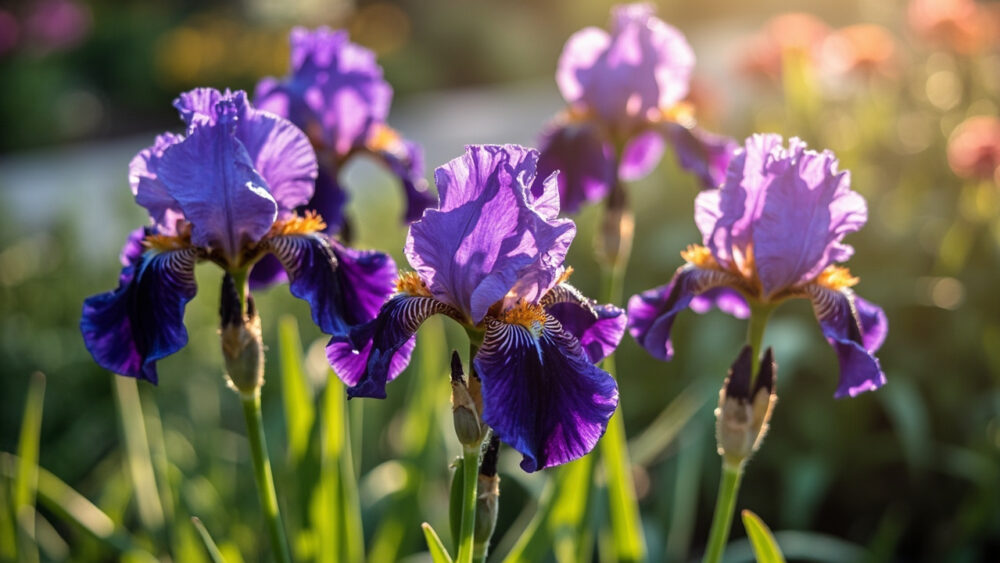
Most irises bloom in mid to late spring, roughly April through June depending on your climatewith a few reblooming types putting on a second, smaller show in late summer or fall. Bearded irises tend to peak in May. Siberian and Japanese irises usually run a few weeks later.
That range is only half the answer, though, because where you live and what kind of iris you planted can shift bloom time by a month or more in either direction. There’s also the frustrating case of an iris that grows fine, looks healthy, and just refuses to flower, which trips up more gardeners than any pest ever does.
Stick with this and you’ll know what your own plant is likely doing right now, why it might be sulking instead of blooming, and how to stretch a bloom season that can otherwise feel over in a blink. There’s a save-able quick-reference card at the bottom once we’ve covered the ground that makes it accurate for your yard.
How Long the Iris Bloom Window Actually Lasts
A single iris flower usually lasts only three to five days before it fades, which surprises a lot of first-time growers. But each stalk carries multiple buds that open in sequence, so one plant can stay in bloom for two to three weeks.
A full bed with mixed varieties, planted at slightly different times or in different microclimates in your yard, can stretch the overall show to four to six weeks. That’s the realistic window for most bearded iris plantings in a home garden.
Reblooming varieties add a second flush, often six to ten weeks after the first, if conditions cooperate.
Knowing how long any one bloom lasts changes how you judge whether something’s wrong, which is where climate and variety come back in.
What Actually Controls the Timing
Two things set the calendar: your climate zone and which type of iris you’re growing. In warmer zones (7 and up), bearded irises can start as early as late March or early April. In colder zones (4 to 6), late May into June is normal.
Iris type matters just as much as location. Dwarf bearded irises bloom earliest, often two to three weeks before the tall bearded types. Siberian and Japanese irises follow the tall bearded wave. Reblooming bearded varieties are bred specifically to flower again once summer heat breaks in early fall.
Soil temperature and a normal winter chill also matter. Bearded irises need a real cold dormancy period to set flower buds well, so an unusually mild winter can push bloom later or thin it out.
So the honest way to know your bloom date isn’t a calendar at all, it’s reading your specific rhizome and your specific spring.
How to Get More Flowers, or a Longer Show
If you want more blooms next season, the biggest lever is division. Bearded iris clumps get crowded every three to four years, and an overcrowded rhizome mass blooms less even though the foliage looks lush. Dig, divide, and replant with rhizomes spaced about 12 to 18 inches apart in mid to late summer, six to eight weeks after this year’s bloom.
Sun is the other big one. Irises want a minimum of six hours of direct sun; anything less and you get leaves but few flowers.
Feed lightly with a low-nitrogen, phosphorus-forward fertilizer in early spring as growth starts. Too much nitrogen grows leaves at the expense of blooms, which is a common, avoidable mistake.
Get those three right and the next question usually answers itself, because a plant that isn’t blooming is almost always failing one of them.
Why Your Iris Might Not Be Blooming at All
If you assumed a non-blooming iris just needs more water, that guess is rarely the fix; bearded irises actually prefer being a little dry and resent soggy, poorly drained soil far more than they resent drought. Root rot from wet feet is a real bloom-killer.
Planting depth is the other classic culprit. Bearded iris rhizomes should sit at or just barely below the soil surface, with the top slightly exposed. Bury them too deep and they’ll grow leaves for years without ever flowering.
Overcrowding, too much shade, and a rhizome that’s rotted or borer-damaged in the center round out the usual suspects. Iris borers hollow out rhizomes from the inside. If you find soft, mushy sections when dividing, cut them out and discard the damaged piece rather than replanting it.
Once you’ve ruled those out, the last thing that determines how long you get to enjoy the flowers is what you do after they open.
Deadheading and Aftercare That Stretches the Season
Snip spent flowers off as they fade, right where the bloom meets the stalk, so the plant isn’t wasting energy on seed production. Once an entire stalk has finished blooming, cut it down near the base.
Leave the foliage alone. Cutting back green iris leaves after bloom is a common mistake. That foliage is busy photosynthesizing and building next year’s flower bud inside the rhizome. Only remove leaves once they’ve browned naturally in fall.
For reblooming varieties, deadheading promptly and keeping plants watered through summer heat noticeably improves the odds and size of that second fall flush.
That’s the whole cycle, bloom, fade, feed the rhizome, repeat, and here’s the short version to save.
Irises: Quick Reference
- Bloom window: mid to late spring, generally April through June, with rebloomers adding a second flush in late summer or early fall.
- Per-flower lifespan: three to five days per bloom, two to six weeks total per plant or bed as buds open in sequence.
- Climate shift: warmer zones (7+) bloom as early as late March, colder zones (4 to 6) often wait until late May or June.
- Variety order: dwarf bearded blooms first, tall bearded next, Siberian and Japanese follow, rebloomers add a fall encore.
- Sun and feeding: at least six hours of direct sun, light phosphorus-forward feeding in early spring, go easy on nitrogen.
- Common non-bloom causes: rhizomes planted too deep, overcrowded clumps needing division, poor drainage, borer damage, too much shade.
- Aftercare: deadhead spent blooms, cut stalks after flowering, leave green foliage until it browns naturally in fall.
Get the planting depth, sun, and division timing right, and irises reward you reliably every spring.
Miss any one of those, and you’ll get healthy leaves with nothing to show for them.