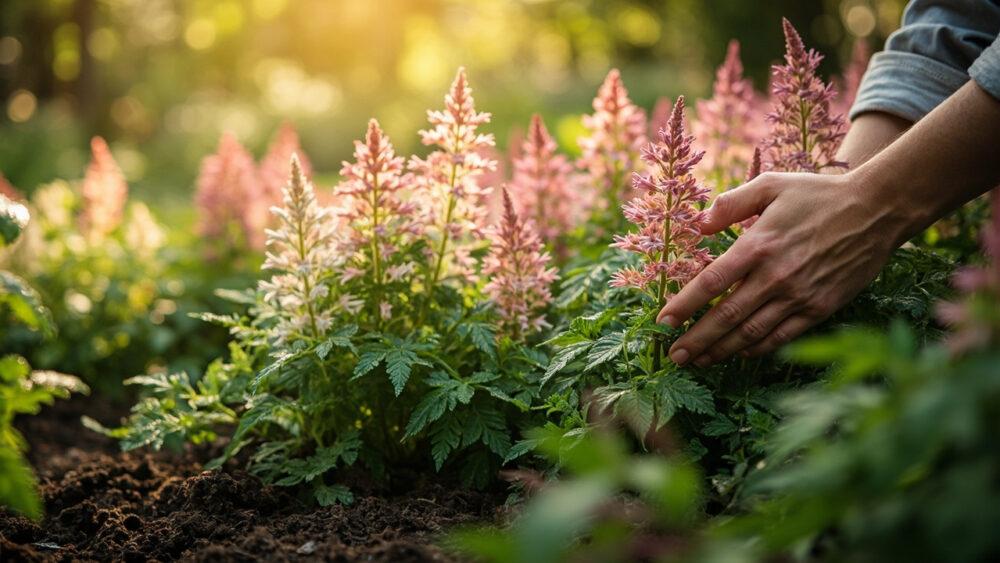
Growing astilbe comes down to three things it will not forgive you for skipping: consistent moisture, at least partial shade in anything warmer than zone 6, and rich soil with real organic matter in it. Get those right and astilbe is one of the easiest, longest-lived shade perennials you can plant, coming back bigger every year for a decade or more. Get them wrong and you get scorched, crispy leaf edges by July and a plant that sulks instead of blooms.
Most people who fail with astilbe make the same mistake: they plant it like a sun perennial, in a spot that looks shady in May but bakes by August once the tree canopy above it changes or a nearby shrub gets pruned back. There is also a sign almost everyone misreads, brown, crispy leaf margins in mid to late summer, and almost everyone blames the sun for it when the real cause is usually underneath their feet. And if you are wondering when this thing actually blooms and whether you will get a second show, the honest answer surprises people who are used to reblooming perennials.
Stick with me through planting, care, and troubleshooting, and I will give you the save-able Astilbe at a Glance card at the very bottom with every number you need on one screen.
When to Plant Astilbe
Plant astilbe in spring after the soil has thawed and can be worked, or in early fall at least six weeks before your first hard frost. Spring planting is more forgiving almost everywhere, since it gives roots a full season to establish before winter.
Soil temperature matters more than the calendar. Astilbe roots want soil that has warmed past roughly 50°F, which usually lines up with the week or two after your last frost date in most zones.
In zones 3 and 4, stick to spring planting only. In zones 5 through 8, where astilbe is happiest overall, fall planting works fine as long as you get that six-week head start before the ground freezes hard.
Zone 9 gardeners can grow astilbe but should treat it almost like an annual in deep, reliable shade with irrigation, since hot dry summers push it hard.
Timing gets your astilbe in the ground safely, but where you put it decides whether it thrives or just survives.
Choosing the Spot and Prepping the Soil
Astilbe wants part shade to full shade, and the amount of sun it can tolerate depends entirely on your climate. In zone 7 and warmer, give it shade for most of the day with maybe an hour or two of gentle morning sun. In zone 5 and cooler, it can handle several hours of direct morning sun and still be fine, since the heat load is lower.
The soil is where most first attempts quietly go wrong. Astilbe needs soil that holds moisture without staying waterlogged, meaning rich, loamy, high in organic matter. Straight clay or sandy soil that drains in ten minutes both cause problems, just in opposite directions.
Work 2 to 3 inches of compost or aged leaf mold into the top 8 to 10 inches of soil before planting. This single step does more for astilbe than any fertilizer you will buy.
Once the bed is built, the actual planting is the easy part.
Planting Astilbe Step by Step
1. Time it to overcast or cool weather
Plant on a cloudy day or in the evening if you can. Astilbe transplants wilt fast under bright sun and hot soil, and that stress sets them back for weeks.
2. Dig the hole right
Dig each hole about twice as wide as the root ball and just as deep, so the crown sits level with the surrounding soil, not buried and not perched above it.
3. Space for the size, not the pot
Space plants 15 to 24 inches apart depending on the variety, tighter for dwarf types under 12 inches tall, wider for tall varieties that reach 3 to 4 feet. Crowded astilbe fights itself for moisture within two or three seasons.
4. Settle and water immediately
Backfill, firm the soil gently with your hands, and water deeply right away, enough to saturate the whole root zone, not just wet the surface.
5. Mulch to lock in moisture
Add 2 inches of shredded bark or leaf mulch, keeping it an inch away from the crown itself so it does not trap rot-causing moisture against the stems.
The plant is in the ground now, but the real test comes in July and August when the moisture demands peak.
Watering and Feeding Through the Season
Astilbe is not drought tolerant, full stop, and that is the honest limit of this plant. It wants consistently moist soil all season, not soggy, but never allowed to dry out completely.
Check the soil 2 inches down with your finger once or twice a week in summer. If it feels dry at that depth, water deeply that day rather than waiting.
Give it about 1 inch of water a week from rain or irrigation, more during stretches over 85°F. Established plants in good, mulched soil can stretch a little further, but new transplants have no reserves and need closer attention their first year.
Feed once in early spring as new growth emerges with a balanced, slow-release fertilizer or a top-dressing of compost. A second light feeding right after the first flush of bloom helps power foliage through the rest of summer.
Feed and water are the baseline, but a few problems show up on schedule almost every year, and it helps to know them before you see them.
The Problems Most Likely to Strike
Here is that crispy brown leaf edge, finally explained: it is almost never sunburn on its own. It is usually drought stress, the soil drying out at the roots faster than the leaves can compensate, often made worse by afternoon sun the plant technically shouldn’t be getting.
The fix is not more shade, it is more consistent water and better mulch. Move the plant only if the site genuinely gets hot afternoon sun in a warm zone; otherwise, fix the watering first.
Powdery mildew and leaf spot can show up in humid, still air with poor spacing. Improve airflow, water at the soil line instead of overhead, and remove badly affected foliage. If it’s severe, a fungicide labeled for ornamental use can help; always follow the product label exactly.
Slugs and Japanese beetles will chew ragged holes in the leaves in early summer. Handpicking at dusk and beer traps handle light pressure. For heavy infestations, an appropriately labeled insecticide is the next step, again following the label.
Astilbe is not toxic to dogs, cats, or horses according to standard toxicity references, which makes it one of the safer shade perennials for pet-heavy gardens. If a pet ever eats an unusual amount of any plant and seems unwell, call your veterinarian rather than waiting to see what happens.
Handle the water and airflow basics and most of these problems never get a foothold.
When Astilbe Blooms, and the Rebloom Question
Astilbe blooms once a year, typically for 2 to 4 weeks sometime between early summer and late summer depending on the variety, with early, mid, and late-season types available if you want to stagger the show. This is the honest answer to the question most people are about to ask: astilbe does not rebloom the same season once its plume fades, no matter how you deadhead or feed it.
What you get instead is a full season of good, ferny foliage that stays attractive on its own after the flowers finish, which is more than a lot of one-shot bloomers offer.
You can leave spent plumes standing for fall texture and winter interest, or cut them back to the base once they turn brown and papery. Either way, cut all foliage down to a couple of inches after it dies back completely in fall or leave it as winter mulch and clean up in early spring.
Divide congested clumps every 3 to 4 years in spring or early fall, lifting the whole clump and splitting it into sections with a sharp spade, each with its own healthy roots and buds.
That division schedule is also your best tool for keeping a planting vigorous instead of thinning out over time.
Astilbe at a Glance
- When to plant: spring after soil hits about 50°F, or early fall at least six weeks before your first hard frost, zones 3 to 4 spring only.
- Light and site: part to full shade, more sun tolerated in cooler zones, guard against hot afternoon sun in zone 7 and warmer.
- Soil: rich, moisture retentive, amended with 2 to 3 inches of compost, never allowed to dry out completely.
- Spacing and depth: 15 to 24 inches apart depending on variety, crown level with the soil surface, 2 inches of mulch kept off the crown.
- Water and feed: about 1 inch a week, more in heat over 85°F, fed in early spring and again after bloom.
- Bloom window: 2 to 4 weeks sometime between early and late summer depending on variety, no rebloom the same season.
- Maintenance: divide every 3 to 4 years in spring or fall to keep clumps vigorous.
Consistent moisture and the right amount of shade solve almost every astilbe problem before it starts.
Get those two things right once, and this plant will outlast most of what you put next to it.