Dahlias typically start blooming 8 to 12 weeks after planting, which lands most gardeners somewhere in midsummer, and once they start they keep going until the first hard frost kills the foliage. That is a bloom window of two to four months for most climates, which is longer than almost any other tuber or bulb you will grow.
The exact start date moves around more than people expect, and pot-grown dahlias, and shady yards, all shift the timeline in a specific direction. There is also one mistake that delays first bloom by weeks and another that quietly shortens the whole season without the plant looking sick at all.
Stick with me through the sections below and I will show you how to read your own plant’s stage right now, plus what actually pushes out more flowers instead of more leaves. The save-able quick-reference card is at the bottom once you have the full picture.
The Bloom Window and How Long It Actually Lasts
Most dahlias planted after the soil warms in spring begin flowering in early to mid summer and continue nonstop until frost cuts them down. That is the honest range: 8 weeks for early, fast dinner-plate types and border varieties grown from divisions with a head start, up to 12 weeks for tubers planted late or in cooler soil.
Once flowering starts, an individual dahlia plant does not bloom once and stop. It produces a continuous wave of new buds all season if you keep cutting or deadheading the spent flowers.
A single bloom on the plant lasts 4 to 7 days before fading, but the plant itself stays in flower for months.
What Actually Controls the Timing
Soil temperature at planting is the biggest lever. Dahlia tubers rot in cold, wet soil and simply sit still until it warms, so planting into soil below 60°F does not give you an earlier bloom, it gives you a stalled one. Wait until night temperatures are reliably above 50°F and the soil has warmed, generally a week or two after your last frost date.
Day length matters too. Dahlias are somewhat day-length sensitive, and many varieties set buds more eagerly as days shorten slightly from their peak, which is part of why the flower show often gets even heavier in late summer and early fall.
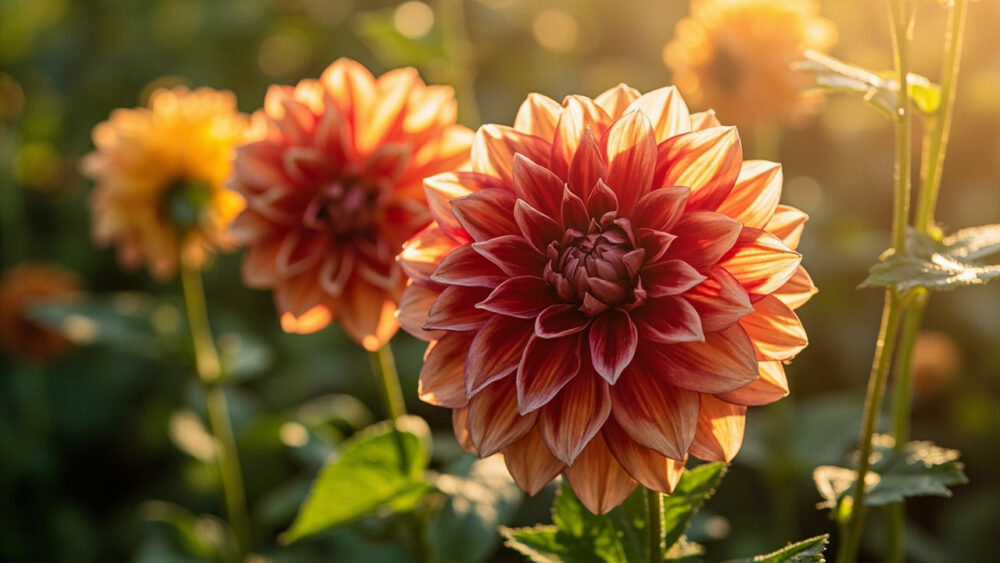
Variety size plays a role as well. Small-flowered border dahlias and single-flowered types bloom noticeably earlier than giant dinner-plate varieties, which need more time and energy to build a flower that size.
Your calendar date matters less than your soil thermometer and your variety tag.
How to Get More Flowers, and Bigger Ones If You Want Them
If you assumed more fertilizer means more flowers, that guess backfires with dahlias. High-nitrogen feeding grows lush leaves and stems at the expense of buds. Feed instead with a fertilizer lower in nitrogen and higher in phosphorus and potassium, applied every 3 to 4 weeks once plants are 12 inches tall.
Pinching the growing tip when the plant reaches about 12 to 15 inches tall, removing just the top few inches of the main stem, forces it to branch into multiple stems instead of one. More stems means more flowering points later, at the cost of a slightly later, but much bigger, first show.
For maximum bloom count, give plants full sun, at least 6 hours and ideally 8, and water consistently, about 1 inch per week, more in extreme heat. Drought-stressed dahlias shut down flowering to survive, not because they are dying, just because they are conserving.
If you want fewer but larger blooms instead, on dinner-plate types, disbud by removing the two smaller side buds that flank each main bud, leaving one flower to take all the plant’s energy.
None of that matters, though, if the plant will not bloom at all, so let’s cover that next.
Why Your Dahlia Isn’t Blooming Yet
The most common cause is simply time. If it has been under 8 weeks since planting, the plant may still be building its root and leaf base before it commits energy to flowers, and that is normal, not a failure.
Too much shade is the second most common cause. Dahlias in less than 6 hours of direct sun grow tall and leafy but stingy with blooms, and the fix is more light, not more feeding.
Too much nitrogen, from rich compost, lawn fertilizer runoff, or an overzealous feeding schedule, produces the same leafy, bloom-shy plant. Back off nitrogen and switch to a bloom-boosting formula and you often see buds within a couple weeks.
A last possibility: the tuber was planted too deep, below about 4 to 6 inches, and is taking extra time to push growth to the surface. Shallow, warm soil gets dahlias moving fastest.
Once the flowers finally arrive, how you treat them determines whether you get a two-week show or a four-month one.
Deadheading and Aftercare That Extend the Show
Deadhead constantly. Cut spent blooms all the way back to the next set of leaves or side shoot, not just snapping off the petals, because leaving the base of the old flower on the plant signals it to put energy into seed production instead of new buds.
Dahlias respond well to being cut as flowers for the vase, so treat regular cutting as a bloom-extending chore, not just a bonus. The more you cut, the more the plant produces.
Stop feeding with high-nitrogen products entirely once flowering begins, and keep watering consistently through the whole bloom period, since a late-season dry spell will shut down flower production even on an otherwise healthy plant.
In fall, once frost blackens the foliage, that is your real end-of-season marker, not a date on the calendar.
All of that, boiled down to the numbers, is what you actually came here for.
Dahlias: Quick Reference
- Bloom start: typically 8 to 12 weeks after planting, usually early to mid summer.
- Bloom end: continues until the first hard frost, not a fixed calendar date.
- Individual flower life: 4 to 7 days per bloom, with continuous new buds if deadheaded.
- Soil temperature needed: at least 60°F at planting depth, with nights reliably above 50°F.
- Light requirement for full bloom: 6 to 8 hours of direct sun daily.
- Water needs during bloom: about 1 inch per week, more during heat or dry spells.
- Fertilizer during bloom: low nitrogen, higher phosphorus and potassium, every 3 to 4 weeks.
- Biggest bloom booster: pinching the growing tip at 12 to 15 inches tall for more flowering stems.
Get the soil warm, the sun plentiful, and the deadheading shears busy, and a dahlia will bloom for you for months, not weeks.
That is a longer flower season than almost anything else you could plant this spring.