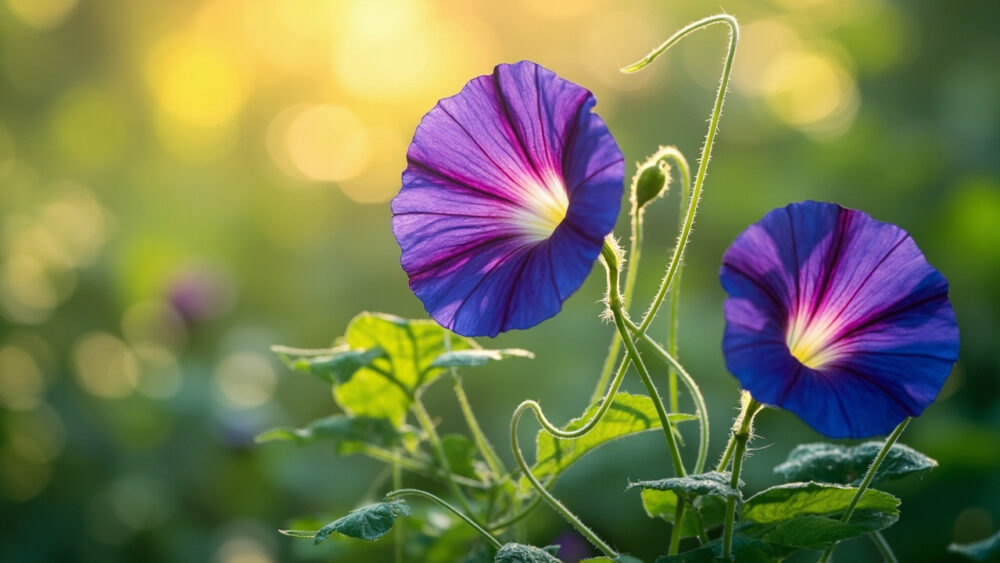
Morning glories bloom from mid to late summer through the first hard frost, with most vines opening their first flowers roughly 8 to 12 weeks after the seedlings emerge. In practice that means late June to July in warmer zones, and August in short-season climates. Each individual flower lasts about a day, but a healthy vine produces new ones nonstop for months.
That said, plenty of readers standing in front of a vine right now are seeing nothing but leaves. There is usually one specific reason for that, and it is almost never “not enough water.”
Stick around for the part on why some vines refuse to flower at all, the trick for pushing out more blooms per week, and the deadheading habit that either helps or does absolutely nothing depending on your variety. There’s a save-able quick-reference card at the bottom once you’ve got the full picture.
The Bloom Window, and How Long It Actually Lasts
Morning glory is a warm-season annual vine (Ipomoea purpurea and relatives), and it will not flower until the plant has enough size and warmth behind it. From seed sown after the soil warms, expect first flowers in 8 to 12 weeks, then a steady show until frost kills the vine.
Individual blooms open at dawn and typically close by early afternoon, sooner on hot days. That is the plant’s namesake habit, not a sign of stress.
A single well-grown vine can carry dozens of buds at once once it hits its stride in late summer.
What Actually Controls the Timing
Three things set the calendar: day length, temperature, and plant maturity. Morning glories are short-day plants at heart, meaning they flower more readily as days start shortening after the summer solstice, which is part of why bloom really ramps up in August even on vines that were planted in May.
Soil temperature matters early on. Seed sown into cold soil sits and sulks instead of germinating, which pushes the whole bloom season later.
Nitrogen-heavy soil is the other big lever, and not in the direction people expect.
Too much nitrogen builds gorgeous foliage and delays flowering, sometimes for weeks.
How to Get More Blooms, and Get Them Sooner
If you assumed more fertilizer means more flowers, that guess backfires with morning glory specifically. Cut back on nitrogen once the vine is climbing well, and switch to a bloom-boosting feed with more phosphorus and potassium instead.
Full sun is non-negotiable. Six or more hours a day gets you a vine covered in flowers; four hours gets you a vine covered in leaves.
Give the roots something to fight for. Morning glories bloom harder in average, even slightly lean soil than in rich, heavily amended beds.
- Plant in full sun, not partial shade
- Skip the high-nitrogen fertilizer after the vine is established
- Water consistently but don’t overdo it, moderate moisture beats soggy soil
- Give it something to climb, a stressed, unsupported vine flowers less
Get those four right and you will see more open flowers per week, not just a longer season.
Why Your Morning Glory Isn’t Blooming Yet
If it’s midsummer and you have nothing but vine, the most common culprit is too much shade or too much nitrogen, in that order. Both produce the same frustrating result: lush green growth, zero flowers.
The second most common cause is simply time. A vine planted late, or one that germinated slowly in cool soil, just hasn’t hit its 8 to 12 week mark yet. Patience solves that one.
Check the variety, too. Some morning glory relatives, including moonflower, only open at night or dusk, so you may be missing the show entirely by looking at the vine mid-afternoon.
Rule those three out before you assume something is actually wrong with the plant.
Deadheading and Aftercare That Extends the Show
Deadheading morning glory is optional, not essential, since spent flowers drop on their own within a day. But removing developing seed pods does help.
A vine that’s allowed to set a heavy load of seed pods will slow flower production as it redirects energy into ripening seed. Snip off pods as you notice them if you want the bloom show to keep running strong into fall.
One honest caution here: morning glory reseeds itself readily, sometimes aggressively, in mild climates. Letting pods mature is exactly how a lot of gardeners end up with volunteer vines everywhere next spring, whether they wanted that or not.
Keep that in mind before you decide whether to deadhead or let nature run the show.
Morning Glories: Quick Reference
- Bloom window: mid to late summer through first hard frost, first flowers 8 to 12 weeks after germination
- Individual flower life: about one day, opens at dawn, closes by early afternoon in heat
- Peak bloom trigger: shortening day length after the summer solstice, so late summer is usually the heaviest show
- Sun needs: at least 6 hours of direct sun for strong flowering, partial shade means mostly leaves
- Fertilizer rule: go light on nitrogen once established, high nitrogen delays and reduces blooms
- Not blooming yet: usually too much shade, too much nitrogen, or simply not enough weeks of growth
- To extend the show: remove seed pods regularly, and know that unchecked pods lead to self-seeding next year
Get the sun, the timing, and the nitrogen right, and morning glory does the rest of the work itself.
It is one of the most reliable bloomers you can plant, once it’s growing on its own terms instead of yours.