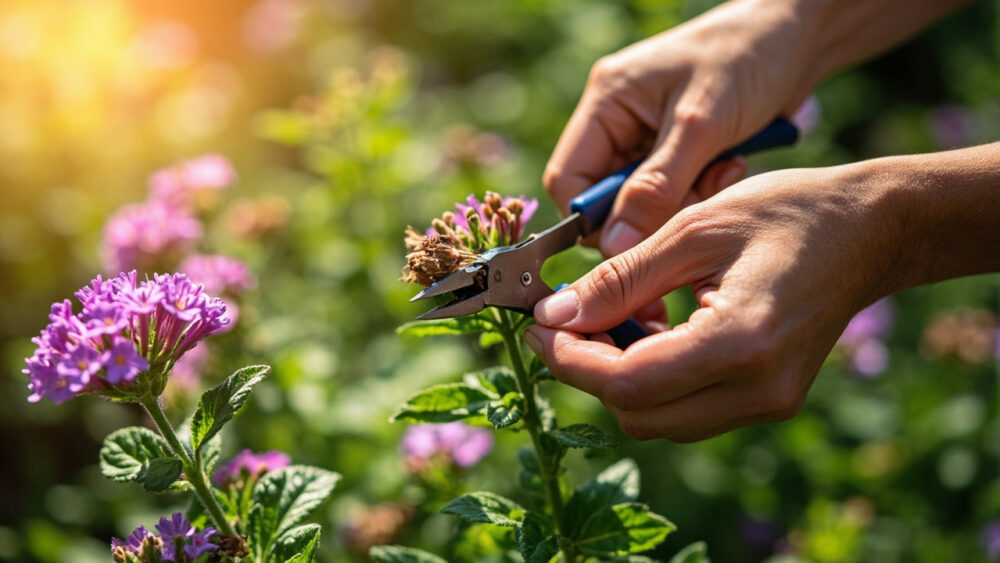
Here’s how to deadhead verbena: snip or pinch off spent flower clusters right where the stem meets the next set of leaves or the next branching point, not just the flower head itself. Do it every 7 to 10 days through the bloom season, starting as soon as the first flush of flowers starts fading and browning. Skip the flower head alone and you’ll be back out there again in three days wondering why nothing improved.
That’s the quick version, and it works. But there’s a mistake buried in that instruction that trips up most people the first time they try it, a sign of “done too much” that looks identical to a sign of “not enough water,” and a real answer to the question you’re about to ask next: does trailing verbena in a hanging basket get treated the same as the upright stuff in your border.
Stick around for all three, plus the save-able Verbena at a Glance card at the very bottom with the numbers you’ll want next time you’re standing in front of the plant with scissors in hand.
When to Deadhead Verbena, and When to Leave It Alone
Start deadheading the moment you notice the first round of flower clusters going papery, brown, or collapsing in on themselves, usually 4 to 6 weeks after planting once the plant is established and blooming steadily. From there it’s a standing task, not a one-time chore, roughly once a week through summer.
There’s one window where you should NOT deadhead, and it’s the one most people miss. In the first two to three weeks after transplanting, while the plant is still settling its roots, let it bloom and fade on its own. Cutting too early stresses a plant that hasn’t finished establishing.
Stop regular deadheading about 4 to 6 weeks before your first fall frost. The plant needs that late energy to harden off, not to keep pushing new flower buds.
Timing is only half the job, though, the tool in your hand matters almost as much.
The Tools and the One Prep Step That Matters
Small, sharp bypass snips or even your fingernails work fine on verbena, the stems are soft and thin. What actually matters is the prep step almost everyone skips: look at the plant’s overall shape before you cut a single flower.
Verbena, especially trailing types, gets leggy and bare in the center by midsummer. If you go stem by stem removing only dead flowers, you’ll deadhead for weeks and the plant will still look thin and sparse. That’s the mistake that ruins most attempts, treating deadheading and shaping as two separate jobs when they need to happen together.
Wipe your blades with rubbing alcohol if you’ve been cutting diseased plant material elsewhere in the garden, verbena is prone to powdery mildew and you don’t want to spread it on your tools.
Once your tools are ready and you’ve eyed the shape, the actual cutting takes less time than deciding where to make it.
How to Deadhead Verbena Step by Step
Step 1: Find the Right Cut Point
Follow the flower stem down past the spent bloom to where it meets a leaf node or a Y-shaped branch junction. That’s your cut point, not the base of the flower itself. Cutting only the flower head leaves a bare, ugly stub that won’t rebranch.
Step 2: Cut at an Angle, Just Above the Node
Snip about a quarter inch above that node, angled slightly so water doesn’t sit on the cut. This is where new growth and the next round of buds will come from.
Step 3: Take a Little Extra When the Plant Looks Leggy
If a stem is mostly bare with just one flower cluster hanging off the end, cut back 2 to 4 inches into fuller growth, not just at the nearest node. This is the shaping-while-deadheading move that keeps trailing verbena bushy instead of stringy.
Step 4: Work the Whole Plant, Not Just What’s Visible
Rotate the pot or walk around the bed. The backside and undersides of hanging baskets fade first and get ignored longest.
Once you’ve made your way around the whole plant, the next flush isn’t instant, and here’s what that gap actually looks like.
What to Expect After You Deadhead
Don’t expect new flowers tomorrow. Verbena typically needs 10 to 14 days to push a new round of buds after a deadheading session, sometimes longer in cooler or lower-light conditions.
In that gap, the plant often looks a little rougher before it looks better, more green, fewer blooms, some cut stems visible. That’s normal, not a sign you did something wrong.
Here’s the sign everyone misreads: if leaves start looking pale or slightly wilted a few days after a hard deadheading and shaping sessionthe instinct is to water more. Usually that’s wrong. It’s typically transplant-style stress from the cutback itself, not drought, and it resolves on its own within a week as new growth kicks in. Check the soil an inch down first; if it’s still moist, hold off on extra water and just give the plant time.
Feed with a balanced liquid fertilizer at half strength right after a big deadheading round, verbena is a hungry, fast-cycling bloomer and the new growth spurt draws down nutrients quickly.
Now for the trailing-basket question you were probably already turning over.
Trailing Verbena vs. Upright Verbena: Same Job, Different Amount
Upright, clump-forming verbena (the kind you see in borders) tolerates individual spent-flower snipping just fine all season. Trailing verbena in hanging baskets and window boxes is the one that needs the more aggressive shaping cuts described above, because it blooms along the entire length of long stems and gets thin and stringy fast if you only ever nip flower heads.
For trailing types, plan on one harder cutback per month, trimming 3 to 6 inches off the longest, most bare stems in addition to your weekly deadheading. It looks brutal for about a week. It’s what keeps a basket full instead of scraggly by August.
That difference in aggressiveness is exactly where the real mistakes happen.
The Mistakes That Cost You a Season of Flowers
- Cutting only the flower, not the stem back to a node: leaves dead stubs that stall rebranching and make the plant look chewed on.
- Deadheading right after transplant: adds stress before roots are established; wait 2 to 3 weeks first.
- Ignoring shape until the plant is already bare in the middle: by the time it’s obviously leggy, recovery takes weeks instead of days.
- Watering more when the plant sulks post-cutback: usually makes root rot more likely, not less. Check soil moisture before adding water.
- Deadheading right up to first frost: robs the plant of the energy it needs to slow down and harden off for the season’s end.
- Using dull scissors or pinching with dirty fingers on a mildew-prone plant: spreads fungal spores from stem to stem.
Fix those six and deadheading verbena stops being a weekly chore you dread and turns into a five-minute walk-around.
Verbena at a Glance
- When to start deadheading: 2 to 3 weeks after transplanting, once the first flush of blooms fades.
- How often: every 7 to 10 days through the growing season.
- Where to cut: just above a leaf node or branch junction, never at the base of the flower head alone.
- Trailing types: add one harder cutback per month, trimming 3 to 6 inches off leggy stems.
- When to stop: 4 to 6 weeks before your first fall frost.
- Recovery time: new buds typically appear 10 to 14 days after a deadheading or shaping session.
- After a big cutback: feed with a half-strength balanced liquid fertilizer, and check soil moisture before watering if leaves look droopy.
Deadheading verbena is really a shaping job wearing a deadheading costume. Cut to the node, take a little extra off the leggy stems, and the flowers take care of themselves.