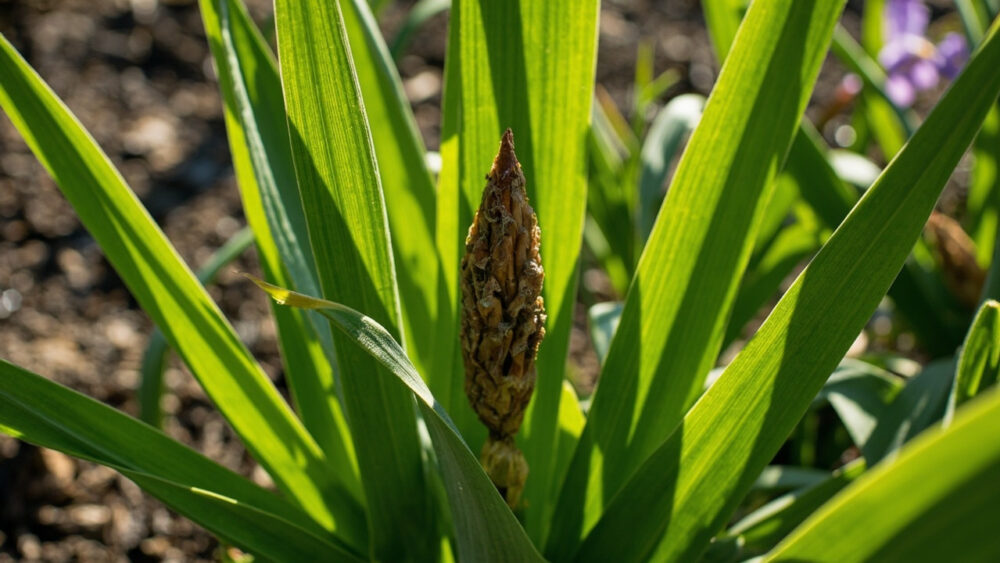
The single biggest reason irises stop blooming is planting depth: the rhizomes have gotten buried too deep, either from mulch piling up over the years or from being planted wrong from the start. The fix is simple, if a little labor-intensive: dig them up and reset them so the top of the rhizome sits right at the soil surface, exposed to sun. Most people never check this, because irises not blooming looks like a mystery when the real problem is sitting a few inches under their feet.
Before you blame the weather or assume the plant is sick, know that overcrowding is the second most common cause, and it fools almost everyone because the clump looks perfectly healthy, just leafy and flower-free. The detail that actually tells you which cause you’re dealing with isn’t the leaves at all, it’s the rhizome itself: how deep it sits, how crowded its neighbors are, and whether it feels firm or mushy when you press on it.
Most non-blooming iris clumps recover fully within a year of the right fix, sometimes two if you’re dividing an old, tangled bed. Stick around for the full list of causes, the tell-apart guide, and the two-minute diagnosis checklist at the very bottom you can run right now at the plant.
Why Your Iris Isn’t Blooming
Rhizomes planted or buried too deep
Confirm it: scrape back the soil or mulch at the base of a fan of leaves. Bearded iris rhizomes want to be at or just barely below the surface, with the top visibly exposed to sun. If you find it sitting an inch or more under soil, that’s your answer.
Fix it by lifting the rhizome and replanting it shallow, roots spread downward and the top third to half of the rhizome sitting above the soil line. Do this in late summer after bloom season, not during active spring growth.
But depth isn’t the only way a healthy-looking clump quietly stops flowering.
Overcrowded, aging clump
Confirm it: look at the clump’s structure. If it’s been three or more years since you divided it and you see a dense mat of rhizomes overlapping each other, tangled and pushing each other up out of the ground, overcrowding is choking the bloom.
Rhizomes compete hard for space and nutrients once packed together, and the plant shifts its energy into surviving rather than flowering.
Fix it by dividing in late summer: dig the whole clump, snap or cut it into fans with a healthy piece of rhizome and a few roots attached, discard the old woody center, and replant each division 12 to 18 inches apart.
Crowding is common, but not every skinny, dark green iris fan is starving for space, some are starving for something else entirely.
Too much shade
Confirm it: count the hours of direct sun the bed actually gets. Bearded irises need a genuine 6 or more hours of full sun to bloom well; anything less and you get lush leaves with little to no flowering, especially if a nearby tree or shrub has grown taller over the past few seasons.
This is easy to miss because the plant doesn’t look stressed, it just looks green and leafy and stubborn.
Fix it by moving the clump to a sunnier spot, or by cutting back overhanging branches if the shade is new and recent.
If light and space both check out fine, the next culprit is what you’ve been feeding, or not feeding, the bed.
Too much nitrogen, not enough phosphorus and potassium
Confirm it: think about your fertilizer routine. If you’ve been feeding a high-nitrogen lawn fertilizer nearby, or a general all-purpose feed heavy on nitrogen, you’ll often see dark green, vigorous foliage and few or no flowers.
Nitrogen pushes leaf growth at the expense of blooms.
Fix it by switching to a fertilizer lower in nitrogen and higher in phosphorus and potassium, applied lightly in early spring and again right after bloom, and stop any nitrogen-heavy feeding drifting over from lawn care.
If your feeding has been modest, look instead at what happened last year, not this one.
Bloomed too hard last year, or foliage was cut back too early
Confirm it: recall whether you cut the leaves down short right after last summer’s bloom, or whether the clump flowered heavily and then had a rough fall.
Iris rhizomes build the next year’s flower bud using energy stored through the foliage over the growing season; cutting leaves back to stubs too early, or a stressful drought or early frost, can rob next spring’s bloom.
Fix it by leaving foliage standing (trim only dead, brown tips) until it yellows naturally in fall, and give the clump a normal season to recharge, this one often just needs time.
Sometimes, though, the problem isn’t stress or timing at all, it’s something actively eating the rhizome.
Iris borer or soft rot damage
Confirm it: press on the rhizome. If it feels soft, mushy, or smells foul, or if you find tunnels and a sawdust-like residue inside when you cut into it, you’re dealing with borer damage or bacterial soft rot, often together since borer wounds let rot in.
Leaves may show water-soaked streaking or die back oddly on one fan while others look fine.
Fix it by cutting out and discarding all soft or tunneled rhizome tissue, letting the cut surfaces dry in the sun for a day before replanting healthy pieces, and cleaning up old iris debris every fall since borer eggs overwinter in dead foliage.
Once you’ve ruled out pests and rot, it’s worth stepping back and comparing all these causes side by side.
How to Tell the Causes Apart
Depth problems show up as leafy, otherwise-healthy fans with rhizomes visibly buried when you check the soil line.
Overcrowding shows a dense, tangled mat of rhizomes with fans practically stacked on top of each other.
Shade issues show stretched, slightly floppy leaves reaching toward the light source.
Nitrogen excess shows unusually dark, lush, oversized foliage with no bloom stalks at all.
Post-bloom stress shows a clump that flowered fine last year but skipped this year, with foliage otherwise normal.
Borer or rot shows soft, foul-smelling, or tunneled rhizomes and uneven leaf dieback, not just missing flowers.
Match what you see to one of these patterns before you decide on a fix, since treating the wrong cause wastes a full growing season.
Will It Recover?
Depth and crowding issues have the best odds: replant correctly in late summer and you’ll usually see bloom return the very next spring, occasionally the spring after for a badly overcrowded clump.
Shade and nitrogen problems recover just as reliably once the light or feeding routine is corrected, typically within one full season.
Post-bloom stress almost always resolves on its own with a normal, unstressed growing season, no intervention needed beyond patience.
Borer and rot damage is the honest exception: rhizomes that are mostly hollow or mushy throughout should be discarded rather than saved, but any firm, healthy sections you cut away and replant have a good chance of blooming again in a year or two.
Cut your losses only when a rhizome is more rot than rhizome, everything else here is worth the wait.
How to Keep It From Happening Again
Divide every three to four years before overcrowding sets in, even if the clump still looks fine on top.
Keep the rhizome tops exposed to sun and resist the urge to mulch heavily right over them.
Feed lightly with a low-nitrogen, bloom-focused fertilizer in early spring, and skip nitrogen-heavy lawn feed drift near the bed.
Leave foliage standing until it yellows naturally each fall, and clear away dead leaf debris promptly since it’s where borers overwinter.
Do this and most iris beds will bloom reliably for a decade or more between major reworkings.
Diagnosis Checklist
- Scrape soil from the rhizome top: if it’s buried an inch or more, that’s your cause, replant shallow this late summer.
- Look at clump density: if rhizomes are stacked and tangled with no bare soil between them, divide in late summer.
- Count direct sun hours on the bed: if it’s under six hours, relocate the clump or cut back overhanging shade.
- Check the foliage color and fertilizer history: if leaves are unusually dark and lush with a nitrogen-heavy feeding routine, switch to a low-nitrogen, high-phosphorus feed.
- Recall last year’s bloom and fall foliage care: if it bloomed well and foliage was cut short early, give it one full season to recharge.
- Press on the rhizome: if it’s soft, mushy, or foul-smelling, or tunneled inside, cut away damaged tissue, dry the cuts, and discard anything mostly rotten.
- If none of these match, wait one full bloom cycle before changing anything else, since a single off year is common and often self-corrects.
Most non-blooming irises are fixed with a shovel, not a spray bottle.
Get the depth, space, and light right, and next spring’s flower stalks take care of themselves.