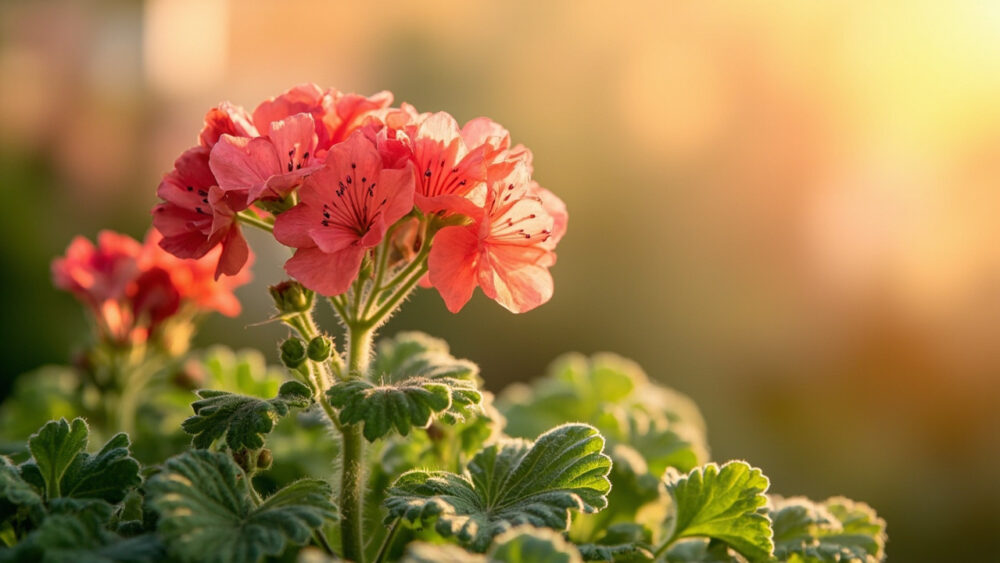
Geraniums bloom from late spring through fall, typically starting 8 to 10 weeks after planting and continuing until the first hard frost. In mild-winter zones (10 and 11) they can flower nearly year-round. That is the honest range, but the exact window in your yard depends on a few things most people never check.
One is whether your plant is actually a geranium or a pelargonium, since the nursery tags use the names interchangeably and it changes what you should expect. Another is the single most common reason a healthy-looking plant refuses to flower, which has nothing to do with water or fertilizer. And there is a five-minute habit that turns a three-week flush into a season-long show.
Stick around for the quick-reference card at the bottom. It is built to save or screenshot so you are not hunting through paragraphs next time you are standing in front of the plant wondering what it needs.
The Bloom Window, and How Long Each Flush Lasts
True hardy geraniums (the perennial Geranium species, sometimes called cranesbill) bloom in flushes, usually 4 to 6 weeks at a stretch, with a strong show in late spring and a smaller repeat in late summer if you cut them back after the first round.
The zonal and annual geraniums most people grow in pots and window boxes, which are technically pelargoniums, work differently. Once they start, individual flower clusters last 1 to 2 weeks, but the plant keeps producing new ones continuously from late spring until frost as long as it has enough light and you keep removing spent blooms.
So the “how long does it last” answer is really two answers depending on which plant is in your yard.
What Actually Controls Bloom Timing
Light is the biggest lever. Geraniums want 5 to 6 hours of direct sun minimum; in less than that, they will grow leafy and green but hold back on flowers, sometimes for the entire season.
Temperature matters almost as much. Geraniums stall out and drop buds in prolonged heat above the mid-90s, which is why a lot of potted geraniums look great in June, sulk in August, and pick back up in September as things cool off.
Day length plays a role too, especially for zonals, which tend to flower more freely as days lengthen into summer.
Get the light right and everything else gets easier.
How to Get More Blooms, or Make the Show Last Longer
If you want more flowers, the fastest fix is almost always more sun, not more fertilizer. Move a struggling pot to a spot with 6 or more hours of direct light and watch what happens over the next 2 to 3 weeks.
Feed lightly, not heavily. A fertilizer with more phosphorus and potassium than nitrogen (something like a 5-10-10 ratio) encourages blooms over leaves. Heavy nitrogen feeding does the opposite: lush foliage, few flowers.
Keep soil evenly moist but never soggy. Geraniums bloom poorly in soil that swings between bone dry and waterlogged, and potted plants are especially prone to this because containers dry out fast in full sun.
- Water when the top inch of soil feels dry, not on a fixed schedule.
- Use pots with drainage holes; standing water rots roots and stops blooming fast.
- Pinch back leggy stems in early summer to encourage bushier growth and more bloom sites.
None of this helps much, though, if the real problem is something else entirely.
Why Your Geranium Might Not Be Blooming
If you assumed it just needs more fertilizer, that guess is responsible for more flowerless geraniums than any pest or disease. Extra nitrogen pushes leaf growth and can actually suppress flowering further.
The real usual suspects, in order of likelihood:
- Not enough direct light, by far the most common cause.
- Overwatering or poor drainage, which stresses roots and shuts down flower production.
- A rootbound pot, where the plant has no room left to support new growth.
- Heat stress during a summer stretch above the mid-90s, which is temporary and usually resolves on its own as it cools.
- Old, unpinched growth that has gone leggy and woody at the base.
Check light exposure first, since fixing that solves the majority of no-bloom complaints without spending a dime.
Once flowers do show up, what you do next decides how long they stick around.
Deadheading and Aftercare That Stretch the Season
Deadhead spent blooms by snapping or snipping the entire flower stalk off at its base, not just the petals. Left in place, spent blooms put energy into seed production instead of new flowers, and the whole plant slows down.
Check every 4 to 7 days during peak bloom. It takes under a minute per plant and it is the single habit that separates a geranium that blooms all summer from one that gives you three good weeks and quits.
For hardy perennial geraniums, shear the whole plant back by about a third after the first flush fades. This looks drastic but it reliably triggers a second round of flowers within 3 to 4 weeks.
For potted zonals overwintered indoors, cut back hard in late winter and resume light feeding once new growth appears, which sets up a strong bloom the following spring.
That habit, more than any product you could buy, is what keeps color going from May into October.
Geraniums: Quick Reference
- Bloom season: late spring through fall, with hardy types flushing 4 to 6 weeks at a time and zonal types blooming continuously until frost.
- Time to first bloom: roughly 8 to 10 weeks after planting out.
- Light needed: 5 to 6 hours of direct sun minimum, more for the heaviest bloom.
- Temperature range: best flowering between about 65 and 85 degrees, with a slowdown likely above the mid-90s.
- Feeding: light applications of a bloom-focused (low-nitrogen) fertilizer, not heavy or frequent nitrogen feeding.
- Watering: when the top inch of soil is dry, in well-draining pots or soil.
- Maintenance for longer bloom: deadhead every 4 to 7 days, shear hardy types back by a third after the first flush.
Get the light and the deadheading right, and the rest of the plant tends to take care of itself.
That is really all a geranium is asking for.