Tiger lilies bloom in mid to late summer, typically from July into August, with each flower stalk staying showy for two to four weeks as buds open in succession from bottom to top. In warmer zones that window can start in late June, while cooler northern gardens sometimes push it into September. That is the short answer, but it does not tell you whether your particular plant is running late, sulking, or just getting started.
A few things quietly control that timing: how many hours of sun the bed actually gets, how old the bulb is, and whether last year’s foliage got cut back too soon. There is also a sneaky mistake almost every new tiger lily grower makes with deadheading, one that either extends the show or quietly shortens next year’s display depending on how you handle it.
Stick with me through the sections below and I will show you how to read your own plant’s timing, how to coax out more flowers per stalk, and what it means if July comes and goes with no buds at all. There is also a save-able quick-reference card at the very bottom with the whole bloom picture in one place.
The Bloom Window and How Long It Actually Lasts
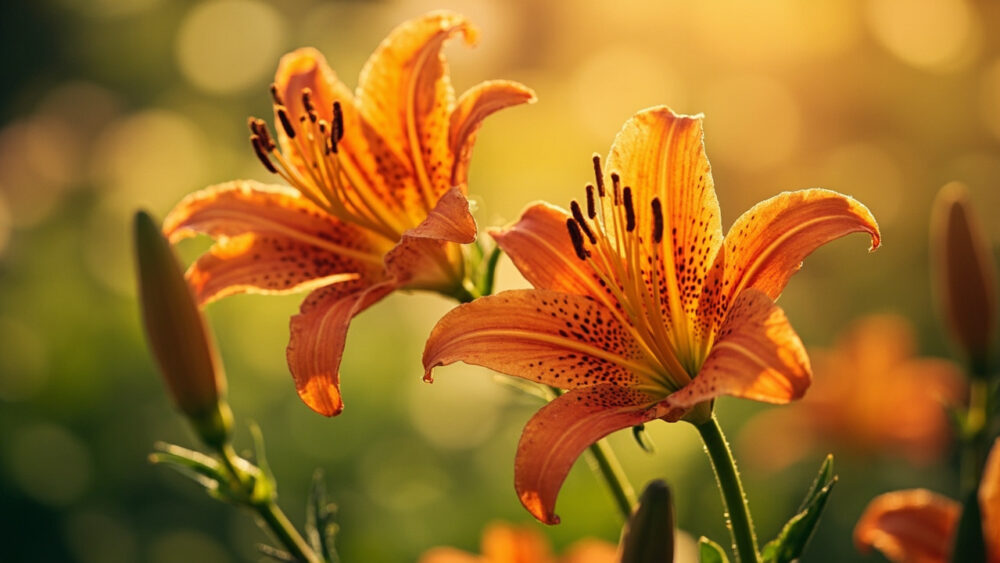
Tiger lilies (Lilium lancifolium) send up a single tall stalk, often 3 to 5 feet, studded with buds that open one after another rather than all at once. A healthy, established clump can carry a dozen or more buds per stalk in a good year.
Individual flowers last only about a week each, but because they open in sequence, the whole plant stays in bloom for three to four weeks total. A big, mature clump with multiple stalks can stretch color across five or six weeks if the stalks are staggered.
If you planted bulbs this spring, expect a shorter, thinner first-year show. Tiger lilies take a year or two to hit their full bud count.
That first-year lag brings up the real question: what actually decides when the show starts.
What Controls Bloom Timing
Sun exposure is the biggest lever. Tiger lilies want at least 6 hours of direct sun; in partial shade they still bloom, just later and with fewer flowers per stalk.
Soil warmth matters too. Bulbs planted in cool spring soil push up slower, and a cold, wet spring can delay first bloom by two to three weeks compared to a warm one.
Bulb maturity is the quiet variable everyone forgets. A bulb splits and multiplies underground over the years, and each new offset needs a season or two before it is big enough to flower. So a clump that bloomed heavily last year but looks thin this year may just have several young, not-yet-flowering bulbs mixed in with the mature ones.
Climate zone shifts the calendar too, and that is worth checking against your own yard.
Reading Your Own Yard’s Timing
In zones 8 and 9, tiger lilies often start in late June. In zones 5 through 7, mid to late July is normal. In zone 4 and colder pockets, expect August.
Look at the stalk itself for the real clue instead of the calendar. Once buds swell and show a hint of orange at the tip, you are usually 5 to 10 days from the first open flower.
If your stalks are still green and tight-budded in early July and you are in zone 6 or warmer, you are not behind, that is just your plant’s normal pace.
Now for the part most people actually clicked for: getting more flowers, not just on time.
How to Get More Blooms, and Longer-Lasting Ones
More bulbs underground means more stalks, and more stalks means a longer bloom season overall. Every three to four years, dig and divide crowded clumps in fall after foliage yellows, then replant the offsets 6 to 8 inches apart.
Feed lightly in early spring with a balanced fertilizer or compost worked into the soil, then again right after bloom finishes. That second feeding is the one people skip, and it is what rebuilds the bulb for next year’s flower count.
Water consistently through bud formation in June. Drought stress right before blooming is a common reason for fewer, smaller flowers rather than a full, heavy stalk.
If you are doing all of that and still getting a thin show, the problem is probably something else entirely.
Why It Might Not Be Blooming at All
If you assumed a non-blooming tiger lily just needs more fertilizer, that guess is usually wrong. Too much nitrogen pushes lush leaves at the expense of flowers.
The most common real cause is not enough sun, especially in a bed that has gradually filled in with shrubs or trees over the years.
The second most common cause is foliage that got cut down too early the previous fall. Lily foliage feeds the bulb all the way until it yellows on its own; cutting it green robs next year’s bloom.
Overcrowding is the third culprit. A dense, years-old clump can go leaf-heavy and flower-light until you divide it.
One more possibility, less common but real: red lily beetle damage or vole feeding on the bulb can weaken a plant enough to skip a bloom cycle entirely, so check the bulb and stem base if everything else checks out.
Whatever the cause, the fix usually shows up the following year, not the same season.
Deadheading and Aftercare That Stretches the Show
Snap or snip spent flowers off as they fade, cutting just below the bloom without disturbing the stalk. This is not for more flowers on that stalk, buds already set will open regardless, but it stops the plant from wasting energy on seed pods and keeps the display looking tidy.
Leave the green stalk and foliage standing after the last flower fades. It keeps photosynthesizing and sending energy down to the bulb for weeks after bloom ends.
Only cut stalks back once they’ve yellowed and pull away easily, usually well into fall.
That single habit, patience with the foliage, is the difference between a clump that rebuilds itself and one that slowly declines.
Tiger Lilies: Quick Reference
- Bloom window: mid to late summer, generally July into August, sometimes late June in zones 8 and 9 or into September in zone 4 and colder.
- Bloom duration: individual flowers last about a week, whole stalks stay showy 3 to 4 weeks, mature multi-stalk clumps can show color 5 to 6 weeks.
- Sun needs: at least 6 hours direct sun for full bud count, less sun means fewer, later flowers.
- Bud-to-bloom clue: orange coloring at the bud tip means flowers within 5 to 10 days.
- To get more flowers: divide crowded clumps every 3 to 4 years, feed lightly in spring and again after bloom, water well during bud formation in June.
- Most common no-bloom cause: insufficient sun, followed by foliage cut back too early the previous fall.
- Aftercare rule: deadhead spent flowers for tidiness, but leave green foliage standing until it yellows on its own in fall.
Tiger lilies reward patience more than fuss. Get the sun, the foliage timing, and a little dividing right, and the bloom takes care of itself.