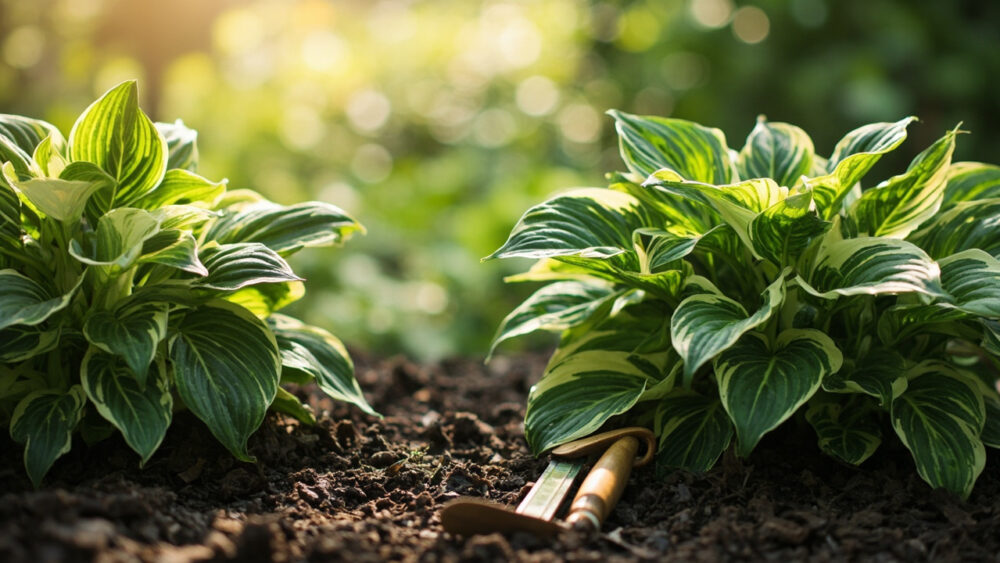
How far apart to plant hostas depends on the mature size of the variety, and that range is wider than most people expect. Miniature hostas want 12 to 15 inches between plants, mid-size varieties want 18 to 24 inches, and the big landscape types like Empress Wu or Sum and Substance need 3 to 4 feet of clear space in every direction. Plant the crown, that knobby spot where the roots meet the shoots, right at or barely below soil level, never buried under 2 or 3 inches of dirt.
Here is where most people go wrong, and it is not the spacing math. It is planting based on the size of the nursery pot in front of them instead of the tag that tells them what that hosta becomes in year four.
A quart-size hosta looks lonely at 30 inches apart. Give it three seasons and that gap disappears, sometimes with room to spare, sometimes not, and the difference between those two outcomes is exactly what this guide sorts out. Stick around, because the save-it-to-your-phone spacing card is at the bottom once you have the reasoning that makes the numbers stick.
Why Hosta Spacing Depends on Mature Size, Not Pot Size
Hostas sold in nurseries are usually one to three years old and nowhere near full size. A “small” hosta today can be a 3-foot-wide monster in five years.
Check the tag or variety name for mature width, not the pot diameter, before you decide on spacing. Miniatures like Blue Mouse Ears stay under 12 inches wide. Mid-size varieties such as June or Patriot settle in around 18 to 24 inches wide. Giants like Empress Wu or Sum and Substance can spread 4 to 5 feet across at maturity.
Space plants so their mature edges just touch or come within a few inches of each other, not their current baby-plant edges.
That single habit, matching spacing to mature size instead of current size, is the difference between a bed that looks intentional in year three and one that looks like a jungle fight.
The Exact Spacing Numbers by Hosta Size
Break it down by category and the guessing stops. These numbers are measured crown to crown, center of one plant to center of the next.
- Miniature hostas (under 12 inches mature width): space 12 to 15 inches apart.
- Small hostas (12 to 18 inches mature width): space 15 to 18 inches apart.
- Medium hostas (18 to 24 inches mature width): space 18 to 24 inches apart.
- Large hostas (24 to 36 inches mature width): space 30 to 36 inches apart.
- Giant hostas (36 inches and up): space 36 to 48 inches apart.
If you are mixing sizes in one bed, always plant based on the biggest neighbor’s future spread, not the smaller one’s.
Spacing is only half the equation, and the other half is how deep that crown actually sits in the ground.
Planting Depth: The Detail That Quietly Kills More Hostas Than Spacing Does
If you assumed depth barely matters for a tough perennial like a hosta, that assumption causes more stalled, sulky plants than crowding ever does. The crown, where white roots meet green shoots, should sit at or within half an inch of the soil surface.
Bury the crown 2 inches deep or more and you get a hosta that survives but refuses to size up, sometimes for two or three years running, because it is spending its energy pushing new growth up through extra soil instead of building leaf mass.
Plant it too shallow, with roots exposed at the surface, and it dries out and heaves in winter in colder zones.
Dig a hole as deep as the root ball and just as wide, or a little wider, spread the roots out flat, and backfill so the crown sits level with the surrounding soil.
Get depth right and the spacing numbers above will actually deliver the fill-in timeline you are picturing.
Row and Bed Layout: How to Arrange Hostas So They Actually Look Planned
Straight rows work for a border along a walkway, but most hosta beds look better staggered. Use a triangular or offset grid instead of a grid, staggering each row by half the spacing distance.
For a shaded island bed, put the largest varieties in the center or back, medium types in the middle ring, and minis at the front edge closest to foot traffic.
As a foundation planting along a house or fence, mid-size hostas spaced 18 to 24 inches apart, set back far enough that the mature width does not swallow the walkway, read as tidy rather than crowded.
Layout decides how the bed looks in year one, but spacing decides how it looks in year five, and those are two different problems.
What Actually Goes Wrong When Hostas Are Planted Too Close
Here is the honest answer to the question you are probably about to ask: crowding does not kill hostas outright, it just makes everything about them worse.
Airflow drops between crowded crowns, and that damp, still air is exactly what slug damage and crown rot need to take hold, especially after a wet spring.
Leaves overlap and shade each other, so lower leaves yellow and drop early, and the whole clump looks ragged by midsummer instead of full.
Root competition is the slow one. Two hostas planted 12 inches apart when they both want 30 will fight for water and nutrients underground for years, and neither one ever reaches its full size or full color saturation, since variegation and blue tones both depend on the plant having enough energy to spare.
None of that shows up the first season, which is exactly why overcrowding is such a common mistake.
What Goes Wrong When They Are Planted Too Far Apart
The opposite mistake is quieter but still costly. Hostas spaced too far apart leave bare soil between them for two or three years, and bare shaded soil is prime real estate for weeds, since hostas cannot outcompete anything until their canopy closes.
That gap also reads as unfinished in photos and in person, which is the main complaint people have about new shade beds.
The fix is not always more plants. Mulch the gaps 2 to 3 inches deep with shredded bark or leaf mold and let the hostas fill in on schedule, checking width against the tag rather than rushing to add filler plants that will only need dividing out later.
Patience costs nothing here, but it does test you for a season or two.
Container Spacing: A Different Set of Rules
Containers change the math because roots hit the pot wall instead of a neighboring plant. A single mid-size hosta wants a pot at least 14 to 16 inches in diameter, with room for two to three years of growth before it needs dividing or upsizing.
For a mixed container, treat hosta spacing the same as in-ground minimums, not tighter, since pot soil dries faster and crowded roots compete even harder for that limited moisture.
Drainage holes are non-negotiable. Hostas tolerate a lot, but a waterlogged pot rots crowns fast.
Containers buy you flexibility, but they do not buy you an exemption from the spacing rules above.
How to Fix a Hosta Bed That Is Already Overcrowded
If your hostas are already jammed together and looking rough, division solves it, and it is easier than people expect. Divide in early spring as shoots just start to break the soil, called “hosta eyes,” or in early fall once the weather cools, giving roots six or more weeks before hard frost to settle in.
- Dig up the whole clump, going wide of the root mass, not just around the visible leaves.
- Rinse or shake off excess soil so you can actually see where the crowns and eyes separate.
- Cut or pull sections apart, aiming for at least two to three eyes per division so each new piece can establish quickly.
- Replant divisions at the correct spacing for that variety’s mature size, crown at soil level.
- Water deeply right after replanting and keep the soil consistently moist for the first two to three weeks.
A crowded bed is not a failure, it is just a bed that is overdue for division, and most hostas thank you for it with a stronger next season.
Hostas at a Glance
- Spacing: 12 to 15 inches for minis, 15 to 24 inches for small to medium varieties, 30 to 48 inches for large and giant types, measured crown to crown based on mature width.
- Planting depth: crown level with or within half an inch of the soil surface, never buried under 2 or more inches of soil.
- Best planting time: early spring once soil is workable, or late summer to early fall at least six weeks before your first hard frost.
- Sun and site: partial to full shade for most varieties, morning sun with afternoon shade works well, more sun tolerance in gold and green varieties than in blue ones.
- Container minimum: 14 to 16 inches wide for one mid-size hosta, with drainage holes required.
- Division timing: early spring as eyes emerge, or early fall with six or more weeks before frost.
- Signs of overcrowding: early yellowing lower leaves, ragged summer appearance, stalled growth, increased slug and crown rot pressure.
Match spacing to what the tag says the hosta becomes, not what it looks like in the pot.
Get that one decision right and the depth, layout, and years of low-maintenance fill-in take care of themselves.