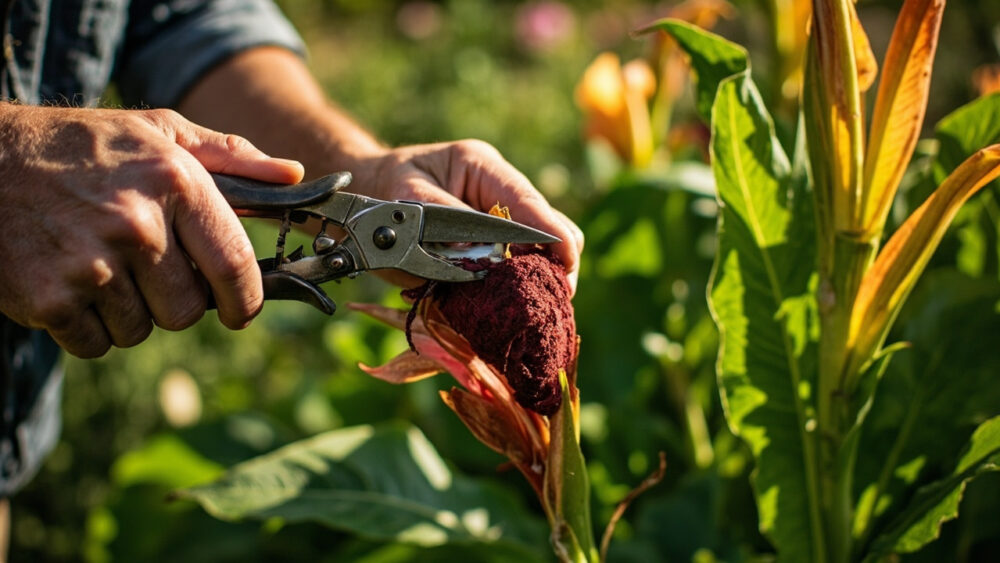
Deadhead canna lilies by snapping or cutting off the entire spent flower spike down to the first full set of leaves, not just the individual faded blooms. Do this as soon as the top flowers brown and drop, usually every 7 to 10 days through the bloom season. That is how to deadhead canna lilies in one sentence, but the details decide whether you get a second flush or a plant that just sits there looking tired.
Most people who try this make one mistake that quietly shuts down reblooming for the rest of the summer. There is also a sign on the stalk that half of gardeners misread as “done blooming” when it actually means the opposite.
Stick around and I will also answer the question you are about to ask next, which is what to do with the whole plant once frost is coming. The saveable Canna Lilies at a Glance card is at the very bottom, screenshot it before you head out to the garden.
When to Deadhead, and When to Leave the Stalk Alone
Start deadheading as soon as the first flower spike finishes, which on most cannas is 8 to 10 weeks after shoots emerge in spring. You will keep at it continuously through summer into early fall, right up until nighttime temperatures start dropping into the 40s.
Do not deadhead a stalk that still has unopened buds lower down, even if the top flowers are spent. Cannas bloom from the top of the spike downward and then send up a secondary spike from the same stalk, so cutting too early wastes flowers you already paid for with a season of growth.
Once frost has actually browned the foliage, deadheading is over and you are into fall cleanup instead.
The Tools and the One Prep Step Everyone Skips
A clean pair of bypass pruners or even sharp scissors is all you need. Hand-snapping works fine on soft, fresh flower stems but the thicker flower stalks want a blade.
The prep step that actually matters: wipe your blades with rubbing alcohol before you start, especially if you deadheaded a different plant right before this one. Cannas are vulnerable to canna rust and bacterial soft rot, and a dirty blade is a free ride for both from one stalk to the next.
Skip this and you might not see the consequence for a week, which is exactly why nobody connects the dots.
How to Deadhead a Canna Lily, Step by Step
Step 1: Find the true cutting point
Follow the flower spike down past the spent blooms to the first healthy leaf or leaf joint. That joint, not the base of an individual flower, is your cut point.
Step 2: Check for hidden buds first
Look closely at the stalk below the spent flowers for small, tight green buds. If you see them, wait, that secondary flush is coming and you would be cutting it off before it opens.
Step 3: Make the cut
Cut the entire spike cleanly just above that leaf joint, at a slight angle so water does not sit on the cut surface. You are removing the whole flowering stem, not pinching off single flowers one at a time.
Step 4: Decide on the stalk itself
If that particular stalk has finished both its flushes and shows no more buds anywhere on it, cut the whole stalk down to the base near the crown. New stalks will replace it from the rhizome below.
That last step, cutting the whole stalk, is the one most people never do, and it is exactly why their canna clump stops producing new flower stems by midsummer.
What Happens After You Deadhead
Within 5 to 10 days of a proper deadhead, you should see either the secondary bud flush opening on that same stalk or a fresh stalk emerging from the base of the plant. That is the payoff for cutting correctly instead of just picking off dead petals.
If you assumed that a plant with no visible flowers for a couple of weeks has stopped blooming for the season, that guess costs people flowers every single year. Cannas often pause between flushes, especially in a hot, dry stretch, and resume once you deadhead the spent spike and give them a deep watering.
What you should not expect is instant regrowth if the plant is nitrogen-starved or bone dry, so a light feeding and a good soak right after deadheading speeds the whole cycle along.
A plant that goes three full weeks with zero new growth after deadheading is telling you something else is wrong.
The Mistakes That Cost You an Entire Flush
- Cutting individual flowers only: pinching off single dead blooms and leaving the spike looks tidier for a day but the plant keeps feeding energy into that dead spike instead of pushing a new one.
- Cutting too low, too early: removing the whole stalk while it still has unopened lower buds throws away flowers that were days from opening.
- Deadheading during a drought stress point: cutting a stressed, wilting canna does not hurt it, but skipping the follow-up watering means the new growth you just encouraged has nothing to grow with.
- Ignoring rust-spotted leaves while deadheading: canna rust shows up as orange-brown raised spots on the leaf undersides. Working through infected foliage with the same tool you use elsewhere spreads it fast, so isolate and clean up affected leaves separately and follow a fungicide label if it gets bad.
- Leaving spent stalks to rot in wet weather: mushy, blackened stalk bases after a rainy stretch usually mean bacterial or fungal rot moving in, and it spreads faster through un-deadheaded, decaying spikes than through clean-cut ones.
Fix those five habits and you have already solved the reason most home canna clumps bloom heavy in July and go quiet by August.
Canna Lilies at a Glance
- When to deadhead: as soon as the top flowers on a spike brown and drop, roughly every 7 to 10 days through the growing season.
- Where to cut: the entire spent flower spike, down to the first healthy leaf joint, not individual dead blooms.
- When to remove the whole stalk: only after that stalk has finished both flower flushes and shows no more buds, cut it back to near the base.
- Tools: bypass pruners or sharp scissors, wiped with rubbing alcohol between plants.
- After deadheading: water deeply and give a light feeding, expect new growth or a secondary flush within 5 to 10 days.
- Watch for: orange-brown spots on leaf undersides, a sign of canna rust, and soft, blackened stalk bases after wet weather, a sign of rot.
- Stop deadheading: once nighttime temperatures drop into the 40s and foliage starts browning from frost, that is fall cleanup, not deadheading.
Cut the whole spike, check for hidden buds first, and keep the water and food coming after every cut.
Get those three habits right and your cannas will keep pushing new stalks for the entire season instead of quitting in August.