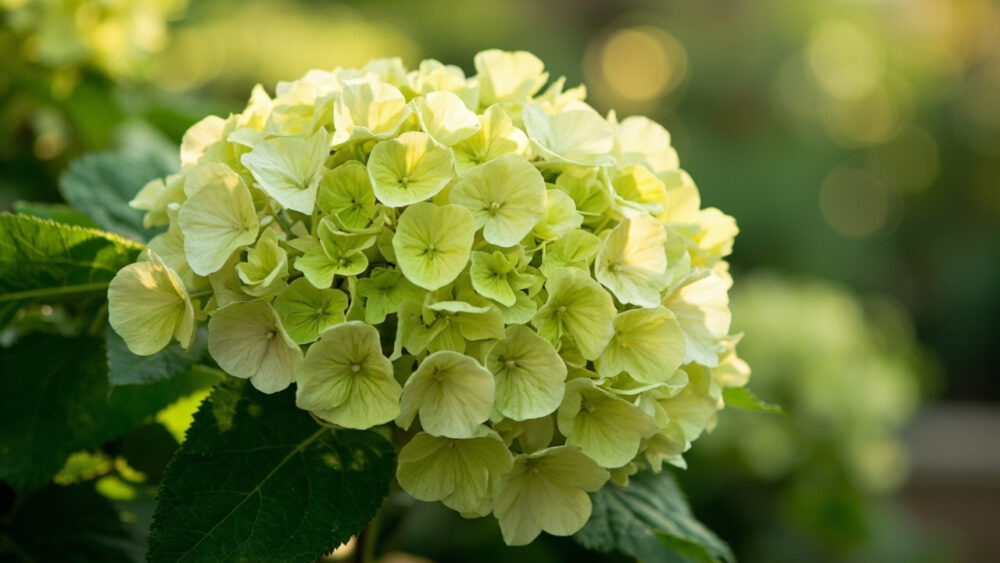
Limelight hydrangeas bloom from midsummer into fall, typically starting sometime in July and holding those big lime-green cone-shaped flower heads all the way into September or October in most climates. That is six to ten weeks of color, sometimes longer, and it is one of the longest bloom windows of any hydrangea you can grow. When do limelight hydrangeas bloom exactly depends on your zone and the weather that particular year, but July through September is the safe bet almost everywhere.
Here is what most people do not realize: the flowers do not just fade and drop like a lot of shrubs. They age through a whole run of colors on the plant, green to white to pink to a dusty burgundy, so “bloom season” and “looks good in the yard season” are actually two different stretches of time.
A few things change this answer for your specific yard, and one common assumption about why a limelight will not bloom is almost always wrong. Stick around, because the save-able quick-reference card at the bottom sums up the whole timeline plus the numbers that matter, so you can check your own plant against it in ten seconds.
The Real Bloom Window, Start to Finish
Limelight panicle hydrangeas (Hydrangea paniculata ‘Limelight’) set their flower buds on new wood, the growth that comes up that same spring. That is why bloom starts later than the mophead hydrangeas you might be used to.
First color usually shows up in early to mid July, with the cone-shaped panicles opening a soft lime green. They stay green through most of summer, then as temperatures cool in late summer they shift to creamy white and eventually blush pink to deep rose by September or October.
In warmer zones (7 and up) that whole run can stretch closer to twelve weeks. In cooler zones (3 to 5) it compresses, starting a bit later and getting cut short by frost.
The color change is not the flower dying, it is the flower aging, and that is exactly what makes this shrub worth the wait.
What Actually Controls the Timing
Three things move the start date around: your climate zone, how much sun the plant gets, and how it was pruned that year.
Sun exposure matters more than people expect. A limelight in full sun (six or more hours) blooms earlier and produces more flower heads than one tucked into partial shade, which might bloom two to three weeks later with a noticeably lighter show.
Spring temperatures also play a role. A cold, slow spring delays new growth, which delays bud set, which delays bloom. A warm spring pushes everything earlier.
Pruning timing is the other lever. Because buds form on new wood, a hard prune in early spring actually resets the clock and can push bloom later, while an unpruned or lightly pruned shrub may bloom a touch earlier simply because it had a head start on growth.
Get the sun and pruning right and you are most of the way to a reliable bloom date every year.
How to Get More Flowers, or a Longer Show
If you want more blooms rather than just on-time blooms, feeding and pruning discipline do more than any fertilizer marketing will tell you.
Prune correctly, and only once a year: late winter to very early spring, while the plant is still dormant, cutting back by about a third. Skip a hard prune every single year if you want a fuller, taller shrub with more flower heads. Limelights left unpruned for a year or two often reward you with the biggest show of the bunch.
Feed lightly. A balanced, slow-release fertilizer in early spring is enough. Heavy nitrogen pushes leafy growth at the expense of flowers, so more is not better here.
Water consistently, especially in the first couple of years while roots are establishing, and mulch to keep soil moisture even through summer heat. A hydrangea under drought stress will produce smaller panicles and may drop buds before they ever open.
Do all three consistently and you will notice the difference by the second season, not the first.
Why Your Limelight Isn’t Blooming
If you assumed a lack of flowers means the plant needs more fertilizer, that guess is rarely the fix and can actually make things worse.
The most common real cause is pruning at the wrong time, specifically pruning in mid to late spring after new growth has already started forming buds. Cut it back then and you remove the very growth that would have flowered. The fix going forward is simple: only prune in late winter or very early spring.
The second most common cause is not enough sun. A limelight planted in heavy shade may survive for years and never bloom well. If yours is more than a couple of seasons old and still sparse, and it is getting less than four to five hours of direct sun, that shade is your answer, not the soil or the fertilizer.
Young plants are also just slow to start. A limelight planted this year may not put on a full show until its second or third season while it builds root mass.
Rule out timing of pruning and sun exposure first, because those two account for the vast majority of no-bloom limelights.
Deadheading and Aftercare to Stretch the Season
Unlike a lot of flowering shrubs, limelight does not need deadheading to keep blooming, and cutting off the aging blooms will not trigger a second flush. What deadheading does here is cosmetic and practical, not bloom-boosting.
Let the flowers age on the plant if you want the full green-to-white-to-pink color show, which is honestly the best reason to grow this variety in the first place. Many gardeners leave the dried, papery panicles on right through winter for structure in the snow, then cut them off during the late winter prune.
If a stem is flopping under the weight of a heavy flower head, especially after rain, a light cut back to a strong side bud can tidy things up without hurting next year’s bloom.
Cut a few stems for indoor arrangements any time after they have opened fully. They dry beautifully and hold color for months.
Leave the rest of the plant alone until that one late-winter pruning window, and you have done everything this shrub actually needs.
Limelight Hydrangeas: Quick Reference
- Bloom window: typically early to mid July through September or October, six to ten weeks of active color and often longer as flowers age.
- Color progression: lime green when they open, shifting to creamy white, then blushing pink to deep rose by late season.
- Blooms on: new wood, meaning this year’s spring growth, which is why late pruning can delay or ruin bloom.
- Sun needs: full sun, at least six hours, for the strongest and earliest bloom, partial shade gives fewer flowers and a later start.
- Pruning window: late winter to very early spring only, cutting back roughly a third, skip a hard prune some years for a fuller show.
- Common no-bloom causes: pruning too late in spring, insufficient sun, or a young plant still establishing roots in its first one to two seasons.
Get the sun and the pruning timing right, and a limelight will reward you with one of the longest, most reliable blooms in the garden.
Once you see that green-to-pink shift happen for the first time, you will plan your whole summer around it.