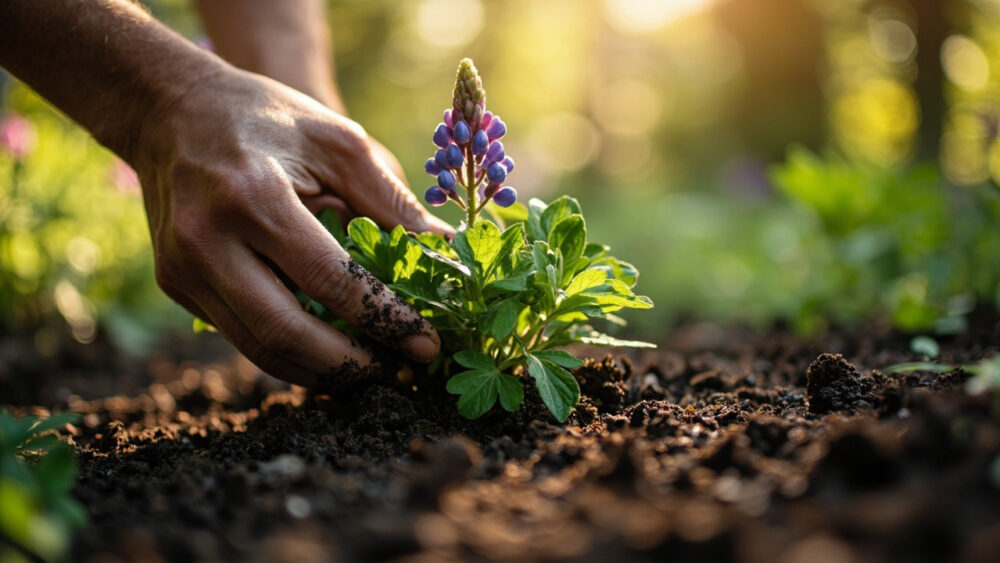
The best time to plant lupines is two to four weeks before your last frost date for seedlings and bare-root plants, or in early fall six weeks before your ground freezes if you’re direct-sowing seed. Soil temperature matters more than the calendar: lupines want cool soil, ideally 55 to 65 F, and they sulk or rot in anything hot and wet. Get that window right and lupines are almost foolproof; get it wrong and you’ll spend a whole season wondering why nothing happened.
Here’s the part most people miss: the mistake that kills more lupines than frost or drought combined is planting into warm soil because the weather “felt right.” Lupines don’t read the thermometer on the porch, they read the soil four inches down, and that number lies to you constantly in spring.
There’s also a sign everyone misreads, a stalled, sulky seedling that looks dead but isn’t, and an honest answer about why your neighbor’s lupines reseed themselves everywhere while yours refuse to come back a second year. All of that is coming, and the exact “Lupines at a Glance” card you can screenshot before you head out to the yard is waiting at the very bottom.
The Real Planting Window, Anchored to Frost and Soil
Lupines are cool-season growers with a taproot that hates being disturbed once established, so timing is about getting them in while the soil is still cool and workable, not warm and baked.
For transplants and potted starts: get them in the ground two to four weeks before your average last frost date, as soon as the soil can be worked and isn’t waterlogged. Lupine seedlings tolerate a light frost fine once hardened off.
For direct-sown seed in spring: sow as soon as soil hits about 50 F and you can work it, usually three to six weeks before last frost depending on your region.
For fall sowing, which many lupine growers actually prefer because it mimics how the seed drops naturally, get seed in the ground six to eight weeks before your ground typically freezes solid.
The frost date on the seed packet is a starting point, not a guarantee, your own soil is the real test.
How to Find Your Actual Window in Your Own Yard
Forget the calendar for a minute. Push a soil thermometer four inches into the bed where you plan to plant, in the morning, three days in a row.
If you’re consistently reading 50 to 65 F, you’re in business. Above 70 F and germination drops off hard, plus transplants get heat-stressed before their roots ever settle in.
The squeeze test tells you the rest: grab a handful of soil from that same spot. It should hold together loosely and crumble when you press it, not drip water or pack into a hard mud ball.
If water runs out when you squeeze, the ground is still too wet for a taprooted plant that despises soggy feet.
Once the thermometer and the squeeze test agree, that’s your green light, not the date on a plant tag.
The Sign Everyone Misreads: “Stalled” Isn’t “Dead”
This is the guess that trips up almost everyone new to lupines. You plant a little early, a cold snap rolls through, and the seedling just sits there, no new growth, maybe a slightly purple tinge on the leaves.
The obvious assumption is that it’s dying and you should replant. That assumption is usually wrong.
Lupines genuinely pause growth in cool soil below about 50 F, they are not dead, they are waiting. Pull one gently and check the taproot before you give up on it, if it’s firm and white, leave it alone.
What actually kills lupines at this stage isn’t cold, it’s a well-meaning gardener yanking and replanting a perfectly fine seedling, or overwatering a “stalled” plant because it looks thirsty when it’s really just cold.
Patience here costs you nothing, replanting costs you the whole taproot.
Plant Too Early, Plant Too Late: What Actually Happens
Too early, meaning into cold, saturated soil below 45 F, and the real risk isn’t frost on the leaves, it’s root rot. Lupine taproots sitting in cold mud for two or three weeks straight will simply rot before they ever push top growth.
Too late, meaning into soil that’s already climbed past 70 to 75 F with summer heat closing in, and germination rates for seed crash hard, often below what’s worth the effort. Transplants set out this late spend their energy just surviving heat stress instead of building the root system they need to overwinter.
Neither mistake is instantly fatal the day it happens, which is exactly why people don’t connect cause and effect until weeks later when nothing’s come up.
Missing the window doesn’t always show up immediately, and that delay is what makes it so easy to blame the wrong thing.
Prep Before the Window Opens
Lupines are not picky about soil richness, in fact overly fertile soil produces leggy, floppy plants with fewer flowers. What they do need is drainage, so amend heavy clay with compost or coarse sand well before planting day, not the morning of.
If you’re seeding, nick or lightly sand the hard seed coat and soak seeds overnight in room-temperature water. Untreated lupine seed can sit in soil for weeks without germinating, and that delay gets blamed on timing when it’s really a prep issue.
Pick your site now too: full sun to light afternoon shade, and a spot you won’t till again later, since disturbing established taproots is close to a death sentence for the plant.
- Test drainage by digging a 12-inch hole, filling with water, and timing the drain, under 2 hours is ideal
- Loosen soil 8 to 10 inches deep where the bed will go, taproots need room to run straight down
- Skip high-nitrogen fertilizer at planting, it feeds leaves at the expense of blooms
Do this groundwork before your soil thermometer hits the target number, not after.
Region Notes That Actually Change Your Timing
In cold-winter regions, roughly USDA zones 3 to 6, spring planting after the ground thaws is your main window, and fall sowing needs enough lead time for roots to establish before a hard freeze locks things down.
In milder regions, zones 7 and up, fall planting often works better than spring. Cooler fall soil lets seedlings establish through winter without the heat stress they’d face if you waited for spring.
Hot-summer, mild-winter climates, think much of the interior South, are genuinely tough for lupines no matter when you plant, since the plant wants a cool season long enough to size up before heat arrives, and that window can be short. Treating them as an annual there is the honest approach, not a failure on your part.
Lupines that reseed easily in cooler climates often behave as short-lived annuals or biennials further south, which explains the neighbor’s self-sowing patch you were wondering about earlier.
Your zone tells you which season is your real spring, spring or fall.
Lupines at a Glance
- When to plant transplants: two to four weeks before your last frost date, once soil is workable and not waterlogged.
- When to direct-sow seed: spring once soil hits about 50 F, or fall six to eight weeks before your ground typically freezes.
- Ideal soil temperature: 50 to 65 F, checked four inches down, three mornings in a row.
- Spacing: 12 to 18 inches apart, they need room for a taproot and a wide crown.
- Planting depth: seeds about 1/4 to 1/2 inch deep, transplants at the same depth they were growing in the pot.
- Soil prep: loosen 8 to 10 inches deep, add compost or sand for drainage, skip high-nitrogen fertilizer.
- Region rule: zones 3 to 6 plant in spring, zones 7 and warmer often do better with fall planting.
Get the soil temperature right and almost everything else about lupines takes care of itself.
When in doubt, wait for the soil to tell you, not the calendar.