Miniature roses care comes down to four things they cannot live without: at least 6 hours of direct sun, soil that stays lightly moist but never soggy, monthly feeding through the growing season, and airflow around those small, dense leaves so black spot and mildew do not move in. Get those four right and everything else is maintenance.
Most people kill miniature roses through kindness. They overwater a plant that actually wants to dry slightly between drinks, or they keep it on a windowsill that feels bright but delivers a fraction of the light a rose needs.
There is also a sign almost everyone misreads, a plant that looks like it is dying of thirst when it is actually dying of root rot, and an honest answer to the question you are about to ask: no, that indoor miniature rose from the grocery store is not going to thrive on a windowsill long term, and I will tell you exactly what to do about it. Stick around for the Miniature Roses at a Glance card at the bottom, save it to your phone before you head back out to the plant.
Light, Placement, and Temperature
Miniature roses need 6 to 8 hours of direct sun a day. Indoors, that means a south or west-facing window, and even then, most homes do not deliver enough intensity without a grow light supplementing a few hours in fall and winter.
Outdoors, full sun is non-negotiable. A spot that gets morning sun and afternoon shade in brutal summer climates (zone 8 and up) will save the flowers from scorching, but everywhere else, more sun means more blooms.
Temperature-wise, they are comfortable in the same range you are, roughly 60 to 75°F. They tolerate light frost outdoors once established but stop blooming and go semi-dormant below 50°F.
If yours has been sulking on a windowsill, the fix is almost never water, it is light.
Watering: How Much, How Often, and How to Tell
Here is the mistake that ends most miniature rose stories early: watering on a schedule instead of checking the soil. These plants have shallow, fine root systems in small pots, and they punish both drought and swamp fast.
Check the top inch of soil with your finger. If it is dry, water thoroughly until it runs from the drainage holes. If it is still damp, wait a day or two and check again.
In active growth, that usually means watering every 2 to 4 days in a pot, less often in the ground. Wilting, crispy leaf edges, and a papery feel to the leaves look like underwatering.
The trap is that yellowing lower leaves and a wilted look also happen when roots are drowning and can no longer take up water at all, so a wilted rose sitting in soggy soil needs less water, not more. Always confirm with your finger before you reach for the watering can again.
Get the moisture right and the next question becomes what is actually in that pot.
Soil, Pots, and Feeding
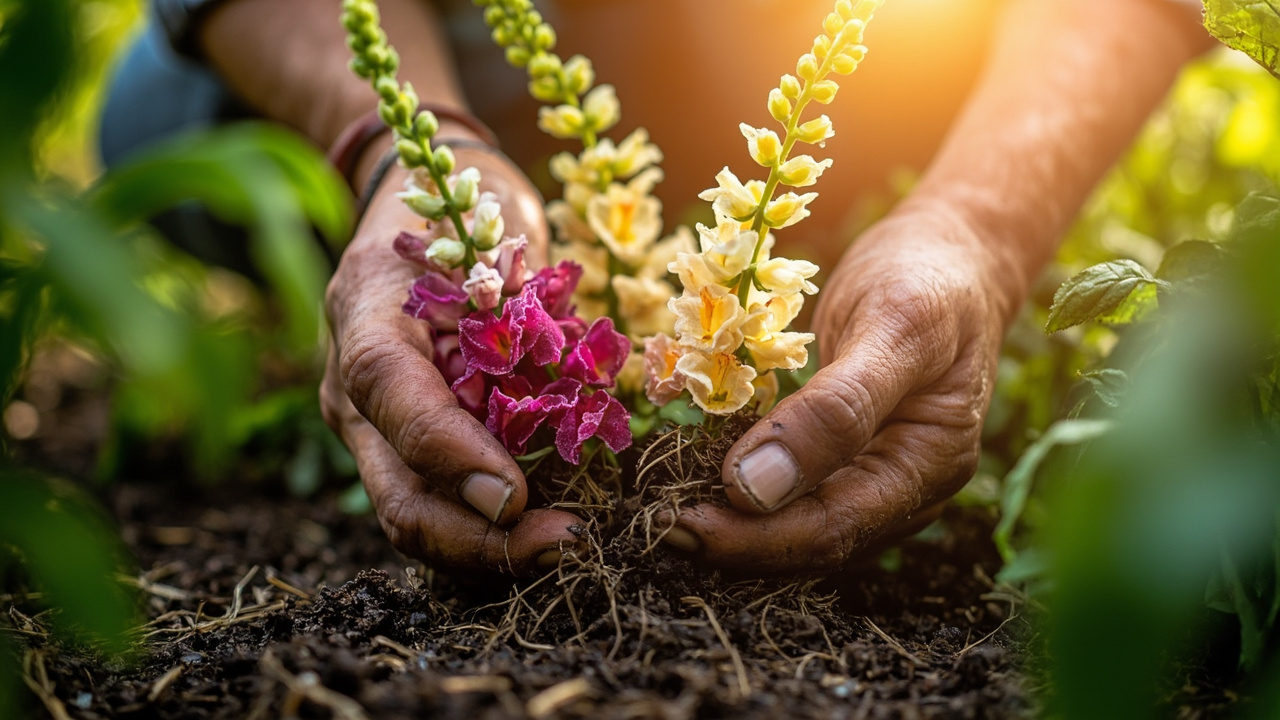
Miniature roses want a well-draining, slightly acidic mix, pH around 6.0 to 6.5. A quality potting mix with some perlite or coarse sand worked in drains well enough for containers; garden soil alone is usually too dense.
Any pot needs drainage holes, no exceptions. A rose sitting in a cachepot with no escape for water is a rose headed for root rot within weeks.
Feed every 3 to 4 weeks during active growth (spring through late summer) with a rose or general bloom fertilizer, following the label rate. Stop feeding about 6 to 8 weeks before your first fall frost outdoors, or simply ease off in late fall for indoor plants as light drops and growth slows.
Skip feeding a plant that just went into new soil, it does not need the push yet.
Pruning, Repotting, and Cleanup
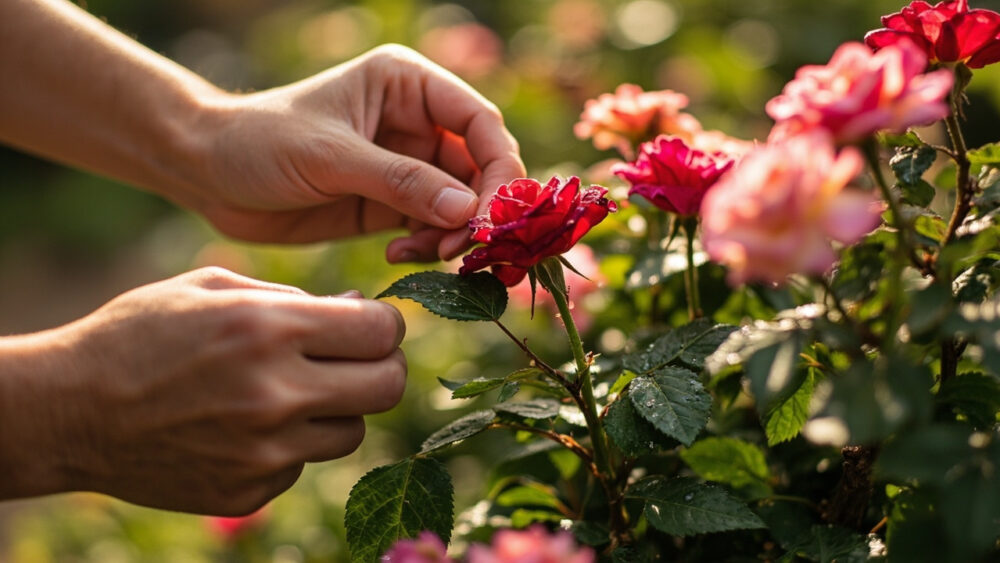
Deadhead spent blooms by snipping just above the first five-leaflet leaf below the flower; this pushes the plant to set new buds instead of seed. Do this continuously through the bloom season.
Give miniature roses a harder prune once a year, cutting back by about a third, timed to when new growth is just starting, typically late winter to very early spring outdoors, or anytime you see fresh red-tinged shoots on an indoor plant.
Repot every 1 to 2 years, moving up one pot size, when you see roots circling the drainage holes or growth stalling despite good light and feeding. Spring is the easiest time to do this since the plant recovers fastest.
Wipe dust off leaves occasionally and pull any yellowed or fallen leaves out of the pot, debris on the soil surface is where fungal problems get their start.
Clean, well-timed cuts prevent most of the problems in the next section before they start.
The Problems Most Likely to Strike
Miniature roses are bred for compact charm, not toughness, and their tightly packed leaves trap moisture. Black spot (dark circular spots, yellowing around them) and powdery mildew (a gray-white dusty coating) are the two most common diseases, both driven by poor airflow and wet leaves.
Fix airflow first: space plants so leaves are not touching neighbors, water the soil rather than the foliage, and water in the morning so any splashed leaves dry by evening. If disease is already established, a fungicide labeled for roses can help, always follow the product label exactly.
Spider mites and aphids are the common pests, mites showing up as fine webbing and stippled, dusty-looking leaves, aphids as small clusters on new growth. Both usually respond to a strong water spray followed by insecticidal soap, applied per label directions.
None of this is exotic. It is airflow, dry leaves, and catching it early.
How to Tell It Is Actually Thriving
A thriving miniature rose pushes out new reddish growth tips regularly and holds glossy, deep green leaves without yellowing at the base. You should see a new flush of buds forming within 2 to 3 weeks of the last deadheading, not a long blank stretch of bare stems.
Firm, upright stems and leaves that stand out rather than droop by midday are good signs, even in afternoon heat a healthy plant perks back up by evening.
If you are getting steady bloom cycles through the warm months and the plant is filling its pot with new growth rather than just holding steady, you are doing this right.
Everything above is the reasoning, here is the version you can actually save.
Miniature Roses at a Glance
- Light needed: 6 to 8 hours of direct sun daily, south or west window indoors, full sun outdoors.
- Watering rule: check the top inch of soil, water thoroughly when dry, never let the pot sit in standing water.
- Soil and pot: well-draining mix, pH 6.0 to 6.5, pot with drainage holes, always.
- Feeding schedule: rose or bloom fertilizer every 3 to 4 weeks in active growth, stop 6 to 8 weeks before first frost outdoors.
- Pruning timing: deadhead continuously above a five-leaflet leaf, hard prune by a third when new growth starts in late winter or early spring.
- Repotting: every 1 to 2 years in spring, one pot size up, when roots circle the drainage holes.
- Watch for: black spot, powdery mildew, spider mites, aphids, all tied to poor airflow or wet leaves.
If you remember one thing, remember that a finger in the soil beats any watering schedule. Give it real sun and good airflow, and the rest of this care is just upkeep.