If your orchid has glossy green leaves but hasn’t flowered in over a year, the most common cause by far is not enough light. Most houseplant orchids, especially the ubiquitous Phalaenopsis, need bright, indirect light for several hours a day to trigger new flower spikes, and a spot that feels “bright enough” to you is often too dim for a plant that evolved under a thin forest canopy. Move it closer to an east or west window and give it eight to ten weeks before you judge the result.
Here’s the loop worth opening right away: most people blame fertilizer first, buying “orchid bloom booster” the day they notice no flowers. That’s rarely the actual problem, and dumping extra phosphorus on a light-starved orchid does nothing but waste money.
The real diagnosis depends on a few details only you can check right now: whether the leaves are dark green or yellow-green, whether the plant has ever bloomed for you before, and how long it’s been since the last flush. Stick with this, because the full diagnosis checklist is waiting at the bottom, and it will let you work through your exact plant in about two minutes.
Causes Ordered by Likelihood
1. Not enough light
Confirm it: dark, deep-green leaves are the tell. Healthy blooming orchids usually have a slightly olive or yellow-green cast, not the rich green of a shade plant. If yours looks lush and dark but never flowers, light is almost always the answer.
Fix it by relocating to an east-facing windowsill or a few feet back from a south or west window with a sheer curtain. No blooms in over a year with dark leaves points straight here.
2. No temperature drop to trigger spiking
Confirm it: check whether your home stays a steady 68 to 75 F day and night, year-round. Many orchids, Phalaenopsis included, need a two to three week stretch where nights drop to around 55 to 65 F to signal it’s time to spike.
Fix it by moving the plant somewhere cooler at night in fall, near a slightly drafty window or an unheated porch above freezing, for a few weeks.
3. Wrong or inconsistent watering
Confirm it: lift the pot. If it feels heavy and the bark or moss stays wet for a week or more, or if roots look brown and mushy instead of firm and silvery-green, overwatering is stressing the plant out of bloom mode entirely.
Fix it by watering only when the medium is dry an inch down, and repot into fresh bark if the current mix has broken down into mush.
4. Not enough humidity or airflow
Confirm it: check leaf tips for a papery, crisping edge, and feel the air near the plant, most homes sit at 30 to 40 percent humidity, while orchids prefer 50 to 70 percent.
Fix it with a humidity tray of pebbles and water under the pot, grouping plants together, or a small humidifier nearby, plus a fan on low to keep air moving so fungus doesn’t follow.
5. Rootbound or exhausted growing medium
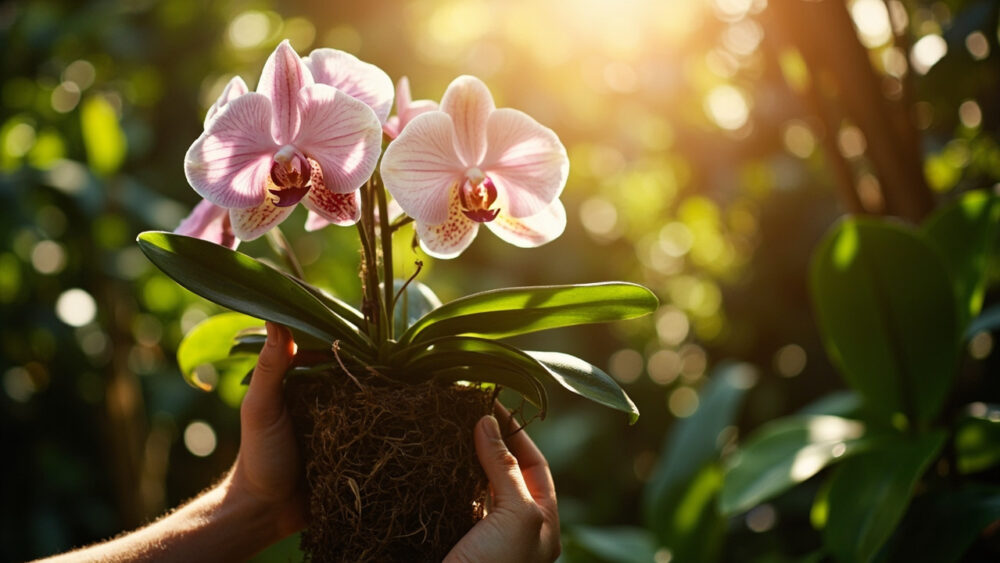
Confirm it: slide the plant out of its pot. Bark that’s turned to dark, compacted mush, or roots circling tightly with no room left, means the plant is fighting for survival, not investing in flowers.
Fix it by repotting into fresh orchid bark or a bark-and-perlite mix, sized only slightly larger than the root mass, right after the last bloom fades or in spring.
6. Too much nitrogen, not enough overall feeding balance
Confirm it: if you’ve been feeding heavily with a high-nitrogen general houseplant fertilizer, you’ll often see vigorous new leaf growth with zero flower spikes.
Fix it by switching to a fertilizer labeled for orchids, feeding at quarter to half strength every other watering during active growth, and easing off in the two or three months you’re trying to trigger a spike.
7. The plant is simply too young or too stressed to bloom
Confirm it: a recently repotted orchid, a rescue from a big-box store clearance rack, or a seedling-stage division may just need time. Check for at least four to five healthy leaves and a solid root system before expecting flowers.
Fix it with patience and steady care, not intervention. Some orchids need a full year or two to mature into their first bloom cycle.
Once you’ve matched a cause, the next step is confirming you picked the right one, because two of these can look nearly identical from across the room.
How to Tell the Causes Apart
Leaf color is your fastest clue. Dark, almost blackish-green leaves with no blooms usually mean insufficient light. Yellowish, thin, or floppy leaves point more toward overwatering or root rot.
Look at where the problem shows up. Crisping leaf tips and edges are a humidity issue localized to the leaf margins, while whole-leaf yellowing that starts at the base and moves up says root or watering trouble.
Check the roots directly, since this single test resolves most confusion. Firm, plump, silvery-green or greenish-white roots mean the plant is healthy and the issue is environmental, light or temperature. Brown, black, or hollow roots mean the issue is inside the pot.
Consider the timeline too. A plant that bloomed fine last year and stopped is usually missing its temperature drop or got moved to a dimmer spot, while a plant that has never once bloomed for you is more likely still immature or was mislabeled.
With the cause narrowed down, the next honest question is how much of this you can actually undo.
Will It Recover?
Light and temperature issues have the best outlook. These plants aren’t damaged, they’re just waiting for the right cue. Correct the light or add the cool-night trigger and most healthy Phalaenopsis will spike within two to three months.
Overwatering and root problems are recoverable if you catch them early. A plant with some healthy roots left, even just a third of the root mass, can rebuild if you repot into fresh, well-draining medium and let it dry properly between waterings. Full recovery and reblooming can take six months to a year.
Humidity and airflow problems rarely kill an orchid outright but can stall blooming indefinitely. Fix the environment and give it a full growing season before expecting flowers.
Nitrogen overload and immaturity are really just timing issues. Ease off fertilizer, or simply wait, and the plant will bloom on its own schedule.
Cut your losses only if the crown, the center where leaves emerge, has gone soft, black, or mushy. That’s crown rot, and it’s usually fatal with no home fix. Everything short of that is worth continuing to nurse along.
Knowing it can recover is one thing, keeping it from happening again is the part that actually saves you the second round of guessing.
How to Keep It From Happening Again
Consistency beats intensity with orchids. A steady, moderately bright spot beats an occasional trip to a sunnier windowsill and back.
Water on a schedule tied to the medium’s dryness, not the calendar, typically every seven to twelve days depending on your home’s humidity and the pot’s material.
Let your home experience its natural seasonal temperature dip in fall instead of running climate control at a dead-flat temperature all year. That dip is doing real biological work.
Repot every one to two years before the bark fully breaks down, and feed lightly and consistently rather than heavily and sporadically.
Get these four things stable and most healthy orchids will rebloom reliably once or twice a year without any dramatic intervention on your part.
Diagnosis Checklist
- Check leaf color: dark green with no blooms means check your light first, pale or yellow means check the roots first.
- Check the spot: if it’s more than a few feet from an east or west window, move it closer and wait eight to ten weeks before reassessing.
- Check nighttime temperature: if your home stays above 65 F year-round, plan a two to three week cool-night period in fall.
- Lift the pot: if it feels heavy and stays wet a week or longer after watering, ease off your watering schedule.
- Slide the plant out and check roots: firm and silvery-green means healthy, brown and mushy means repot now.
- Check the crown: soft, black, or collapsed means the plant likely will not recover, everything else is fixable.
- Check leaf tips: crisping and browning means raise humidity with a pebble tray or humidifier.
- Check your fertilizer label: if it’s a general high-nitrogen feed, switch to an orchid-specific formula at quarter strength.
- Check the plant’s age and history: under a year old or never bloomed before, give it time rather than changing anything drastically.
Run through those nine checks with the plant in front of you and you’ll know your exact cause before you’ve finished your coffee.
Fix the right one, then leave it alone, orchids bloom on their own schedule once you stop working against them.