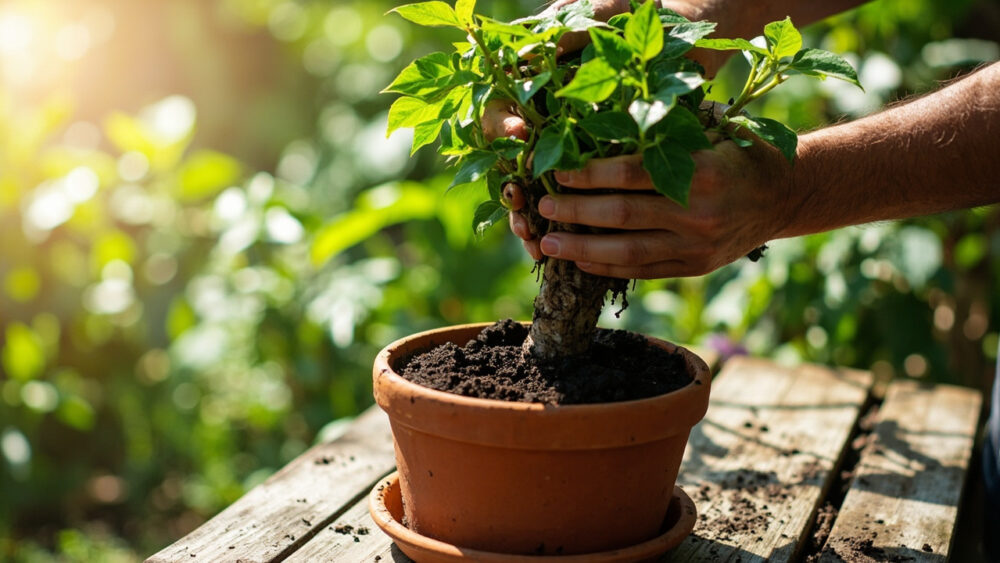
The short answer: repot your money tree (Pachira aquatica) every 2 years, moving up just one pot size, using a fast-draining potting mix, and only when the plant is actively growing, not in winter dormancy. Water it well the day before, ease the root ball out instead of yanking the trunk, and settle it into the new pot at the same soil depth it was growing at before. That is the whole job on paper, but knowing how to repot a money tree without stalling it out for a season takes more than that.
Most people get one part of this wrong without realizing it, and it is not the part they worry about. It is not the timing, and it is not the watering afterward. It is the pot size jump, and it quietly costs people six months of growth while they wonder why their “healthy” repot suddenly looks worse than before.
There is also a sign on the trunk itself that tells you whether the plant even wants a bigger home, and most people never check it before they start digging. Stick with me through the sections below and you will get that sign, the real feeding schedule this plant needs, and the honest list of what actually kills money trees indoors. The save-and-screenshot care card is waiting at the bottom once you have the full picture.
When and Why to Repot a Money Tree
Repot every 2 years, or sooner if roots are circling out the drainage hole or lifting the plant up out of the soil. Do it in spring or early summer, when the plant is putting out new leaves and can recover quickly. Repotting in late fall or winter, when growth has slowed, is the single most common way people stall this plant for months.
Here is the sign almost nobody checks: look at the base of the trunk where it meets the soil. If it looks tight, swollen, or like the trunk is straining against the pot rim, that plant is ready. If the soil surface still has room around the trunk, it may not need repotting at all, just fresh topsoil and a feed.
Size up by one pot diameter only, roughly 1 to 2 inches larger than the current pot. A money tree dropped into a pot that is dramatically larger will sit in wet soil far from its roots, and that excess moisture is what leads to root rot, not overwatering from the hose.
That oversized-pot mistake is exactly the one that ruins most first attempts, and it happens before a single drop of water touches the new soil.
How to Actually Repot It, Step by Step
Water the plant the day before you repot. Damp soil holds the root ball together and slides out of the pot cleanly, while dry soil crumbles and tears roots on the way out.
Turn the pot on its side, squeeze the sides if it is plastic, and ease the plant out by the base of the trunk, never by pulling straight up on the braided stems. If it resists, run a butter knife around the inside edge of the pot first.
- Inspect the roots: trim any that are black, mushy, or wrapped in tight circles.
- Add 1 to 2 inches of fresh potting mix to the bottom of the new pot.
- Set the root ball in at the same depth it sat before, never deeper.
- Fill in around the sides, firming gently, and water until it runs from the drainage hole.
Skip fertilizer for about 4 weeks after repotting. Disturbed roots cannot use it yet, and feeding too early just builds up salts the plant cannot absorb.
Once it is settled in, where you put that pot matters just as much as the repot itself.
Light, Placement, and Temperature
Money trees want bright, indirect light, the kind you get a few feet back from an east or west-facing window. Direct afternoon sun through unfiltered glass will scorch the leaves, leaving pale, papery patches that never green back up.
Too little light does not kill it outright, but it does something people misread constantly: the plant stretches, leaf spacing gets long and thin, and the braid seems to lean toward the nearest window. That is not the plant dying, that is the plant asking for more light.
Keep it between 65 and 80°F, and away from cold drafts, heating vents, and air conditioning blasts. Anything below 50°F for more than a short stretch will cause leaf drop that looks alarming but is usually recoverable once conditions improve.
Get the light right and watering gets a lot more forgiving.
Watering: How Much, How Often, and How to Tell
Water when the top 1 to 2 inches of soil are dry to the touch, which in most homes lands somewhere between 7 and 14 days depending on light, pot size, and season. There is no fixed schedule that works year-round.
If you assumed drooping, yellowing leaves mean the plant is thirsty, that guess is what kills more money trees than actual drought. Drooping and yellowing lower leaves almost always mean overwatering and soggy roots, not underwatering.
Check by sticking a finger into the soil rather than trusting the calendar. Water thoroughly until it drains from the bottom, then let the pot drain fully and never let it sit in a saucer of standing water.
In winter, when growth slows, stretch the interval out and expect to water half as often.
Get the water right and the soil underneath it matters just as much.
Soil, Potting Mix, and Feeding
Use a well-draining potting mix, something like a standard indoor potting soil cut with perlite or coarse sand at roughly a 3-to-1 ratio. Money trees hate sitting in dense, water-retentive soil, and that is the root cause behind most rot problems, not the frequency of watering itself.
A pot with a drainage hole is not optional here. Decorative pots without one need a plastic nursery pot inside them, not a layer of gravel at the bottom, which does not actually improve drainage the way people assume.
Feed monthly during spring and summer with a balanced liquid houseplant fertilizer diluted to about half strength. Skip feeding entirely in fall and winter when growth naturally slows, since fertilizer applied to a dormant plant just accumulates as salt buildup in the soil.
With the soil and feeding dialed in, the routine upkeep is where most of the long-term shape of the plant gets decided.
Pruning, Cleaning, and Other Routine Tasks
Prune in spring, right before or during the active growth push, cutting just above a leaf node to encourage bushier growth. Leggy stems reaching for light are the usual reason people prune, and cutting them back forces new growth lower on the plant.
Wipe the leaves down with a damp cloth every few weeks. Dust buildup blocks light the plant is already working hard to capture, and it is one of the easiest fixes on this whole list.
Rotate the pot a quarter turn every week or two so growth stays even instead of leaning permanently toward the window.
Handled on that rhythm, most problems never get the chance to start.
Problems Most Likely to Strike
Yellow, dropping lower leaves usually mean overwatering or poor drainage, not thirst. Cut back on watering and check that the pot actually drains.
Brown, crispy leaf edges point to low humidity, dry heat, or a buildup of fertilizer salts. Flush the soil thoroughly with plain water every few months to clear excess salts.
Spider mites and scale are the most common pests, showing up as fine webbing or small raised bumps on stems and leaf undersides. Wipe them off with a damp cloth or treat with insecticidal soap, following the product label exactly.
Money trees are considered non-toxic to cats and dogs according to major pet poison lists, but any pet chewing on houseplants regularly is worth a call to your veterinarian if you notice vomiting, drooling, or lethargy.
Rule those out and you are left with the good news, which is what a thriving plant actually looks like.
How to Tell It Is Genuinely Thriving
New growth at the top of the trunk is the clearest sign, glossy leaves unfurling steadily through spring and summer. A thriving money tree also holds its leaves flat and outward rather than curling or drooping between waterings.
The trunk should feel firm, not soft or spongy, and the braid should stay tight without any give at the base. Expect a few lower leaves to yellow and drop naturally over time, that is normal turnover, not decline.
A plant putting out one or two new leaves a month during the growing season is doing exactly what it should.
Save the card below and you have everything from this guide in one glance.
Money Tree at a Glance
- When to repot: every 2 years, in spring or early summer, sizing up just 1 to 2 inches in pot diameter.
- Light: bright, indirect light a few feet from an east or west window, no direct hot sun.
- Watering: when the top 1 to 2 inches of soil are dry, typically every 7 to 14 days, less in winter.
- Soil: a well-draining potting mix cut with perlite or coarse sand at roughly 3 parts soil to 1 part perlite.
- Feeding: half-strength balanced fertilizer monthly in spring and summer, none in fall and winter.
- Temperature: 65 to 80°F, away from drafts, vents, and cold windows.
- Warning sign: yellow lower leaves usually mean too much water, not too little.
Get the pot size and the timing right, and this plant genuinely takes care of itself for years.
When in doubt, check the soil with your finger before you touch the watering can.