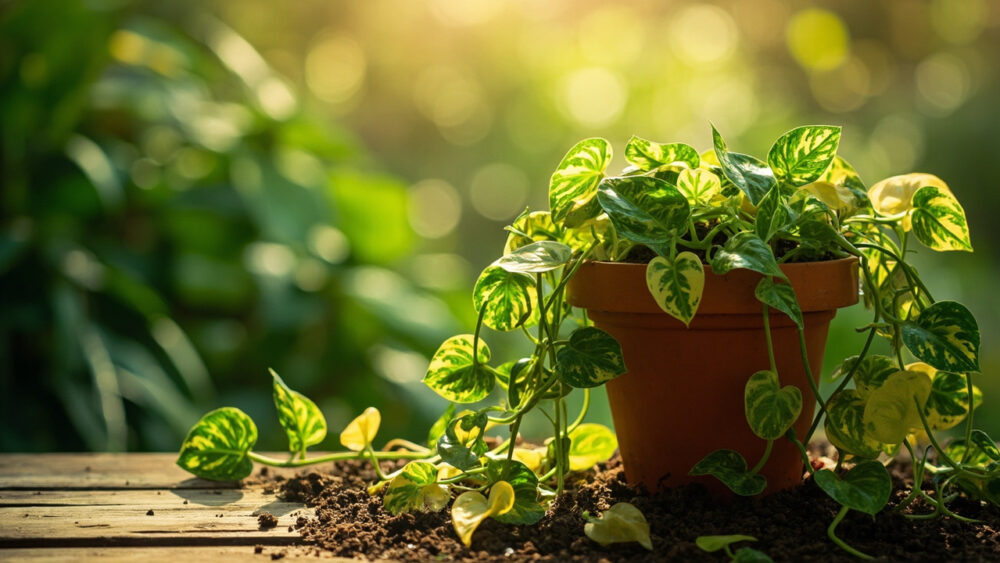
Pothos light requirements are simpler than most houseplant guides make them sound: bright, indirect light is ideal, low light is tolerable but slows everything down, and direct hot sun is the one thing that actually damages the plant. A spot a few feet back from an east or west window covers most homes just fine. That’s the short answer, but it doesn’t tell you what “bright indirect” looks like in your actual living room, or why your pothos might be dying in a spot that looks plenty bright to you.
Here’s what most people get backwards: they assume a leggy, sparse pothos needs more water. It almost always needs more light instead. And the mistake that ruins more pothos than any pest or disease ever will isn’t darkness, it’s a sunny south window with no buffer between the plant and the glass.
I’ll walk through what good light actually looks like room by room, how to read the leaves when something’s off, how the plant’s needs shift with the seasons, and the cheap fixes that work without a greenhouse. Save-and-screenshot the Pothos at a Glance card at the very bottom before you go.
The Plain Answer on Pothos Light Needs
Pothos wants bright, indirect light, the kind of light you get standing a few feet from an unobstructed window without the sun hitting the leaves directly. It will survive in medium or even low light, the kind found six to ten feet from a window or in a north-facing room, but it survives there rather than thrives.
In low light growth slows way down, the vines stretch out looking for something brighter, and variegated types often turn solid green because the plant stops bothering to make the white or yellow patches. In bright indirect light you get faster growth, tighter leaf spacing, and variegation that actually holds.
Direct, unfiltered sun for hours a day, especially through south or west glass in summer, is the one light situation that genuinely hurts the plant.
Next up: what that ideal light actually looks like in a normal house, not a plant catalog.
What “Bright Indirect” Looks Like in a Real Room
If you’ve been guessing that any spot near a window counts as bright indirect light, that guess is why a lot of pothos underperform. Distance and direction both matter more than people expect.
East-facing windows are close to foolproof. The plant can sit right on the sill or a few feet back and get gentle morning sun without scorching.
West and south windows deliver strong, hot light for several hours. Three to six feet back from the glass, or behind a sheer curtain, gives you bright indirect light instead of a leaf-burning blast.
North-facing windows are the low end of acceptable. Right next to the glass is fine; anything farther back gets dim fast.
A simple test: if the plant casts a soft, blurry shadow at midday, that’s good indirect light. A sharp, crisp shadow means it’s getting direct sun and needs to move back or get a sheer between it and the glass.
Once you know what the light should look like, the plant itself will tell you if you got it right.
The Signs of Too Little Light
A pothos in too little light doesn’t usually die outright, it just quietly gives up on looking good. That’s the honest, less dramatic answer to what’s really happening when growth stalls.
- Long gaps between leaves: the vine stretches toward the nearest light source instead of filling in.
- Loss of variegation: white, cream, or yellow patterns fade toward solid green.
- Small new leaves: each new leaf comes in smaller than the one before it.
- Slow or stopped growth: in winter this is somewhat normal, in a bright season it’s a sign the spot is too dim.
None of this is fatal. Move the plant closer to a window or add a plant light and it usually rebounds within a few weeks, though it won’t reverse leaves that already lost their pattern; new growth will just come in better.
Too little light is forgiving, but the opposite mistake burns leaves fast, and that’s next.
The Signs of Too Much Light
Bleached, pale, or crispy patches on leaves, especially ones facing the window directly, mean the plant is getting scorched, not just “a lot of sun.” This is the damage that’s genuinely hard to undo, since burned tissue doesn’t green back up.
Leaf edges that curl and crisp brown, particularly on leaves closest to south or west glass in summer afternoon, are the classic tell. People often mistake this for underwatering and pour on more water, which does nothing because the problem is light, not moisture.
The fix is straightforward: pull the plant back from the glass, add a sheer curtain, or move it to an east window. Damaged leaves can be trimmed off once new growth starts coming in clean. They won’t repair themselves.
Light needs don’t stay fixed all year either, and that catches a lot of people off guard come winter.
How Pothos Light Needs Shift With the Seasons
The spot that was perfect in July can be too dim by December, and that’s the honest answer to a question most guides skip. Winter sun sits lower in the sky and days are shorter, so total light reaching an indoor plant drops even if nothing in the room changed.
A plant sitting comfortably a few feet back from a west window in summer may need to move right up to the glass in winter to get the same brightness. Growth naturally slows in low-light months regardless, so don’t panic if a pothos that grew fast all summer barely does anything in January.
Rotate the pot occasionally too. Vines lean hard toward their light source, and a quarter turn every few weeks keeps growth even instead of lopsided.
If your best window still isn’t cutting it in winter, there are fixes that don’t involve a greenhouse.
Placement Fixes That Don’t Require a Greenhouse
You don’t need a conservatory to get this right, just a few practical adjustments.
- Sheer curtains: soften harsh south or west sun into usable bright indirect light.
- A few feet of distance: the single cheapest, most effective fix for scorch.
- A basic grow light: a small LED plant light on a timer for 10 to 12 hours covers windowless rooms or dark winter stretches.
- Bathrooms and kitchens with a window: often work well since pothos also likes the extra humidity.
- Bright rooms without direct sun, like a north-facing living room with white walls that bounce light around, are underrated pothos spots.
Get the placement right and pothos is genuinely one of the easier houseplants to keep looking good year-round.
Everything above boils down to a handful of facts worth keeping on your phone.
Pothos at a Glance
- Ideal light: bright, indirect light, a few feet back from an east, west, or south window.
- Minimum tolerable light: medium to low light, six to ten feet from a window or a north-facing room, with slower growth.
- Light to avoid: hours of direct, unfiltered sun through south or west glass, which scorches leaves.
- Sign of too little light: long gaps between leaves, fading variegation, small new leaves.
- Sign of too much light: bleached patches, crispy curled edges, especially on window-facing leaves.
- Seasonal note: move plants closer to windows in winter as daylight weakens. Growth slows naturally in low-light months.
- Cheap fixes: sheer curtains for scorch, added distance from hot windows, a basic LED grow light for dark corners.
Get the light roughly right and pothos forgives almost everything else. When in doubt, give it a little more indirect light and a little more distance from hot glass.