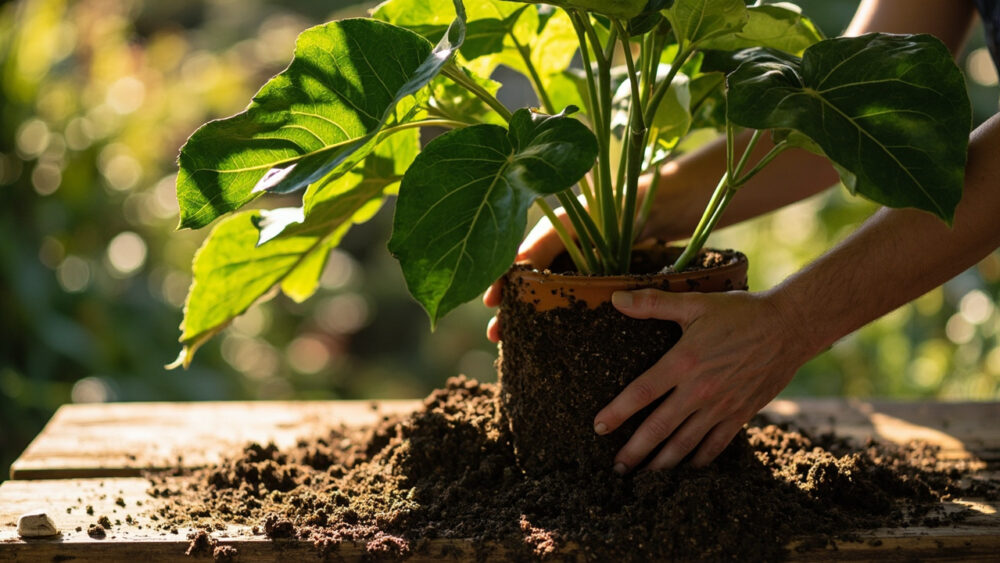
The right time to repot a fiddle leaf fig is spring through mid-summer, when roots are actively growing, and the right pot is only 2 inches wider in diameter than the current one. Go bigger than that and you are asking for root rot, because all that extra soil holds water the roots cannot reach or use fast enough. This guide covers exactly how to repot fiddle leaf fig plants without triggering the leaf drop and transplant shock that scares most people off doing it at all.
Here is what nobody tells you upfront: the plant will probably sulk for two to three weeks after repotting even when you do everything right, and that is normal, not a sign of failure. There is also one sizing mistake that causes more root rot than overwatering ever does, and most people make it on their very first repot without knowing it.
Stick around and you will also get the honest read on how often this plant actually needs repotting (it is less often than you think), plus a save-able Fiddle Leaf Fig at a Glance card at the bottom with every number in one place.
When and Why to Repot a Fiddle Leaf Fig
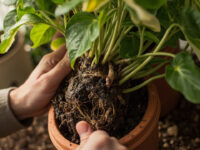
Repot when roots are circling the drainage holes, poking out the top of the soil, or when the plant is drying out within a day or two of watering. That last sign means the pot is more root than soil. For a healthy, actively growing fiddle leaf fig, this is usually every 1 to 2 years, not every spring out of habit.
Timing matters more than people assume. Repot in spring or early summer, while the plant is pushing new leaves and has the energy reserves to recover fast. Repotting in fall or winter, when growth slows or stops, means the plant sits stressed with no active roots to stabilize it.
Next comes the part almost everyone gets wrong: pot size.
The Sizing Mistake That Causes Root Rot
If you assumed a much bigger pot means fewer repots later and less work for you, that guess is exactly what kills most fiddle leaf figs within a year. A pot that is too large holds excess soil volume that stays wet long after the roots have taken what they need, and wet soil around bare roots is where rot sets in.
The real rule: go up only 2 inches in diameter at a time. A fiddle leaf fig in a 10-inch pot moves to a 12-inch pot, not a 16-inch one, even if the plant looks like it deserves more room.
Always use a pot with a drainage hole. No exceptions, regardless of how nice the ceramic one without a hole looks in the store.
Once the pot is right, the actual repotting steps are simple.
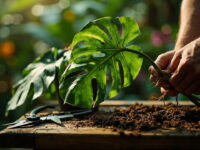
How to Actually Repot It, Step by Step
- Water the plant a day before repotting so the root ball slides out cleanly instead of crumbling.
- Lay the pot on its side and ease the plant out by the base of the trunk, never by pulling on leaves or stems.
- Loosen the outer roots gently with your fingers, and trim any roots that are black, mushy, or clearly dead.
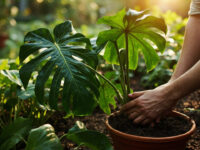
- Add fresh potting mix to the bottom of the new pot, set the plant so the base sits about 1 inch below the rim, then fill in around the sides.
- Water thoroughly until it runs from the drainage hole, and skip fertilizer for about 4 to 6 weeks while roots recover.
Expect some leaf drop or drooping in the first two to three weeks. That is the plant redirecting energy into root repair, not a sign you did it wrong.
Where you put the plant afterward matters just as much as how you repotted it.
Light, Placement, and Temperature
Fiddle leaf figs want bright, indirect light, ideally within a few feet of an east or south-facing window. Direct hot afternoon sun through glass will scorch the leaves, showing up as brown, crispy patches, so filter it with a sheer curtain if that is the only window you have.
Consistency beats intensity. This plant hates being moved around and hates drafts even more. Keep it away from air vents, cold windowsills in winter, and doors that let in a blast of outdoor air.
Ideal temperatures run 65 to 75°F. Below 50°F for any real stretch will cause leaf drop that takes months to reverse.
Get the light and placement right and watering becomes the next thing to nail down.
Watering: How Much, How Often, and How to Tell
Water when the top 2 to 3 inches of soil are dry to the touch, which for most homes lands somewhere between 7 and 10 days. Skip the calendar and check the soil with your finger every time, because light, pot size, and season all shift that timeline.
Drooping leaves get misread constantly. Everyone assumes droopy means thirsty, so they water more, and that is precisely what pushes a stressed plant into root rot. Drooping paired with soil that is still damp an inch down means the roots are suffocating, not thirsty.
When you do water, water deeply until it drains from the bottom, then let the excess drain away completely. Never let the pot sit in a saucer of standing water.
Brown spots with a yellow halo usually mean overwatering; dry, crispy brown edges usually mean underwatering or low humidity.
Soil and feeding decide how well those roots can actually use the water you give them.
Soil and Feeding
Use a well-draining potting mix formulated for indoor plants, ideally with some perlite or bark mixed in. Straight garden soil or anything that stays dense and soggy will suffocate the roots within weeks.
Feed only during active growth, roughly spring through early fall, with a balanced liquid houseplant fertilizer diluted according to the product label. Skip feeding entirely in fall and winter when growth naturally slows.
Over-fertilizing shows up as crusty white buildup on the soil surface and burnt-looking leaf tips, and it is far more common than under-feeding.
Feeding and soil set the foundation, but routine upkeep is what keeps the plant looking like something worth showing off.
Pruning and Cleaning: The Routine Tasks
Prune in spring or early summer, cutting just above a leaf node to control height or encourage branching. A fiddle leaf fig left unpruned for years grows into a single tall stalk with leaves only at the top.
Dust matters more than people think. Those big leaves are basically solar panels, and a dusty leaf cannot photosynthesize well. Wipe leaves down with a damp cloth every few weeks.
Rotate the pot a quarter turn every week or two so the plant grows evenly toward the light instead of leaning hard in one direction.
Even with a good routine, problems still show up, and knowing which one you are looking at saves the plant.
Common Problems and Honest Fixes
- Brown spots with yellow rings: usually overwatering or poor drainage, let the soil dry out further between waterings and check the pot actually drains.
- Dropping lower leaves one at a time: often normal aging, but rapid drop of several leaves signals a shock event like a big temperature swing, a move, or recent repotting.
- Small brown spots on new leaves: often a fungal or bacterial leaf spot from water sitting on foliage; improve air circulation and avoid wetting the leaves when watering.
- Sticky residue or tiny webs: check for spider mites or scale, treat with insecticidal soap or a labeled houseplant pesticide, following the product label exactly.
- No new growth for months: usually insufficient light, move it closer to a bright window before assuming it needs food or a bigger pot.
Note for pet owners: fiddle leaf fig sap is toxic to cats and dogs and can irritate skin and the mouth on contact. If a pet chews on the leaves or shows drooling, vomiting, or mouth irritation, contact a veterinarian rather than waiting to see if it passes.
Once the problems are sorted, it helps to know what success actually looks like.
How to Tell It Is Genuinely Thriving
A thriving fiddle leaf fig pushes new leaves that unfurl a noticeably lighter green and firm up within a couple of weeks. You will typically see a handful of new leaves during the spring and summer growing season on an established plant.
Leaves that stand upright and firm, rather than drooping or curling, are your clearest sign the roots and light levels are both working. Deep green color with no yellowing on the lower leaves rounds out the picture.
If you are seeing steady new growth and firm leaves, resist the urge to repot again just because it is spring. That urge is exactly what leads back to the sizing mistake that started this whole guide.
Fiddle Leaf Fig at a Glance
- When to repot: spring through early summer, every 1 to 2 years, or when roots circle the drainage holes.
- Pot size rule: go up only 2 inches in diameter at a time, always with a drainage hole.
- Light: bright, indirect light near an east or south-facing window, filtered if it gets direct afternoon sun.
- Watering: when the top 2 to 3 inches of soil are dry, typically every 7 to 10 days.
- Temperature: 65 to 75°F, away from drafts, vents, and cold glass.
- Feeding: balanced liquid fertilizer during spring through early fall only, none in fall or winter.
- Pet safety: sap is toxic to cats and dogs, contact a veterinarian for any suspected ingestion.
Get the pot size and the watering check right and almost everything else falls into place on its own.
Repot it once, watch it sulk for a few weeks, and trust that the new leaves coming in are the plant telling you it worked.